
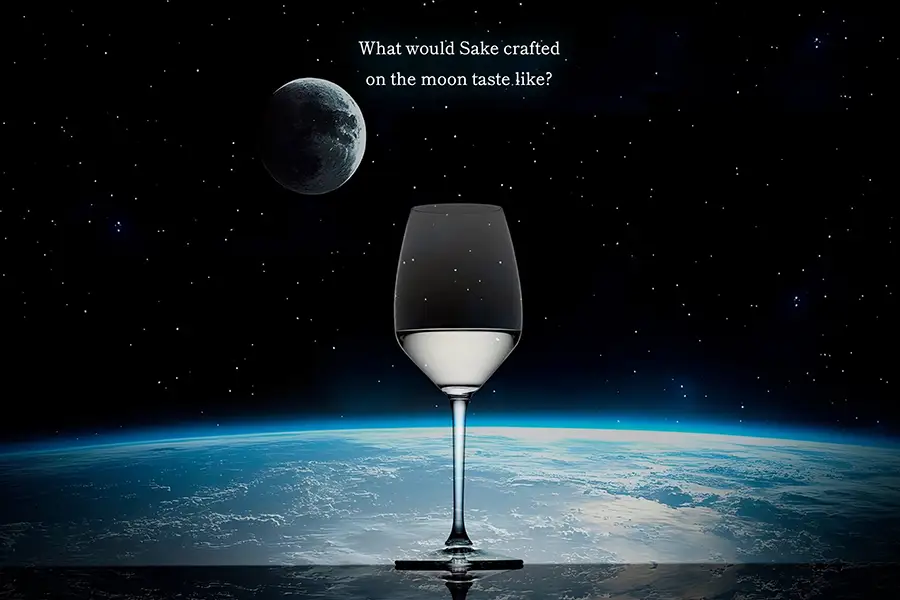

In an unprecedented scientific and commercial endeavor, a bottle of Japanese sake produced using mash fermented aboard the International Space Station (ISS) has sold for an impressive 100 million yen ($620,000). This extraordinary project, developed by Dassai, a prominent sake producer, along with Mitsubishi Heavy Industries, signifies a monumental step in understanding the alcoholic fermentation process under lunar-gravity conditions. The venture not only showcases technological prowess but also aims to explore future possibilities for food production in extraterrestrial environments.
This project is part of a broader ambition to advance Japan’s space development initiatives. By generating interest and funding through unique methods such as space-brewing, the proceeds of this sale are directed towards furthering scientific research and space exploration initiatives. The experiment provides valuable insights into how fermentation behaves in microgravity, carrying implications for both space life sustainability and the enhancement of traditional processes on Earth.
The Space-brewing process: A technical journey
The inception of space-brewed sake began with a precise orchestration involving the transportation of sake ingredients to the ISS. In a coordinated operation, rice, yeast, and fermentation equipment were launched aboard a Japanese rocket from Tanegashima Space Center in southern Kyushu. This marked the beginning of a unique experiment in the ISS Japanese experiment module, specifically designed to simulate the gravity experienced on the lunar surface.
Within the controlled environment of the ISS, astronauts took an active role, facilitating the brewing process. The objective was to observe the alcoholic fermentation process under reduced gravity, a condition that could significantly influence yeast behavior and fermentative kinetics. This experiment, while only the first step, has managed to verify that alcoholic fermentation is indeed viable in space, opening doors to establishing sake breweries on the moon.
Upon completion of the fermentation process, the 260g of fermented mash, known as ‘moromi,’ was returned to Earth in a frozen state. Subsequent to its arrival at Kansai International Airport, it underwent transformation at the Dassai brewery in the city of Iwakuni, Japan, where it was pressed into sake. The final product was contained within a 110ml titanium bottle, accentuating the luxury and exclusivity of this cosmic endeavor.
Alcoholic fermentation in microgravity: Unraveling the effects
One of the key observations from the sake brewed in space is the extended fermentation period experienced under microgravity conditions. Whereas the alcohol content of 12% mirrored terrestrial expectations, the lengthened fermentation process indicates that reduced gravity affects microbial activity and fermentation dynamics. This nuanced understanding of fermentation kinetics could have far-reaching applications in both space and Earth-based brewing.
The implications of this discovery are significant. In space, the fermentation process could be optimized to produce not just beverages but an array of fermented foods that are sustainable and nutritious for astronauts. On Earth, insights gleaned from the space fermentation process could inform the refinement of traditional brewing techniques, potentially leading to new flavors and textures in sake and other fermented products.
The research continues as the fermentation by-products and sake lees are now the subject of study at Tohoku University. The analysis aims to further comprehend how microgravity affects yeast metabolism and resultant flavor profiles. These investigations are crucial for determining the viability of sustaining human nutrition through fermentation in space environments.
Ultimately, Dassai’s vision extends beyond immediate scientific return; it encompasses a long-term strategy for contributing to humanity’s future in space. By establishing the foundation for food production in extraterrestrial colonies, such initiatives could be pivotal in supporting longer-duration missions and human settlement on the lunar surface. This innovative approach demonstrates how a traditional cultural craft can adapt to futuristic objectives using cutting-edge science and technology.