Fermentation can feel complex at first, but in practice it is one of the simplest ways to transform food. With just vegetables, salt, and time, you can create something that develops flavour, preserves itself, and evolves day by day. This guide is designed to help you begin with confidence.
What fermentation is
Fermentation is a natural process where microorganisms such as bacteria and yeast transform sugars into acids, gases, or alcohol.
In vegetable fermentation, naturally present bacteria convert sugars into lactic acid. This creates an environment where the food preserves itself and develops a characteristic sour flavour.
Where do the microorganisms come from?
The microorganisms responsible for fermentation are already present. They exist on the surface of vegetables, in the soil they grow in, and in the surrounding environment. When vegetables are harvested, these microorganisms come with them. Even if you wash them thoroughly you will still have plenty of microbes to work with. When salt is added and the vegetables are kept submerged, conditions begin to favour certain types of bacteria, particularly those that produce lactic acid. Over time, these bacteria become dominant and drive the fermentation process. This is why fermentation can happen without adding anything other than salt and water.
What fermentation is not
Fermentation is often confused with pickling, but the two are not the same.
Pickled foods that have been preserved using vinegar and then heat-treated – such as jars that have been boiled and sealed – are not fermented. The heat process reduces or removes the microorganisms that would otherwise drive fermentation.
However, once such a jar is opened, things can change. Exposure to air and the surrounding environment can introduce new microorganisms. Even using utensils or… tasting directly from the jar, can transfer microbes.
If conditions allow, fermentation may begin over time.
For this reason, fermented foods and heat-treated pickled foods behave differently, both in how they are made and how they evolve after opening.
A tradition found across cultures
Fermentation is not limited to one cuisine. It appears in different forms across the world. In Central and Eastern Europe, cabbage is fermented into sauerkraut. In Korea, it becomes kimchi. In the Black Sea region, including Pontic cuisine, cabbage is preserved in brine with carrots and other vegetables. Different methods, similar principles. This shared foundation is what makes fermentation both simple and universal.
What you need to begin
Starting does not require specialised equipment.
A jar, vegetables, salt, and water are enough.
The most important elements are:
clean ingredients
the right amount of salt
keeping the vegetables submerged
Everything else builds from there.
The basic process
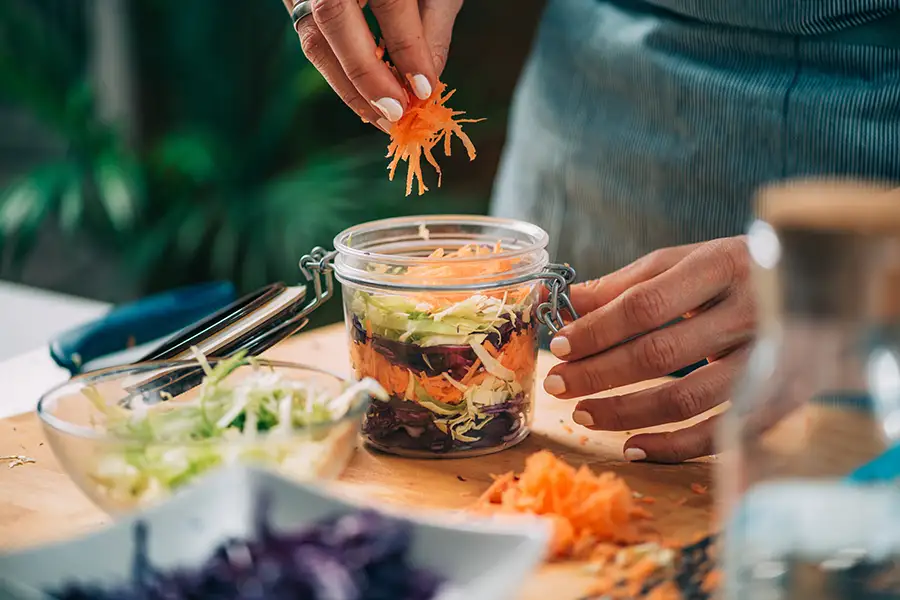
Vegetable fermentation follows a simple pattern. First, the vegetables are prepared, usually by slicing or shredding them. Salt is added, either directly or through a brine. The vegetables are then packed into a container and kept submerged. Over time, naturally present bacteria begin to transform the food. This process typically takes several days to a few weeks, depending on the temperature and the ingredients.
What to start with
Some vegetables are more forgiving than others.
Cabbage is the most reliable starting point.
Carrots and radishes are also good choices.
They ferment consistently and make it easier to understand how the process works.
What to expect
Fermentation is an active process.
You may notice bubbles forming, slight cloudiness in the liquid, and a gradual change in smell.
These are normal signs that fermentation is taking place.
The flavour will evolve from fresh to slightly sour, and then more complex over time.
A note on safety
When basic principles are followed—clean ingredients, sufficient salt, and proper submersion—vegetable fermentation is generally a stable process.
If something smells unpleasant or shows signs of mould, it is best to discard it.
With experience, recognising what is normal becomes easier.
Where to go next
The best way to understand fermentation is to try it.
A simple cabbage ferment is the ideal place to begin.
It requires only two ingredients and follows the core principles of the process.
Fermentation is a worldwide tradition…
Fermentation does not belong to one place or one tradition.
It appears wherever people have worked with food, time, and necessity.
Starting with something simple connects you to that shared practice.