
A handful of tiny grains slips through a farmer’s fingers before falling back into the palm of his hand. They are smaller than rice, less familiar than wheat, and unlikely to appear on the average shopping list. Yet these modest seeds may become some of the most important ingredients of tomorrow’s kitchen.
Across many parts of the world, farmers are beginning to rethink what they grow. Longer droughts, rising temperatures and increasingly unpredictable weather are forcing difficult decisions about crops that have sustained communities for generations. In response, attention is turning towards varieties that can thrive under harsher conditions while using fewer natural resources.
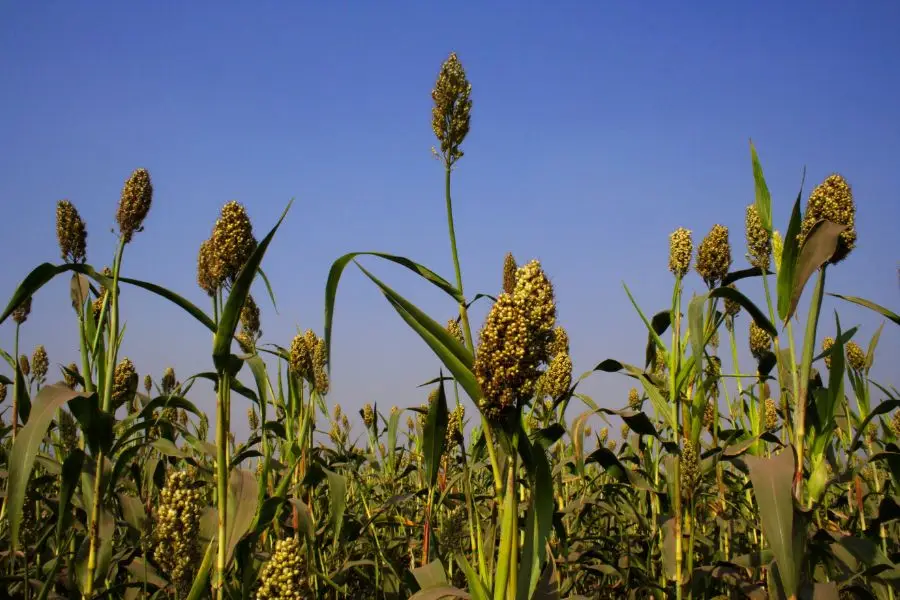
Names that were once largely confined to local markets, such as sorghum, millet, cowpeas and teff, are gradually entering a wider conversation about the future of food.
For us, the real story isn’t just the headline. It’s what it reveals about the way our relationship with food is changing.
Climate change is certainly reshaping agriculture. Yet it is also encouraging cooks, bakers, brewers and fermenters to rediscover ingredients that have quietly nourished communities for centuries.
A different kind of harvest
Earlier this summer, a review published in npj Sustainable Agriculture examined how drought-tolerant crops such as sorghum, sesame, sunflower and guar could support more resilient agricultural systems while opening new opportunities for food innovation and sustainable value chains. Rather than viewing these crops simply as alternatives for difficult growing conditions, the researchers argue that they should be recognised as valuable ingredients capable of creating entirely new food products and industries.
At the same time, food scientists are looking beyond the field and into the kitchen.
Fermentation, one of humanity’s oldest food technologies, is proving to be an ideal partner for many of these resilient crops.
Together, they tell an encouraging story. One is helping agriculture adapt to a changing climate. The other is helping us discover new ways to enjoy the harvest.
Ancient crops, modern possibilities
Many climate-resilient crops are not new at all.
Millets have been cultivated across Africa and Asia for thousands of years. Sorghum has long sustained communities living in hot, dry regions where other cereals struggle to survive. Cowpeas, chickpeas and other hardy legumes have provided dependable sources of nourishment while enriching soils through natural nitrogen fixation.
For decades, however, many of these ingredients gradually disappeared from everyday diets as global agriculture increasingly focused on a relatively small number of high-yield crops.
Now the conversation is beginning to shift.
Climate resilience has become one reason for their return.
Flavour is becoming another.
Fermentation unlocks hidden potential
One challenge facing several climate-resilient grains is that they can be unfamiliar to modern palates. Some contain compounds that influence texture or digestibility, while others simply lack the culinary traditions that make wheat or rice feel instantly approachable.
This is where fermentation becomes particularly exciting.
Recent research presented at the Institute of Food Technologists explored how solid-state fermentation with lactic acid bacteria significantly improved protein digestibility in sorghum, a grain already recognised for its exceptional drought tolerance. Researchers suggest that fermentation could help transform sorghum into more appealing and nutritious food products while preserving its environmental advantages.
Other studies have reached similar conclusions for millets, demonstrating that fermentation can improve flavour, reduce naturally occurring anti-nutrients and increase the availability of certain nutrients.
What emerges is not simply a scientific breakthrough.
It is a reminder that fermentation has always helped people make the most of the ingredients available to them.
A new generation of flavours
For chefs, these resilient crops represent far more than practical solutions to climate challenges.
They offer entirely new flavour palettes.
Sorghum brings gentle sweetness and depth to naturally fermented breads.
Millets develop complex, nutty notes when incorporated into sourdough starters.
Fermented legumes are inspiring new plant-based products with richer textures and more nuanced flavours.
Around the world, innovative kitchens are beginning to explore these possibilities, blending ancient ingredients with contemporary techniques in ways that feel both deeply traditional and surprisingly modern.
Fermentation does not disguise these crops.
It reveals their character.