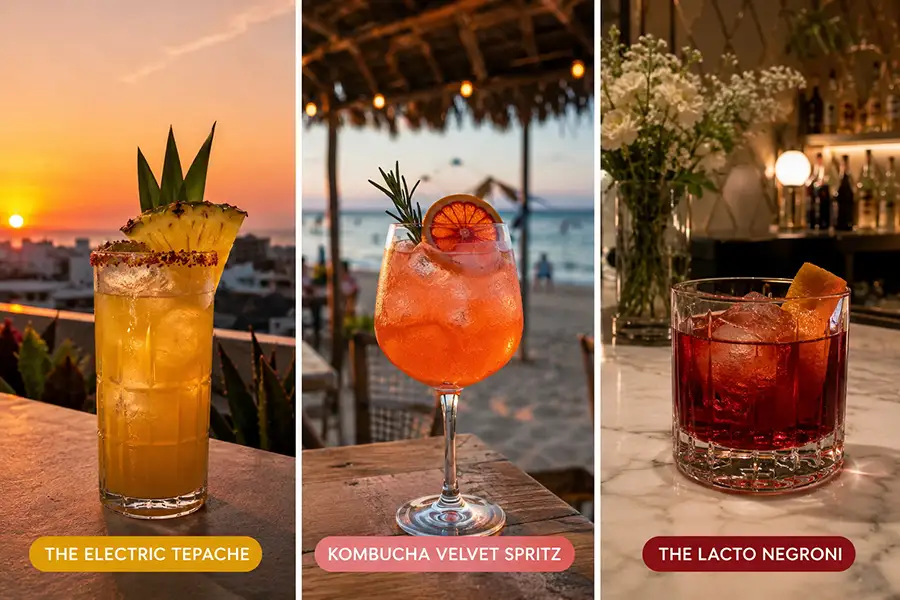

Fermentation has moved far beyond sourdough and kimchi. In today’s cocktail culture, bartenders are using wild yeast, lacto-fermented fruit, kombucha, tepache, and house-made ferments to create drinks with deeper acidity, funkier aromatics, and layered umami complexity. These cocktails don’t just taste different, they feel alive.
Below are three signature fermented cocktails that combine modern fermentation techniques with approachable execution, offering bold flavor profiles and strong visual identity for bars, restaurants, or editorial inspiration.
1. The electric tepache
Flavor Profile: Smoky, tropical, spicy, lightly funky.
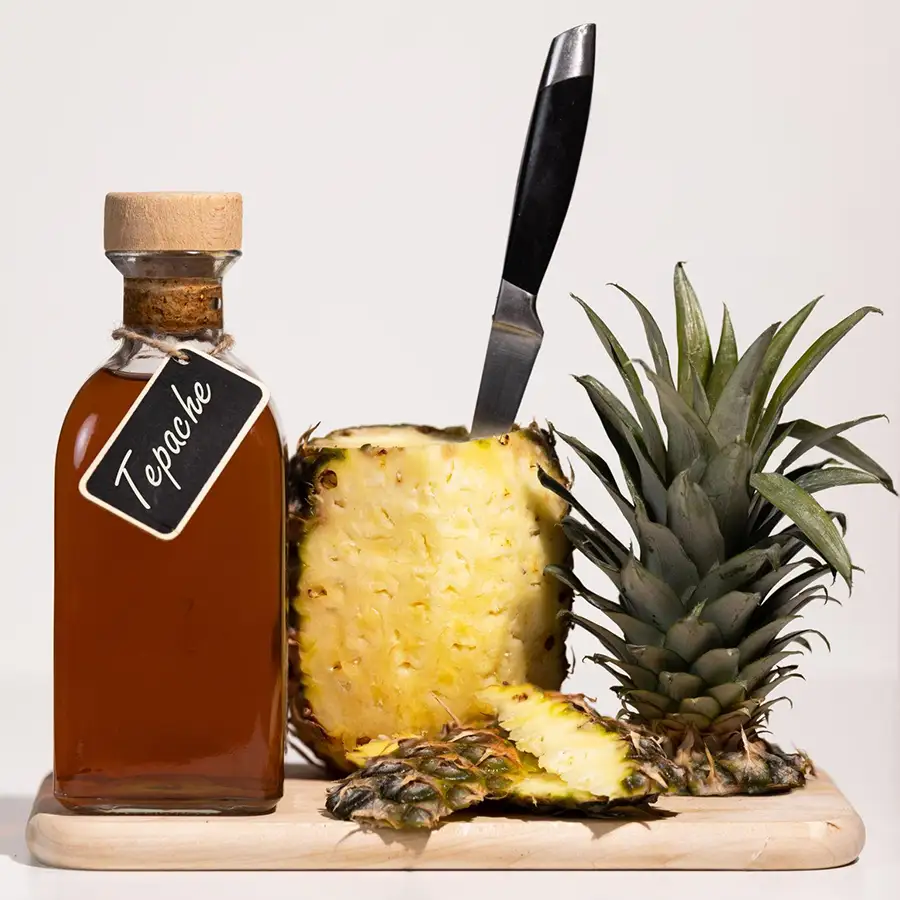
Traditionally made from pineapple skins, brown sugar, and spices, tepache is lightly fermented, naturally fizzy, slightly funky, and deeply refreshing. What was once considered a humble homemade drink has now become one of the most exciting ingredients in modern mixology.
The Electric Tepache cocktail takes tradition and pushes it into darker territory, smoky mezcal, sharp lime, chili salt, and tropical fermentation colliding in one glass. The smoky backbone of mezcal pairs naturally with fermented pineapple because both ingredients carry earthy complexity. Add lime and chili salt, and the cocktail suddenly sits somewhere between street food, fine dining, and underground nightlife. The result is a cocktail that feels raw, energetic, and almost rebellious.
Ingredients
Tepache Base
- 1 pineapple skin + core
- 150g brown sugar
- 1 cinnamon stick
- 2 cloves
- 1.5L filtered water
Cocktail
- 50ml mezcal
- 80ml homemade tepache
- 20ml lime juice
- 10ml agave syrup
- Tajín or chili salt rim
Equipment
- Large fermentation jar
- Fine mesh strainer
- Cocktail shaker
- Jigger
- Rocks glass
Execution
- Combine pineapple scraps, sugar, spices, and water in a jar.
- Cover loosely and ferment at room temperature for 2–3 days.
- Strain and refrigerate.
- Shake mezcal, tepache, lime juice, and agave with ice.
- Serve over ice in a Tajín-rimmed rocks glass.
Why It Works: Natural fermentation creates gentle carbonation and funky acidity that balances mezcal’s smokiness. The drink feels simultaneously ancient and futuristic.
2. Kombucha velvet spritz

Flavor Profile: Floral, tart, sparkling, refreshing.
The Kombucha Velvet Spritz proves fermentation can be delicate, floral, and effortlessly elegant.
Built with hibiscus kombucha, gin, elderflower, and citrus, the cocktail exists somewhere between a classic spritz and a natural wine experience. Bright acidity meets soft botanicals, while the kombucha introduces subtle tannins and a living texture impossible to replicate with artificial mixers. That complexity is exactly why bartenders are increasingly embracing fermented ingredients. Fermentation creates depth without heaviness. A drink can remain light and refreshing while carrying layers of flavor underneath.
Ingredients
- 60ml gin
- 90ml hibiscus kombucha
- 20ml elderflower liqueur
- 15ml lemon juice
- Soda water
- Edible flowers or dehydrated citrus
Equipment
- Wine glass
- Bar spoon
- Jigger
- Ice scoop
Execution
- Fill a large wine glass with ice.
- Add gin, elderflower liqueur, and lemon juice.
- Top with hibiscus kombucha and a splash of soda.
- Stir gently.
- Garnish with edible flowers or dried citrus.
Why It Works: Kombucha brings acidity and tannic complexity that mimic natural wine characteristics while keeping the drink bright and approachable.
3. The lacto negroni

Flavor Profile: Bittersweet, savory, jammy, complex.
The Negroni has survived for over a century because of balance. Bitterness, sweetness, botanicals, and strength exist in perfect tension. It’s a cocktail that rarely needs reinvention, which is precisely why bartenders keep reinventing it.
Enter the Lacto Negroni. At first glance, the drink looks familiar: gin, Campari, sweet vermouth. But then comes the unexpected ingredient, lacto-fermented strawberries.
The process is simple but transformative. Fresh strawberries are fermented with salt over several days, allowing natural bacteria to develop acidity, savory depth, and an almost jam-like complexity. The resulting liquid is intensely aromatic, slightly salty, subtly sour, and layered with umami. When added to a Negroni, the effect is extraordinary.
The Lacto Negroni represents a new kind of luxury in cocktails, not expensive ingredients, but time, process, and experimentation.
Ingredients
Lacto-fermented strawberries
- 300g strawberries
- 2% salt by weight
Cocktail
- 30ml gin
- 30ml Campari
- 30ml sweet vermouth
- 20ml lacto-fermented strawberry brine
Equipment
- Vacuum bag or fermentation jar
- Mixing glass
- Bar spoon
- Hawthorne strainer
- Large ice cube mold
Execution
- Combine strawberries and salt in a sealed bag or jar.
- Ferment for 3–5 days until juicy and aromatic.
- Strain the liquid.
- Stir gin, Campari, vermouth, and strawberry brine with ice.
- Serve over a large cube with an orange peel.
Why It Works: The salty-fermented strawberry element softens bitterness while amplifying the Negroni’s herbal backbone with unexpected umami depth.
Why fermented cocktails matter
Fermented cocktails represent the intersection of sustainability, culinary experimentation, and modern drinking culture. Bartenders are increasingly using fermentation not only for flavor, but also for zero-waste techniques, natural preservation, and signature house identities. The result is a new generation of cocktails that are brighter, funkier, and far more expressive than traditional classics.