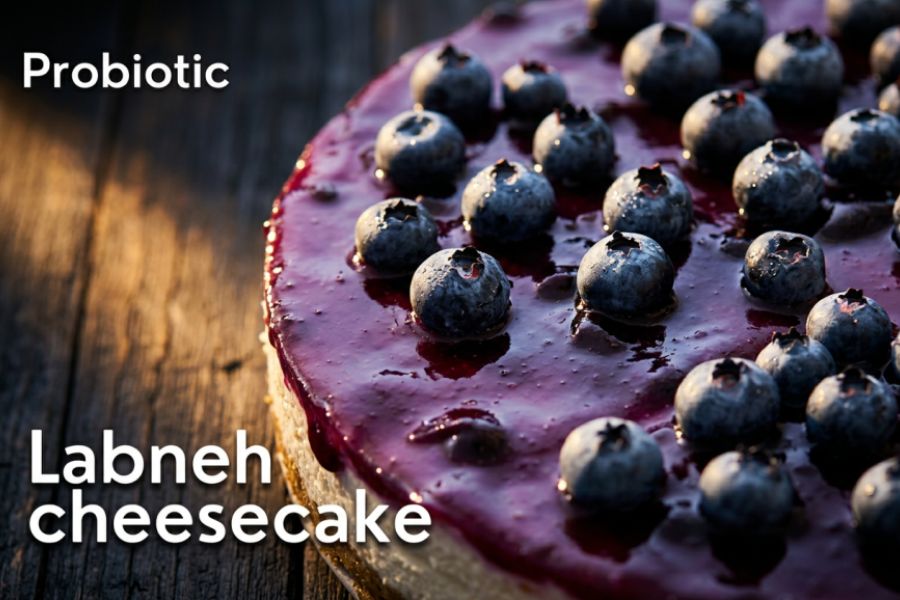

Why the topping matters: heat, cultures, and our probiotic labneh cheesecake
There’s a question we get a lot at Brine & Bloom: if you bake something fermented, is it still “alive”? The honest answer is mostly no, and that’s exactly why this cheesecake is built the way it is.
The short version
Live cultures are bacteria. Bacteria, like most living things, have a temperature ceiling. Once a fermented ingredient goes into a 160°C oven, the vast majority of those cultures don’t survive the bake. So if a baked good is marketed purely as “probiotic” with no mention of what happens in the oven, that claim deserves a second look.
This isn’t a reason to give up on baking with fermented ingredients. It’s a reason to be precise about what they’re doing for you at each stage.
What survives the bake, and what doesn’t
In our probiotic labneh cheesecake, fermented dairy shows up twice, and each instance plays a different role:
Labneh and sour cream in the filling. These go into the oven. They contribute tang, body, and that distinct cultured-dairy depth of flavor that plain cream cheese alone can’t replicate. What they mostly don’t contribute, after 55 minutes at 160°C, are live bacteria. Heat is heat, and most strains can’t survive sustained exposure much above 45–50°C.
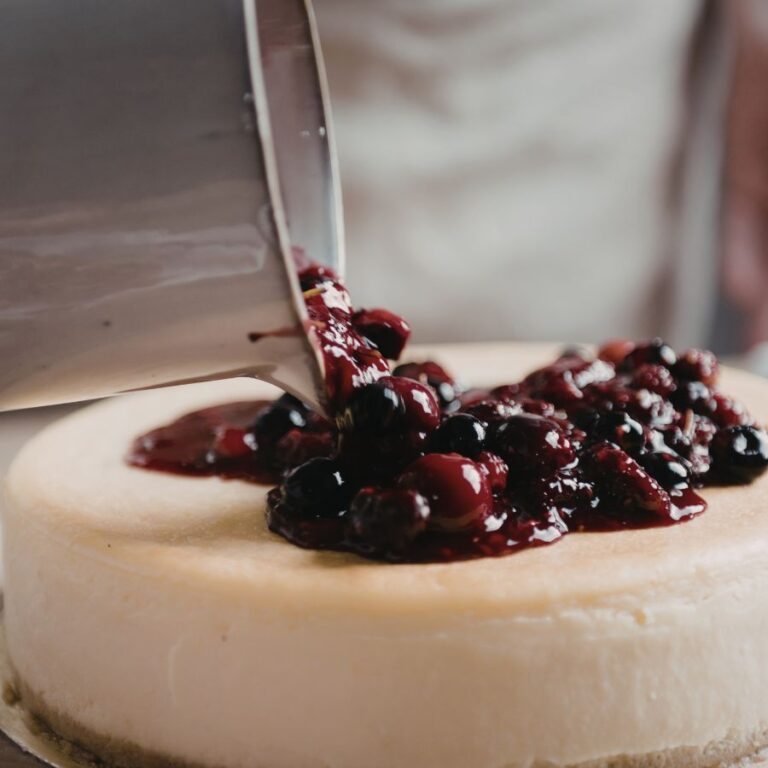
The sour cream topping, added cold after baking. This is where the “probiotic” claim actually holds up. Because this layer never sees the oven, its live cultures stay intact from jar to fork. It’s also why we fold the honey in cold and serve the topping freshly spooned rather than baked into a swirl.
Why we still bake with fermented ingredients
If baking mostly kills the cultures, why bother? Because fermentation does two jobs, and only one of them needs the bacteria to stay alive:
- Flavor and texture transformation. Fermentation breaks down proteins and sugars in ways that change taste, acidity, and mouthfeel, permanently. That transformation doesn’t reverse when you apply heat. It’s baked in, literally.
- Live biological activity. This is the probiotic piece, and it only survives where heat doesn’t reach.
A baked cheesecake using labneh gets the first benefit from every gram of cultured dairy in the filling. It only gets the second benefit from whatever goes on top, raw, at the end.
How to read a “probiotic dessert” claim
A reasonable rule of thumb: ask where in the process the fermented ingredient sits relative to the heat source.
- Fermented ingredient baked, fried, or boiled at any point → flavor benefit only, treat live-culture claims skeptically
- Fermented ingredient added after cooking, served cold or raw → flavor and live-culture benefit, this is the part doing the probiotic work
For our cheesecake, that means the crust and filling are about flavor and structure. The honeyed sour cream finished on top, after everything has cooled, is the part actually carrying live cultures to the plate.
The recipe
If you haven’t made it yet, the full recipe for the Probiotic Labneh Cheesecake walks through both halves: the baked labneh and cream cheese filling, and the live-culture sour cream and honey topping added at the end. Active prep is about 30 minutes, with the rest of the roughly 6.5 to 7 hours being hands-off baking, cooling, and chilling time.
It’s a good dessert for the same reason it’s a good explainer: it doesn’t ask you to take “probiotic” on faith. You can taste exactly where the fermentation is doing flavor work, and where it’s still doing biological work too.