
In the quest for sustainable chocolate production, the fermentation process has emerged as a pivotal innovation. This is particularly evident in the strategies employed by startups in fermentation, such as Fermtech, an Oxford-based company ambitiously working towards revolutionizing the chocolate industry. The company recently garnered attention by raising £2.5 million to scale its innovative “koji cocoa,” a fermentation-derived product set to transform how cocoa is utilized in food manufacturing.
The increasing pressures on traditional chocolate supply chains, exacerbated by fluctuating cocoa prices and climate change, necessitate inventive solutions. Fermtech’s approach could not only alleviate some of these pressures but also reduce environmental footprints and production costs. The startup’s koji cocoa, made from cocoa shells and husks, suggests a promising future for integrating waste reduction principles into chocolate manufacturing.
The role of fermentation in chocolate production
Fermentation is a biological process that uses microorganisms like bacteria, yeast, and fungi to convert organic compounds into energy. This method has been fundamental in food production for centuries, contributing to the development of products like yogurt, bread, and alcoholic beverages. In the context of chocolate production, fermentation plays a critical role in determining the flavor profile of the final product by modifying the chemical composition of cocoa beans.
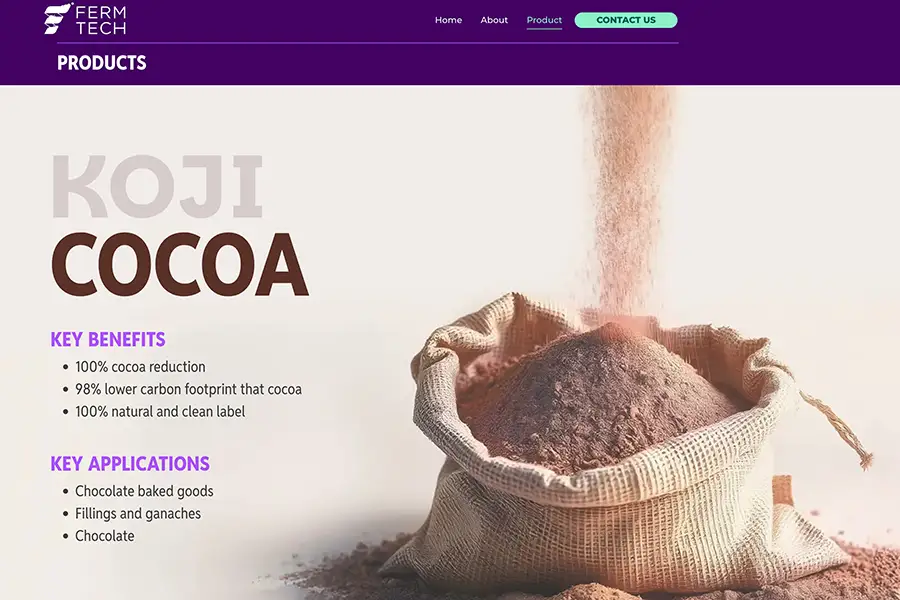
Fermtech harnesses the power of fermentation to create its koji cocoa, leveraging the untapped potential of cocoa by-products like shells and husks. Through this process, these by-products are transformed into valuable ingredients that can partially substitute traditional cocoa. The results are significant: reductions in cocoa use by up to 30% in chocolate baked goods, which correlates to cost savings between 25% to 33% and a drastic emission reduction of up to 98%.
This pivot towards fermentation not only enhances sustainability but also encourages the food manufacturing industry to rethink traditional processes. By turning what was once considered waste into a vital ingredient, novel applications and business opportunities emerge, along with a minimization of environmental impact.
Advantages of koji cocoa
Koji cocoa presents notable advantages over traditional cocoa. Its cost-efficient production is one of the most compelling benefits. By reducing the dependency on cocoa farming, koji cocoa helps mitigate risks associated with price volatility and supply availability. In addition, the reliance on by-products rather than fresh cocoa beans also offers a way to lessen the impact of agriculture-related challenges posed by climate change.
The environmental advantages of using koji cocoa are profound. As the production process can cut emissions by up to 98%, it marks a significant stride toward sustainable chocolate manufacturing. This aligns with global efforts to reduce carbon footprints and embraces concepts of circular economy by minimizing waste.
Market potential and challenges
While the potential market for koji cocoa is promising, driven by rising consumer demand for sustainable products, there are challenges to its widespread adoption. As with any innovation, market penetration depends largely on consumer acceptance and regulatory approvals. Additionally, manufacturers must consider integrating new processes and the potential need for equipment modifications to accommodate the unfamiliar ingredient.
Nevertheless, if successfully adopted, koji cocoa could set a precedent for other segments of the food industry to invest in fermentation-based alternatives. This could lead to broader shifts in manufacturing practices, reinforcing the viability of using fermentation as a tool for more sustainable production methods.
More R&D needed
The implementation of koji cocoa in production involves addressing both technical and perceptual challenges. On a technical level, adjusting existing manufacturing processes to incorporate koji cocoa requires precise calibration and experimentation to maintain the desired flavor and texture profiles in final products. This can necessitate initial investments in research and development to optimize formulations.
From a market perspective, educating consumers about the benefits of fermentation-derived alternatives is crucial. Properly communicating how koji cocoa contributes to sustainability can improve acceptance and increase demand. Additionally, transparency regarding product sourcing and production practices can enhance consumer trust and brand loyalty.