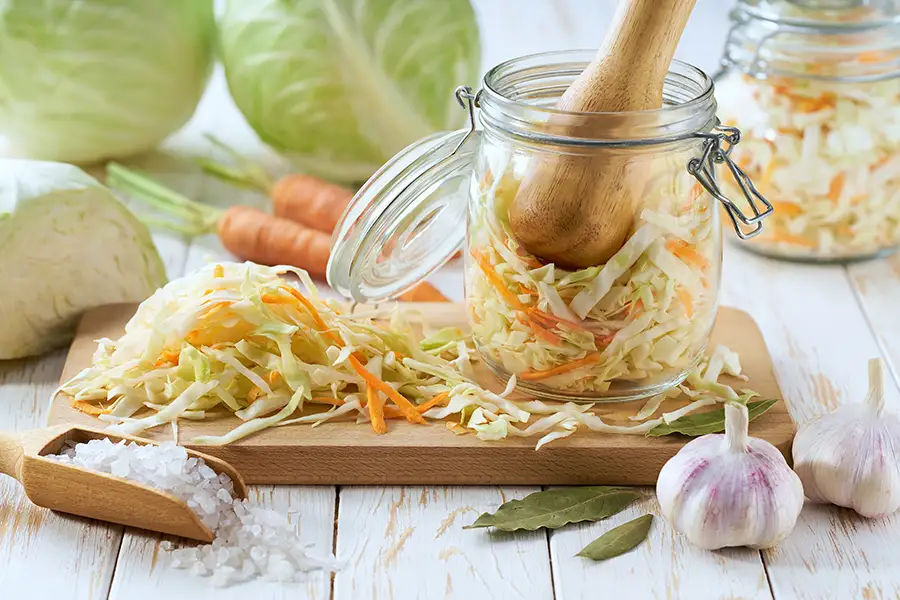

Fermenting cabbage with carrots is a time-honored tradition that marries vibrant flavors with incredible health benefits. This ancient preservation method transforms humble garden vegetables into a tangy, probiotic-rich powerhouse that develops deep, complex flavors over time.
While the art of fermentation might seem intimidating, this recipe is remarkably accessible. With just a few pantry staples and basic kitchen tools, you can master this rewarding craft. Follow these simple steps to create a homemade delight that’s as satisfying to make as it is to eat.
Why make fermented cabbage?
Fermenting cabbage with carrot not only preserves these vegetables but also elevates their nutritional value. This fermentation process introduces beneficial probiotics into the diet, which are known to improve digestion and boost immunity. Additionally, the tangy flavor developed during fermentation adds an exciting zest to meals.
This specific combination offers both textural and taste contrasts: the crunchy carrots blend well with the tender cabbage, producing a ferment that is both nutritionally dense and satisfying. Making this ferment allows for the customization of spices and flavors, catering to personal preferences and dietary needs.
Moreover, this home fermentation method is an economical and sustainable way to utilize and store excess produce, reducing waste while creating a nutritious food staple that can be enjoyed over time.
Equipment
Having the right equipment ensures a smooth fermentation process.
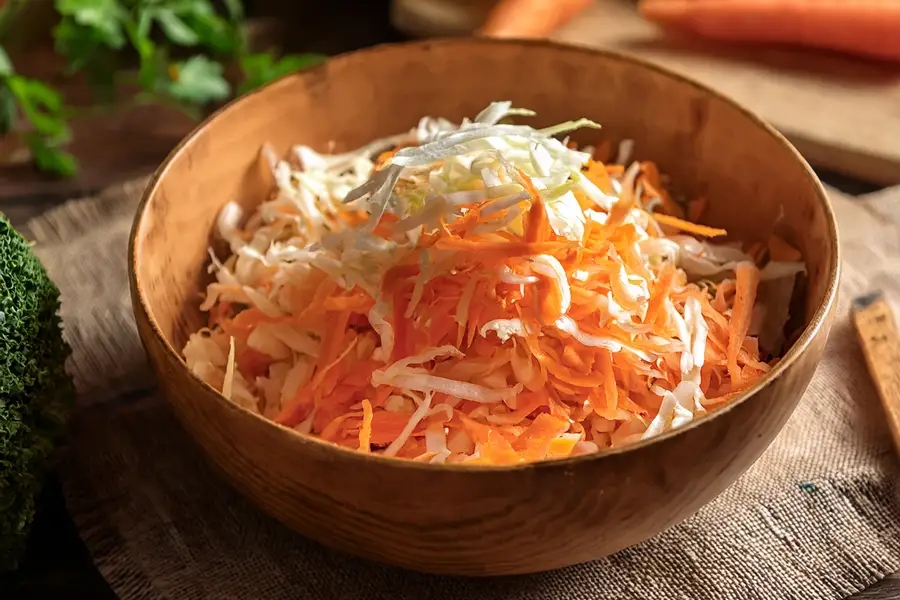
– A large mixing bowl
– A sharp knife or mandoline slicer
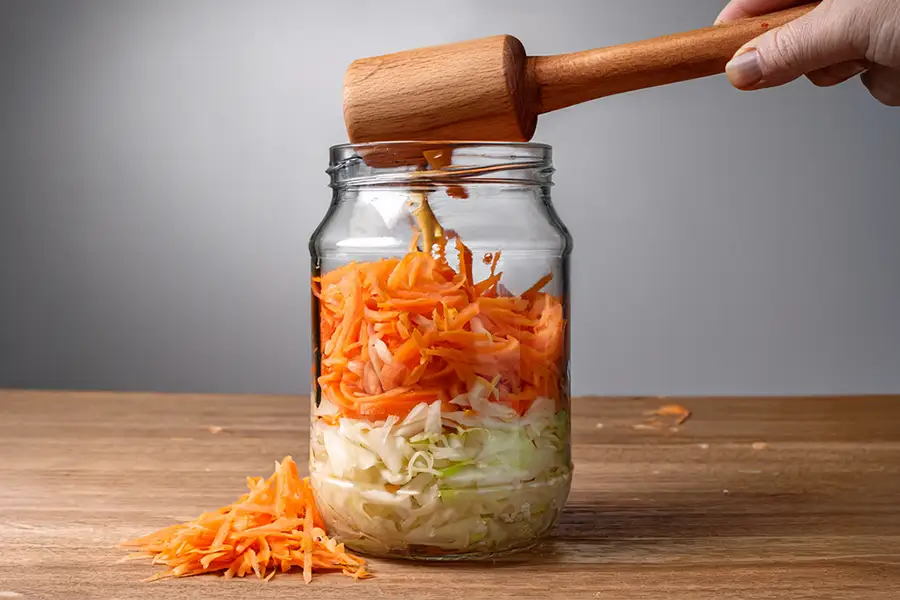
– A large glass jar or fermentation crock
– A weight to keep vegetables submerged (e.g., a fermentation weight or a small glass filled with water)
– A clean cloth or fermentation lid
When is it ready?
The fermentation process can take anywhere from one to four weeks, depending on the ambient temperature and your taste preference. A warmer environment speeds up fermentation.
Start checking the flavor after one week. Once it has reached the desired tanginess, transfer the ferment to the refrigerator, where it can keep for several months.
How to use
Fermented cabbage with carrot can be used in a variety of dishes. It is excellent as a side dish, adding a crisp, acidic note to heavier meals. It’s also a great topping for sandwiches and tacos, or a nutritious addition to salads.
The ferment can replace pickles in recipes, providing similar zest but with the added benefit of probiotics and live cultures that support gut health.
How to maintain
One must store the ferment properly to maintain its quality. Always use clean utensils when extracting cabbage-carrot from the jar to prevent contamination.
Ensure that the remaining vegetables are submerged in their brine before sealing again, and store the ferment in the refrigerator to prolong its shelf life and slow down further fermentation.
Is fermented cabbage good for you?
The probiotic bacteria that develop during fermentation are beneficial to digestive health and overall wellness. They help enhance nutrient absorption, can boost the immune system, and may reduce inflammation.
Additionally, the high fiber content in cabbage and carrots supports digestive regularity, making this a healthful addition to your diet.
Expert tips
Ensure your working environment and equipment are clean to avoid undesirable bacteria. Room temperature is ideal for fermentation, but if it’s too warm, consider starting with a reduced fermentation time.
Adjust spices to taste, adding unique flavors or probiotics using whey or previous brine as starters to kick-start the fermentation process.
Troubleshooting
If you notice any off-smells or mold forming on the surface, remove any affected vegetables and make sure all remaining contents are submerged below the brine. A foul odor generally indicates spoilage, and it’s best to discard the ferment if this occurs.
Bubbles, a sign of active fermentation, are normal, but if they persist beyond four weeks without the flavor reaching the right tanginess, check the seal or the salt ratio: both can affect outcome.