
Traditional baechu kimchi is made with salted napa cabbage, Korean radish, spring onions, garlic, ginger and gochugaru. It is bold, savoury, spicy and deeply aromatic, with a fermentation process that transforms crisp cabbage into one of Korea’s most iconic foods.
- Home / Fermentations
Traditional Korean baechu-kimchi with gochugaru
Traditional baechu kimchi made with napa cabbage, Korean radish, spring onions, garlic, ginger, gochugaru and a savoury rice paste. Bold, spicy and deeply aromatic, this classic Korean ferment develops from crisp and fresh to tangy, complex and full of character.

Brine and Bloom
Writing about fermentation for healthier living
Share this article:
- TAGS:
FAQs
How long does kimchi take to ferment?
Kimchi usually ferments at room temperature for 1–3 days before being moved to the fridge. In a warm kitchen it may become tangy within a day, while cooler rooms may need longer. Once refrigerated, it continues to ferment slowly.
Can I make kimchi without fish sauce or fermented shrimp?
Yes. For a vegetarian version, replace fish sauce and saeujeot with soy sauce, tamari or a little miso. The flavour will be different from traditional kimchi, but still savoury and delicious.
Why is my kimchi bubbling?
Bubbling is a normal sign of active fermentation. It means carbon dioxide is being produced as the vegetables ferment. Open the jar carefully to release gas if using a standard lid, and keep the kimchi pressed below its brine.
Classic Napa cabbage kimchi
- Prep. Time: 4-5 hours
- Fermentation: 1–3 days
Ingredients:
Makes 1 large jar or container
For the cabbage
- 1 large napa cabbage, about 1.2–1.5 kg
- 80–100 g coarse sea salt or Korean solar sea salt
- Water, as needed for rinsing
For the rice paste
- 1 tbsp glutinous rice flour
- 120 ml water
- 1 tsp sugar, optional
For the kimchi seasoning
- 120 g Korean radish, julienned
- 4 spring onions, cut into 3–4 cm lengths
- 4 garlic cloves, grated or finely minced
- 20 g fresh ginger, grated
- 3–5 tbsp gochugaru, Korean red pepper flakes, adjusted to taste
- 2 tbsp fish sauce
- 1 tbsp saeujeot, salted fermented shrimp, optional but traditional
- 1 tbsp soy sauce or extra fish sauce, optional
- ½ small onion, grated or blended, optional
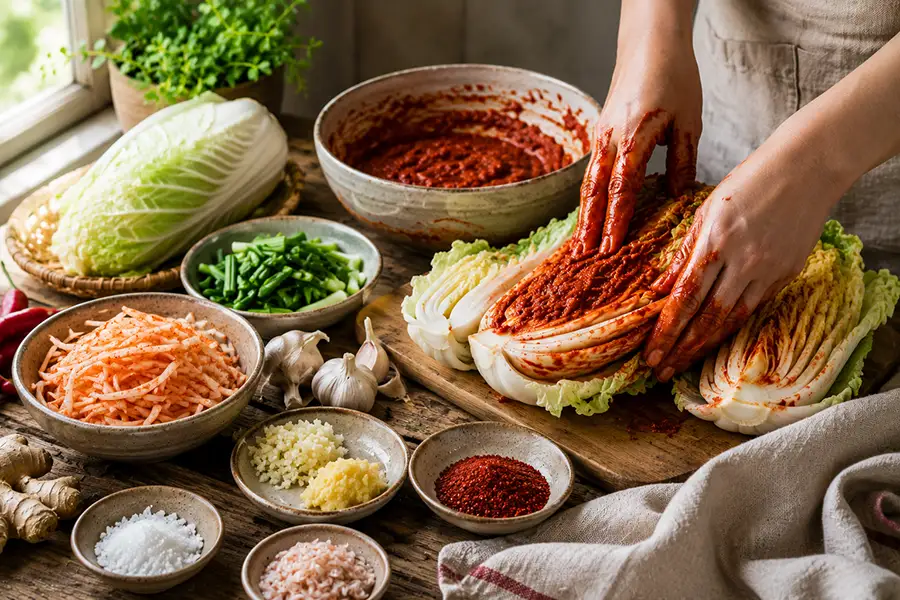
Directions:
- Cut the napa cabbage lengthwise into quarters, keeping the base partly intact so the leaves hold together. Rinse the cabbage briefly, then sprinkle salt between the leaves, concentrating more salt near the thicker white stems.
- Place the salted cabbage in a large bowl or tray and leave for 2–3 hours, turning every 30–40 minutes. The cabbage is ready when the thick white stems bend without snapping.
- Rinse the cabbage well under cold water to remove excess salt. Drain thoroughly for 20–30 minutes, cut-side down.
- While the cabbage drains, make the rice paste. Whisk the glutinous rice flour with water in a small pan. Heat gently, stirring until it thickens into a loose paste. Remove from the heat, stir in the sugar if using, and let it cool.
- In a bowl, mix the cooled rice paste with garlic, ginger, gochugaru, fish sauce, saeujeot if using, soy sauce or extra fish sauce if using, and grated onion if using.
- Add the julienned radish and spring onions to the seasoning paste. Mix well until everything is evenly coated.
- Wearing gloves, spread the seasoning mixture between the cabbage leaves, working it into the thicker stem sections as well as the leafy parts.
- Fold each cabbage quarter into a compact bundle and pack it tightly into a clean jar or fermentation container. Press down firmly to remove air pockets and encourage the brine to rise.
- Leave at least 3–5 cm of headspace at the top. Close the container loosely, or use a fermentation lid. Place the jar on a plate or tray in case liquid bubbles over.
- Leave at room temperature for 1–3 days, depending on your kitchen temperature and preferred flavour. Open daily to release gas if using a standard lid, and press the cabbage down so it stays under its brine.
- When the kimchi tastes lightly sour and lively, transfer it to the fridge. It will continue to ferment slowly and develop deeper flavour over time.
More ferments...
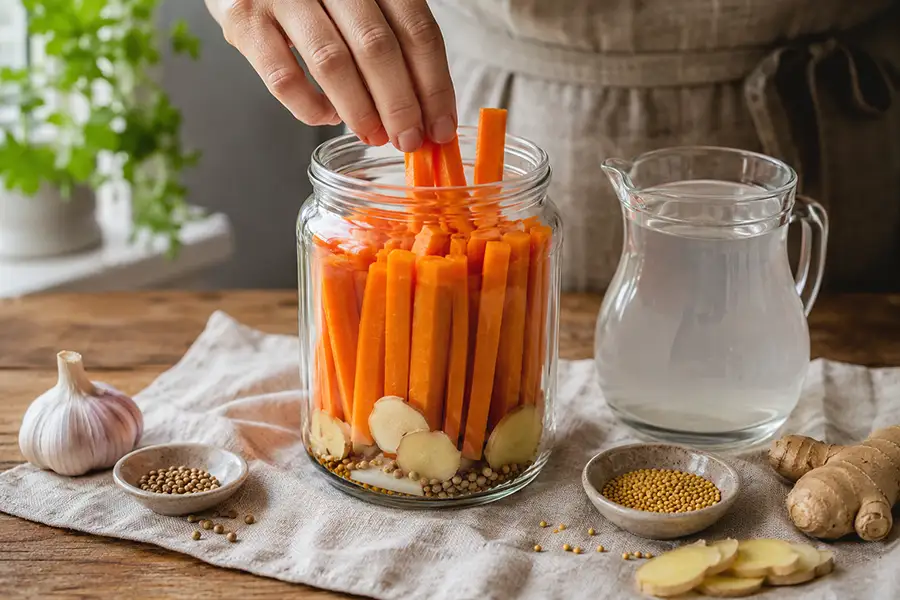
Crisp lacto-fermented carrot sticks with fresh ginger, made in a...

A slow-soaked garlic pickle with fenugreek, black gram, and tangy...
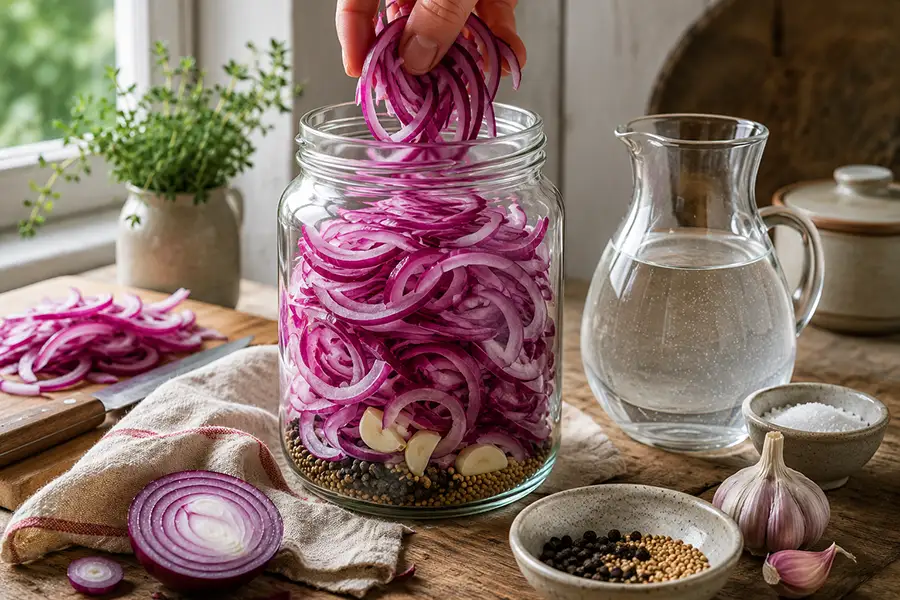
These fermented red onions are crisp, vivid and gently tangy,...
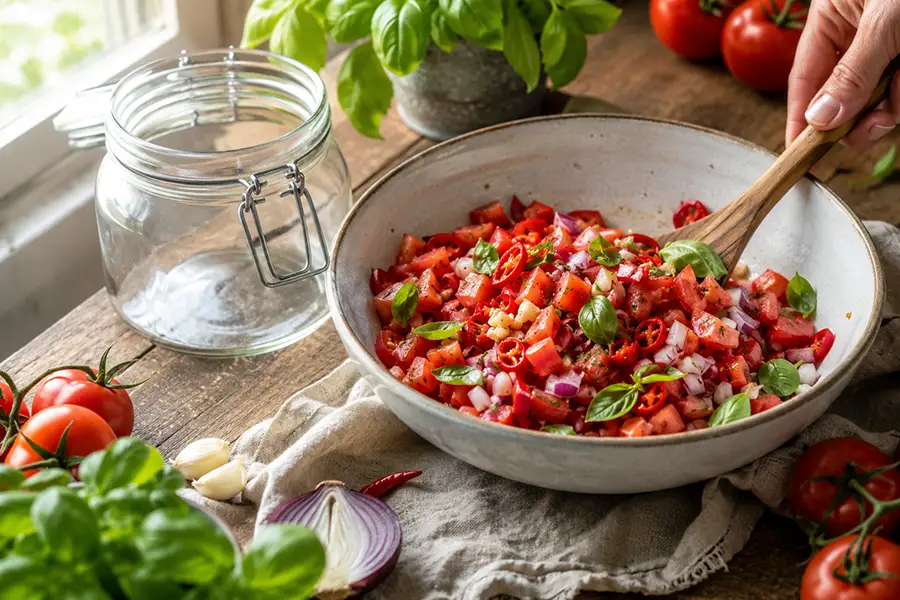
A bright July salsa ferment made with ripe tomatoes, sweet...

A light summer fruit ferment made with ripe peaches, thyme,...
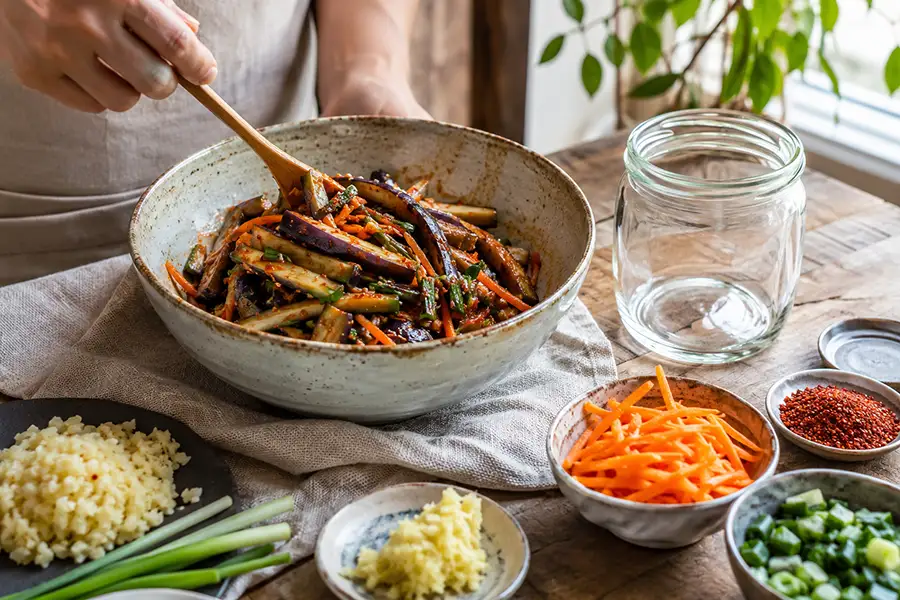
Aubergines salted at 2% are mixed with garlic, ginger, gochugaru,...
Explore more from Brine & Bloom
Fermentation revolutionizes agriculture by providing eco-friendly solutions like biofertilizers, biopesticides,...
Whole fermented foods differ from processed probiotics, crucial for gut...
African fermented grains like millet and sorghum deliver probiotic nutrition...
Engage kids this summer with eight fun and safe DIY...