Lightly fermented peaches with thyme and lemon

A light summer fruit ferment made with ripe peaches, thyme, lemon and a little honey or sugar. Ready in 12–24 hours, it is gently tangy, fragrant and lovely with yoghurt, ricotta toast, pancakes or soft cheese.

Share this article:

A light, fragrant summer fruit ferment made with ripe peaches, thyme, lemon and a small amount of honey or sugar. This is a quick ferment rather than a long preserve, so it is best made in a small batch and enjoyed within a few days.

Serve it with yoghurt, ricotta toast, porridge, pancakes, soft cheese or vanilla ice cream. It also works beautifully spooned over a simple sponge cake or folded through a summer fruit bowl.

FAQs

Can I use very ripe peaches?

Very ripe peaches can become soft quickly, so firm-ripe peaches are better. They should smell fragrant and give slightly when pressed, but still hold their shape when sliced.

How long should I ferment peaches?

This is a short ferment, usually 12–24 hours at room temperature. Warmer kitchens will speed things up, so taste early and refrigerate when the flavour is lightly tangy.

Can I use nectarines instead?

Yes. Nectarines work very well in this recipe and can be used in exactly the same way. Keep the slices fairly thick so they do not soften too quickly.

Peach & thyme short ferment
Ingredients:

Makes 1 small jar


  • 4 ripe but firm peaches
  • 1 tbsp honey or sugar
  • 1 tsp fine sea salt
  • 2–3 sprigs fresh thyme
  • 2 strips lemon peel
  • 2 tbsp filtered water, if needed
  • Optional: ½ tsp grated fresh ginger


Peach & Thyme Short Ferment
Directions:
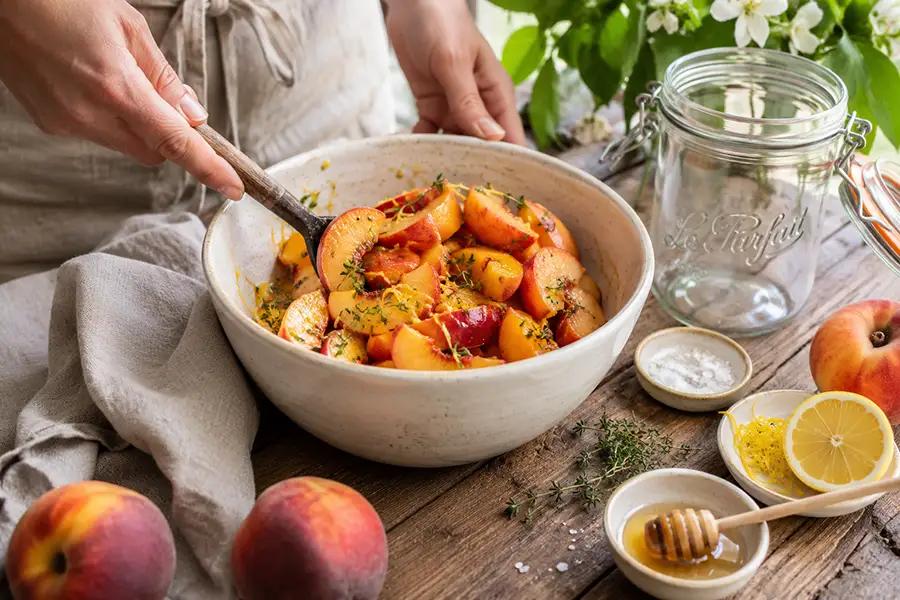
  1. Wash the peaches well. Cut them in half, remove the stones and slice the fruit into wedges.
  2. Place the peach slices in a clean bowl. Add the honey or sugar, sea salt, thyme, lemon peel and ginger, if using.
  3. Gently toss everything together and leave for 10–15 minutes, until the peaches begin to release their juices.
  4. Pack the peaches into a clean jar. Pour over any juices from the bowl. Press the fruit down gently so it is mostly covered by its own liquid. If needed, add 1–2 tablespoons of filtered water.
  5. Use a small fermentation weight, a clean folded cabbage leaf, or a small food-safe weight to keep the peaches below the liquid.
  6. Close the jar loosely, or use a fermentation lid. Leave at room temperature for 12–24 hours, checking once or twice. The peaches should become lightly tangy and aromatic, not strongly sour.
  7. Taste after 12 hours. If you like the flavour, transfer the jar to the fridge. If you want a little more tang, leave it for up to 24 hours.
  8. Keep refrigerated and use within 3–4 days.
Notes:

Fruit ferments move quickly because fruit contains natural sugars. Keep the fruit below the liquid, use clean utensils, and refrigerate once the flavour is lightly tangy. If the ferment smells unpleasant, shows visible mould, or becomes slimy, discard it.

More ferments...

Crisp lacto-fermented carrots with fresh ginger

Crisp lacto-fermented carrot sticks with fresh ginger, made in a...

Traditional Korean baechu-kimchi with gochugaru

Traditional baechu kimchi made with napa cabbage, Korean radish, spring...

Garlic pickle with fenugreek & black gram

A slow-soaked garlic pickle with fenugreek, black gram, and tangy...

Tangy fermented red onion slices

These fermented red onions are crisp, vivid and gently tangy,...

Tomato, pepper & basil fermented salsa

A bright July salsa ferment made with ripe tomatoes, sweet...

Kimchi-style aubergine with garlic, ginger, and gochugaru

Aubergines salted at 2% are mixed with garlic, ginger, gochugaru,...

Explore more from Brine & Bloom

Fermentation supports what grows before it ever reaches the kitchen

Fermentation revolutionizes agriculture by providing eco-friendly solutions like biofertilizers, biopesticides,...

Gut-health hype meets whole fermented foods

Whole fermented foods differ from processed probiotics, crucial for gut...

African fermented grains and beyond

African fermented grains like millet and sorghum deliver probiotic nutrition...

8 kid-friendly fermentations to make this summer

Engage kids this summer with eight fun and safe DIY...

Leave a Reply

Your email address will not be published. Required fields are marked *