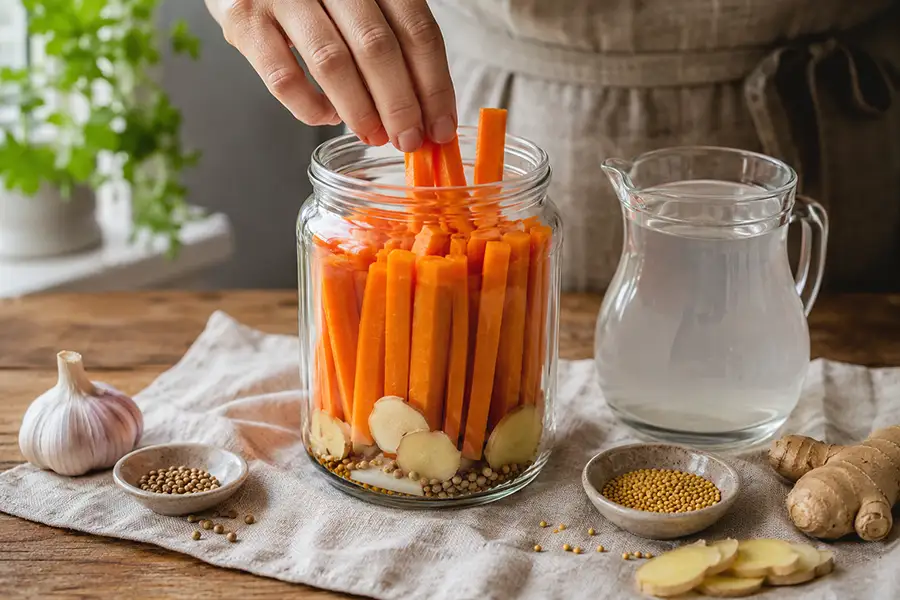
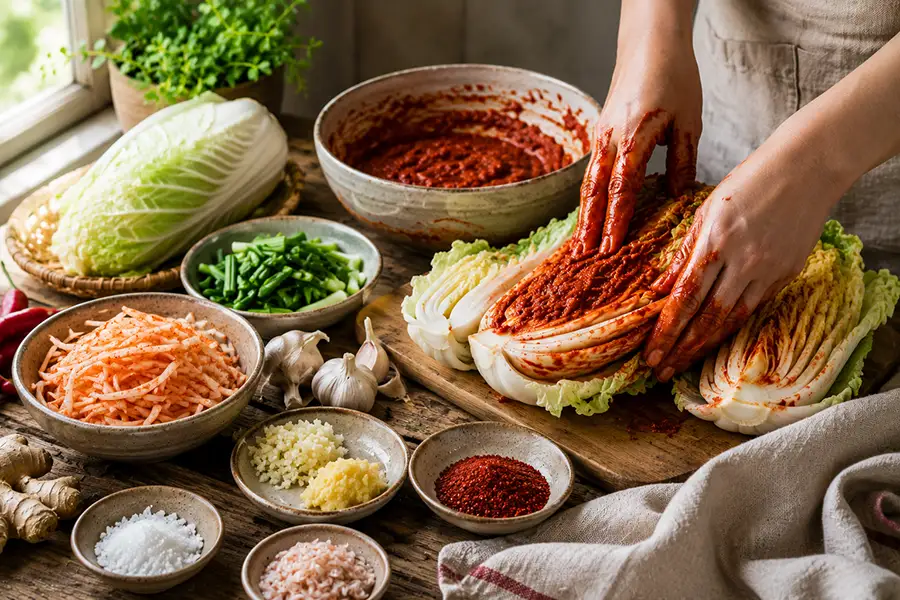
Kvass is a lightly fermented drink traditionally made from rye bread, water, sugar, and a starter such as yeast, sourdough, or a previous batch of kvass. It is especially associated with Eastern and Northeastern Europe, including Slavic and Baltic food cultures, where it has long been valued as a refreshing everyday drink rather than a formal alcoholic beverage. Traditional kvass is usually low in alcohol, cloudy, mildly sour, and often served chilled.
Historically, kvass was a practical way to use stale rye bread and transform it into something drinkable, malty, and gently acidic. In Lithuania, where kvass is known as gira, bread-based versions have been recorded for centuries, and similar drinks appear across Poland, Russia, Ukraine, Belarus, Latvia, Estonia, Georgia, and beyond.
Classic kvass
Ingredients:
Makes about 1.5 litres:
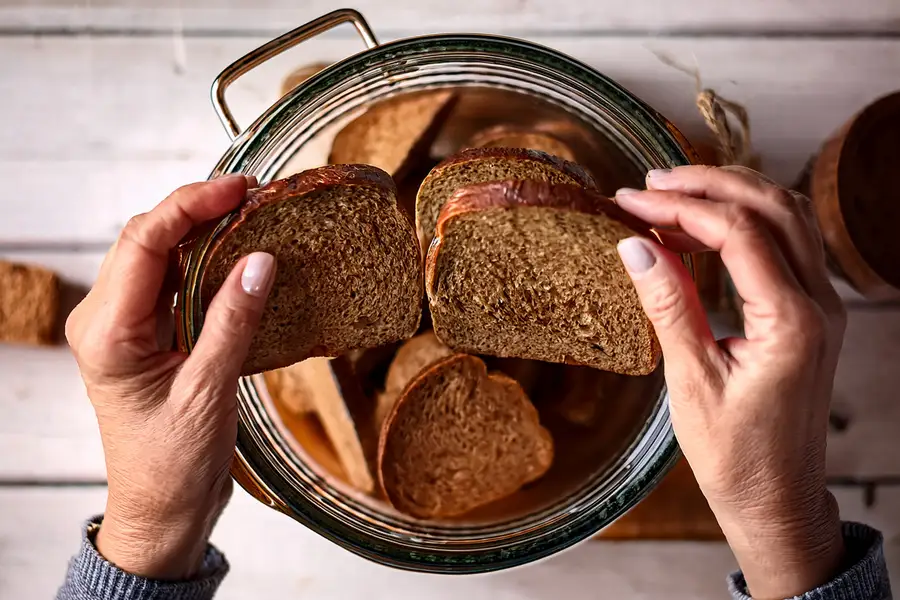
- 200g dark rye bread, preferably stale
- 1.7 litres water
- 70g sugar
- 25g raisins
- 2g dried yeast, or 50g active sourdough starter
- 1 small strip lemon peel, optional
- 5g fresh mint, optional
Directions:
- Cut the rye bread into cubes and toast it in the oven at 180°C for 20–25 minutes, until dark, dry, and fragrant. You want deep colour, but not a burnt taste. The darker the bread, the richer and more roasted the kvass will be.
- Place the toasted bread into a large heatproof bowl or jar. Bring the water to a boil, then pour it over the bread.
- Cover and leave to steep for 6–8 hours, or overnight. The liquid should become dark, malty, and aromatic.
- Strain the liquid through a fine sieve or cheesecloth into a clean jar.
- Press the bread gently to extract liquid, but avoid forcing too much mush through the sieve. Discard the soaked bread.
- Stir the sugar into the strained liquid until dissolved.
- When the liquid is at room temperature, add the yeast or sourdough starter. Do not add the starter while the liquid is hot, as heat can damage the microorganisms.
- Add the raisins and optional lemon peel or mint.
- Cover the jar loosely with a cloth or lid. Leave at room temperature for 12–24 hours. You should begin to see small bubbles, and the aroma should become lightly sour and bready.
- Strain again if needed, then transfer the kvass into clean pressure-safe bottles. Leave a little headspace at the top.
- Seal and leave at room temperature for another 12–24 hours to build carbonation.
- Once lightly sparkling, refrigerate the bottles.
- Serve chilled.
Open carefully, as pressure can build quickly. Classic bread kvass is malty, lightly sour, gently sweet, and softly sparkling. It should taste more like a fermented bread soda than beer. The flavour depends heavily on the bread. Dark rye gives the deepest colour and most traditional character, while lighter bread produces a gentler drink.