Fermented mustard seeds: a sharp, textured condiment with deep savoury warmth

Fermented mustard seeds create a sharp, textured condiment with a tangy depth and gentle heat. Made with mostly yellow mustard seeds and a smaller amount of black or brown seeds, this simple ferment can be kept whole or blended into a rustic mustard for cheeses, roasted vegetables, sandwiches, eggs, and more.

Share this article:

Fermented mustard seeds are tiny flavour engines. As they sit in brine, their sharpness softens, their texture becomes pleasantly poppy, and the liquid develops a tangy, complex character. They work beautifully with roasted vegetables, cheeses, sandwiches, eggs, grilled meats, potatoes, and fermented vegetable bowls.

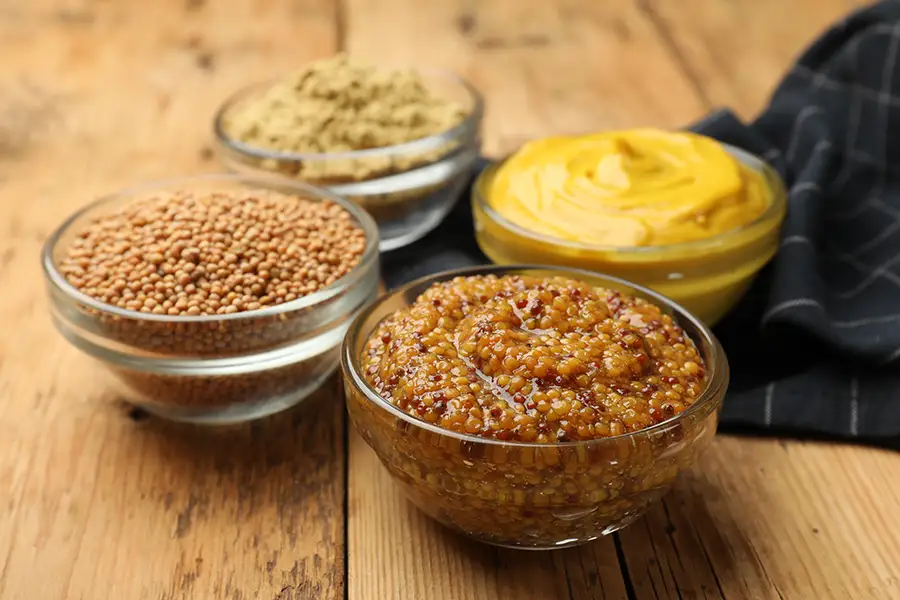
For the best balance, use mostly yellow mustard seeds with a smaller amount of black or brown mustard seeds. Yellow seeds are milder and rounder, while black or brown seeds bring heat, bitterness, and intensity.

Which mustard seeds to use

Yellow mustard seeds
These are the best base for fermented mustard. They are milder, slightly nutty, and absorb flavour well.

Brown or black mustard seeds
These are stronger, sharper, and more pungent. Use them in smaller amounts unless you want a very intense mustard.

Recommended mix
For a balanced ferment: 80% yellow mustard seeds + 20% brown or black mustard seeds

That gives you brightness, heat, and depth without becoming too harsh.

Quick serving ideas

Use fermented mustard seeds with:

  • roasted potatoes
  • cheese boards
  • grilled vegetables
  • sandwiches
  • sausages
  • eggs
  • smoked fish
  • fermented cabbage
  • warm lentil salads


They are especially good anywhere you would normally use mustard, capers, pickles, or vinegar.
Fermented mustard seeds
Ingredients:

For one medium jar:

  • 120g yellow mustard seeds
  • 30g brown or black mustard seeds
  • 300ml filtered water
  • 9g fine sea salt
  • 1 tbsp raw honey or sugar, optional
  • 1 garlic clove, lightly crushed
  • 1 small bay leaf
  • ½ tsp black peppercorns
  • ½ tsp coriander seeds
  • 1 small strip lemon peel, optional


Optional after fermentation:

  • 1–2 tbsp apple cider vinegar
  • 1 tbsp olive oil
  • 1 tsp honey
  • ½ tsp turmeric
  • chopped dill or tarragon


Brine Ratio

Use a 3% brine:

300ml water + 9g salt

This gives enough salt for a controlled ferment while still allowing the mustard seeds to soften and develop flavour.

Fermented Mustard Seeds
Directions:

1. Rinse the seeds. Place the mustard seeds in a sieve and rinse well under cold water. Transfer them to a clean jar.

2. Prepare the brine. Dissolve the salt in the filtered water. If using honey or sugar, stir it into the brine. This can help support fermentation, but it is optional because mustard seeds themselves are not especially sugar-rich.

3. Add aromatics. Add the garlic, bay leaf, peppercorns, coriander seeds, and lemon peel to the jar. Pour over the brine until the seeds are fully covered. Mustard seeds absorb a lot of liquid, so leave at least 3–4cm headspace at the top of the jar.

4. Keep everything submerged. As the seeds hydrate, they may rise or swell. Stir once or twice during the first day and top up with extra 3% brine if needed. If you have a small fermentation weight, use it. If not, stir daily with a clean spoon and make sure the seeds remain moist and covered.

5. Cover the jar loosely or use an airlock lid. Ferment at room temperature for 5–7 days. Taste from day 5 onwards. The seeds should become tangy, slightly softer, and more rounded in flavour. For a deeper ferment, continue for up to 10–14 days, especially in cooler weather.

6. Blend or keep whole

You have two options:

Whole fermented mustard seeds

Leave them as they are for a caviar-like condiment.

Fermented mustard paste

Blend some or all of the seeds with a little of the brine until you reach your preferred texture. For a smoother mustard, blend longer. For a rustic mustard, pulse briefly.

7. After fermentation, taste and adjust.

You can add:

  • apple cider vinegar for extra sharpness
  • honey for balance
  • turmeric for colour and earthiness
  • olive oil for roundness
  • dill or tarragon for freshness


Transfer to the fridge once the flavour is where you want it.

Notes:

The finished mustard should be:

  • tangy
  • sharp but rounded
  • lightly salty
  • aromatic
  • textured and slightly popping

The black or brown seeds will remain more intense than the yellow ones. That is normal.

Store in the fridge after fermentation.

It should keep for several weeks, provided it is kept clean and covered. Always use a clean spoon.

More ferments...

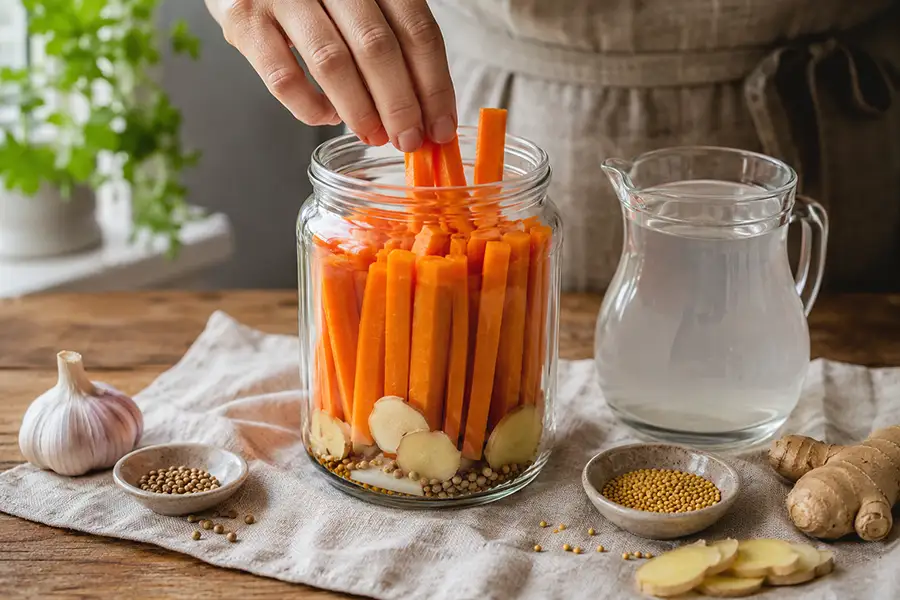
Crisp lacto-fermented carrots with fresh ginger

Crisp lacto-fermented carrot sticks with fresh ginger, made in a...

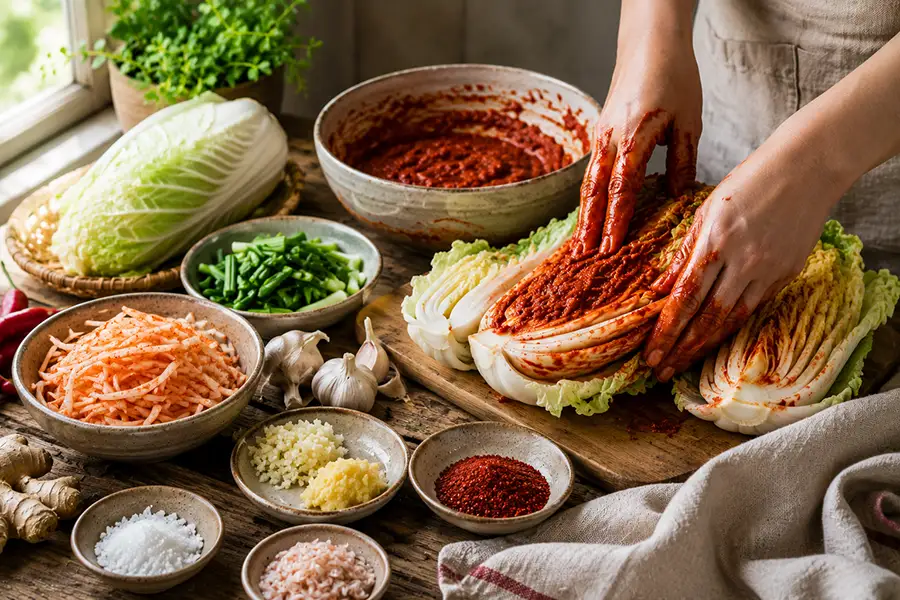
Traditional Korean baechu-kimchi with gochugaru

Traditional baechu kimchi made with napa cabbage, Korean radish, spring...

Garlic pickle with fenugreek & black gram

A slow-soaked garlic pickle with fenugreek, black gram, and tangy...

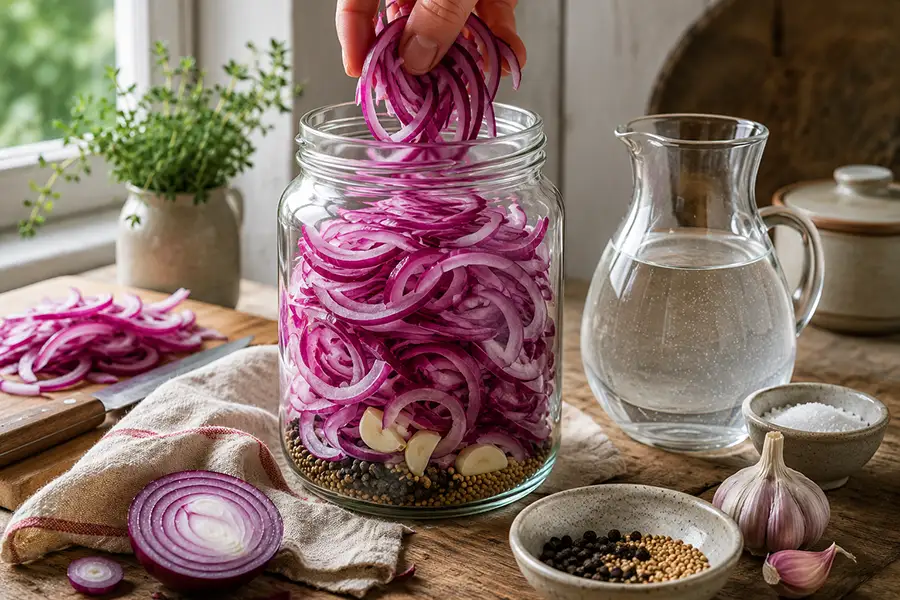
Tangy fermented red onion slices

These fermented red onions are crisp, vivid and gently tangy,...

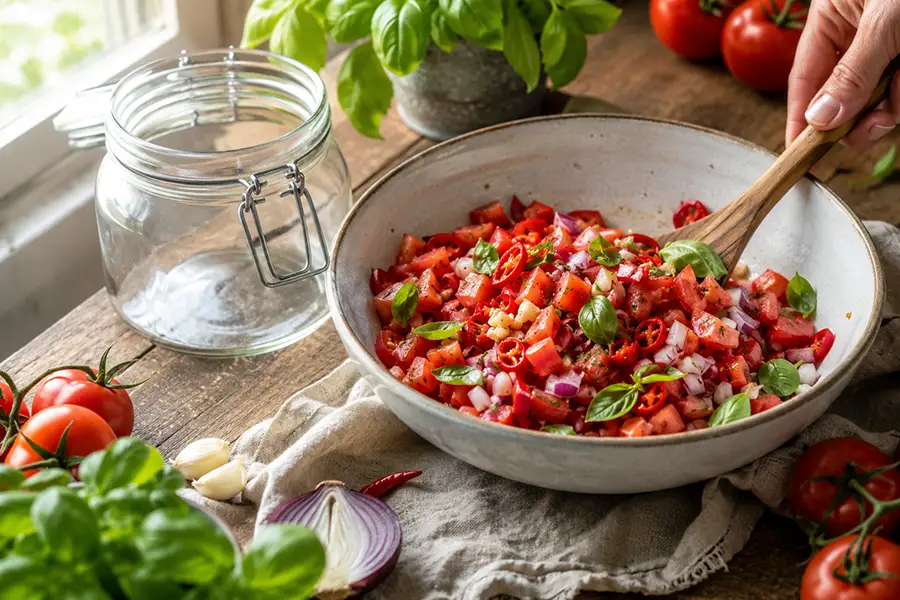
Tomato, pepper & basil fermented salsa

A bright July salsa ferment made with ripe tomatoes, sweet...

Lightly fermented peaches with thyme and lemon

A light summer fruit ferment made with ripe peaches, thyme,...

Explore more from Brine & Bloom

Fermentation supports what grows before it ever reaches the kitchen

Fermentation revolutionizes agriculture by providing eco-friendly solutions like biofertilizers, biopesticides,...

Gut-health hype meets whole fermented foods

Whole fermented foods differ from processed probiotics, crucial for gut...

African fermented grains and beyond

African fermented grains like millet and sorghum deliver probiotic nutrition...

8 kid-friendly fermentations to make this summer

Engage kids this summer with eight fun and safe DIY...

Leave a Reply

Your email address will not be published. Required fields are marked *