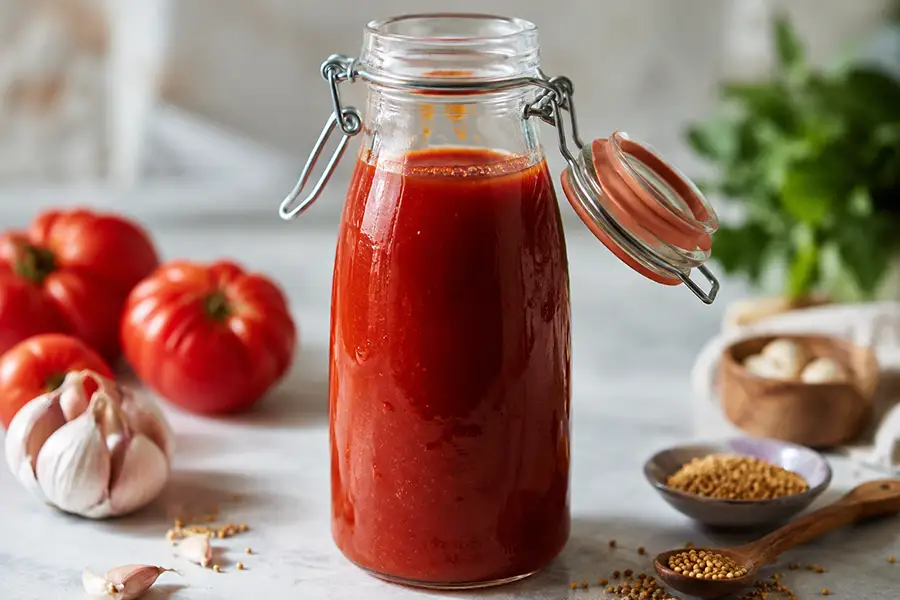
Fermented ketchup: a tangy, gently spiced ketchup with deeper flavour than the bottled kind

This fermented ketchup takes a familiar tomato condiment and gives it extra depth through live brine, gentle spices, and a short fermentation. Tangy, savoury, and softly sweet, it is perfect with roasted potatoes, sandwiches, fritters, burgers, and grilled vegetables.

Share this article:

Fermented ketchup is a brilliant way to turn a familiar condiment into something more layered. It keeps the sweet-tomato comfort of classic ketchup, but the fermentation adds brightness, depth, and a subtle savoury edge.

This version uses tomato paste for consistency and richness, then ferments with a little active brine from a live ferment, such as fermented cucumber brine, sauerkraut brine, or fermented cabbage and carrot brine.

Fermented ketchup
Ingredients:

Makes about 450g


  • 300g tomato paste
  • 80ml active fermented brine (from live sauerkraut, fermented cabbage and carrot, fermented cucumbers, or another salt-brine) ferment
  • 35g raw honey or maple syrup
  • 25g apple cider vinegar
  • 8g fine sea salt
  • 4g garlic powder
  • 3g onion powder
  • 2g smoked paprika
  • 1g ground allspice
  • 1g ground cinnamon
  • 1g black pepper
  • 10ml olive oil, optional
  • 20–40ml filtered water, only if needed to loosen texture


Optional Add-Ons


For a warmer ketchup:

  • 1g ground cloves
  • 1g ground ginger
  • pinch chilli flakes


For a fresher version:

  • 10g finely grated fresh ginger
  • 5g grated garlic
  • 5g finely chopped dill


For a smoky version:

  • add an extra 2g smoked paprika
  • add 5g date syrup or molasses


Fermented Ketchup
Directions:

1. Add the tomato paste, fermented brine, honey or maple syrup, apple cider vinegar, salt, spices, and olive oil if using to a clean bowl. Stir until completely smooth. If the mixture feels too thick, add filtered water little by little until it reaches a spoonable ketchup texture.

2. Spoon the ketchup into a clean glass jar. Leave at least 3cm headspace at the top, as fermentation may create a little pressure. Wipe the rim clean and close the jar loosely. You can also use an airlock lid if you have one.

3. Leave the jar at room temperature for 24–48 hours. Taste after the first day. The ketchup should begin to taste brighter and more rounded. If your kitchen is warm, 24 hours may be enough. In cooler conditions, it may need closer to 48 hours.

4. Once the flavour is where you like it, close the jar properly and transfer it to the fridge. The flavour will continue to settle and develop slowly in the refrigerator.

Notes:

The finished ketchup should be:

  • tangy
  • gently sweet
  • savoury
  • lightly spiced
  • thicker than a sauce, but softer than tomato paste

It should not taste aggressively fermented. The goal is a familiar ketchup flavour with more complexity behind it.

Use live, unpasteurised brine from a successful ferment. Vinegar pickle juice from a heat-treated jar will add flavour, but it will not provide the same active fermentation culture.

Always use a clean spoon when serving. Store in the fridge and use within 2–3 weeks.

If it develops mould, an unpleasant smell, or strong pressure build-up, discard it.

More ferments...

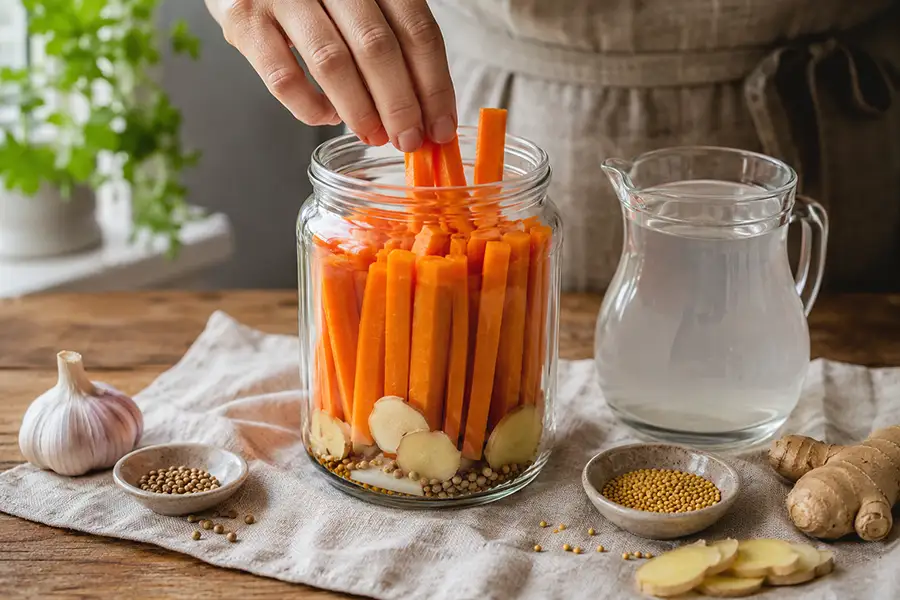
Crisp lacto-fermented carrots with fresh ginger

Crisp lacto-fermented carrot sticks with fresh ginger, made in a...

Traditional Korean baechu-kimchi with gochugaru

Traditional baechu kimchi made with napa cabbage, Korean radish, spring...

Garlic pickle with fenugreek & black gram

A slow-soaked garlic pickle with fenugreek, black gram, and tangy...

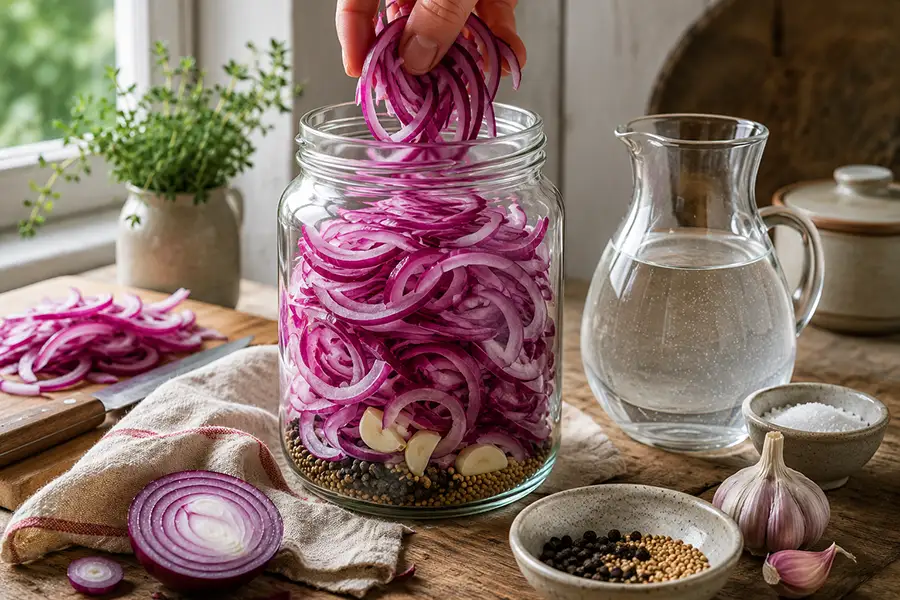
Tangy fermented red onion slices

These fermented red onions are crisp, vivid and gently tangy,...

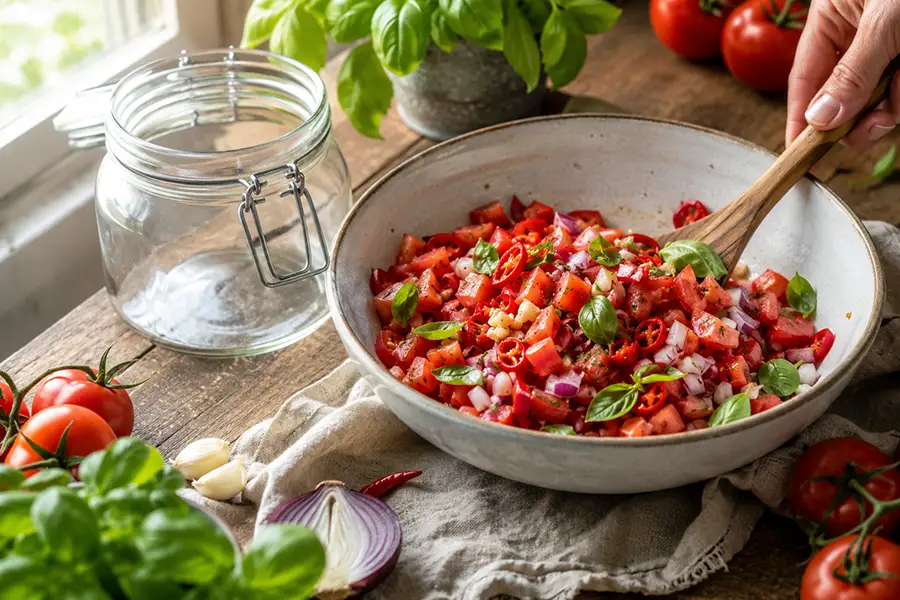
Tomato, pepper & basil fermented salsa

A bright July salsa ferment made with ripe tomatoes, sweet...

Lightly fermented peaches with thyme and lemon

A light summer fruit ferment made with ripe peaches, thyme,...

Explore more from Brine & Bloom

Fermentation supports what grows before it ever reaches the kitchen

Fermentation revolutionizes agriculture by providing eco-friendly solutions like biofertilizers, biopesticides,...

Gut-health hype meets whole fermented foods

Whole fermented foods differ from processed probiotics, crucial for gut...

African fermented grains and beyond

African fermented grains like millet and sorghum deliver probiotic nutrition...

8 kid-friendly fermentations to make this summer

Engage kids this summer with eight fun and safe DIY...