

Fermentation in Greek food culture is often described as preservation.
That is true, but incomplete.
But this is not simply a method of making food last. It is a way of making time edible. Across the Aegean, long before refrigeration, industrial food systems, or an understanding of microbiology, people learned how to work with transformation rather than fight against it.
Salt, oxygen, microbes, clay, and patience formed a system that was less about control and more about rhythm. Food did not stay still. It changed correctly.
And that idea, that change itself can be structured, is the hidden backbone of Greek culinary tradition.
So if you came here looking for the story behind fermented olives, resin-scented wine (retsina), cultured dairy, and the older Mediterranean ancestors of fish sauce, that’s exactly the table we’re setting.
This is the ancient art of fermentation in Greek cuisine: part survival strategy, part flavor obsession, part cultural memory.
Long before microbes had names and preservation had textbooks, Greek households, fishermen, shepherds, and winemakers were already working with invisible transformations. They understood, through observation rather than science, that some of the most remarkable foods emerge not despite time, but because of it.
From brined olives resting in earthenware jars to amphorae sealed with pine resin, from tangy cultured milk to intensely savory fish sauces, fermentation shaped not only what people ate, but how they thought about abundance, scarcity, and the seasons themselves.
Olives: from bitter to beloved
Olives are not born edible. They are structurally resistant to pleasure.
Fresh from the tree, they contain high levels of oleuropein, a compound responsible for the intense bitterness that makes raw olives difficult to eat. Yet for thousands of years, people around the Mediterranean understood that bitterness was not a flaw; it was simply the beginning of a process.
The solution was neither fire nor force.
It was time.
Submerged in brine, olives begin a gradual transformation. Salt creates an environment where beneficial microorganisms thrive, while bitterness slowly leaches away. Over weeks and months, lactic acid bacteria reshape the fruit’s chemistry, creating the familiar flavors and textures we now associate with table olives.
What emerges is something fundamentally different from what entered the jar.
This is not preservation as stasis. It is preservation as refinement.
The olive becomes edible not because it is stopped, but because it is allowed to continue under carefully guided conditions.
Every bowl of olives placed on a Greek table carries this lesson. Flavor is not always created through addition. Sometimes it is created through patience.
Amphorae and pine: the science behind Greece’s most distinctive wine
Wine may be the most celebrated fermented product of the ancient Mediterranean, but its story is not simply one of grapes becoming alcohol.
It is a story about containers.
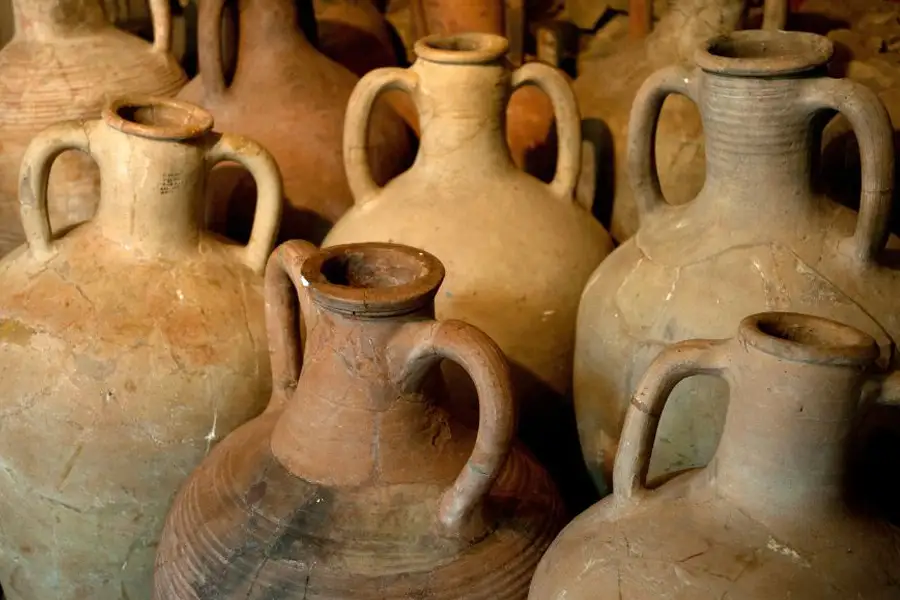
Ancient Greek winemakers stored wine in clay amphorae, vessels that offered both protection and vulnerability. Unlike modern stainless steel tanks, amphorae interacted with their surroundings. Tiny exchanges of air occurred through the porous clay, influencing the wine’s development over time.
Managing oxygen was not just important; it was essential.
To help seal these vessels, producers often used pine resin. What began as a practical solution to prevent spoilage gradually became a defining sensory characteristic. Resin protected the wine, but it also left behind aromas and flavors that became part of the drink itself.
This is the origin story of retsina (/ρετσίνα).
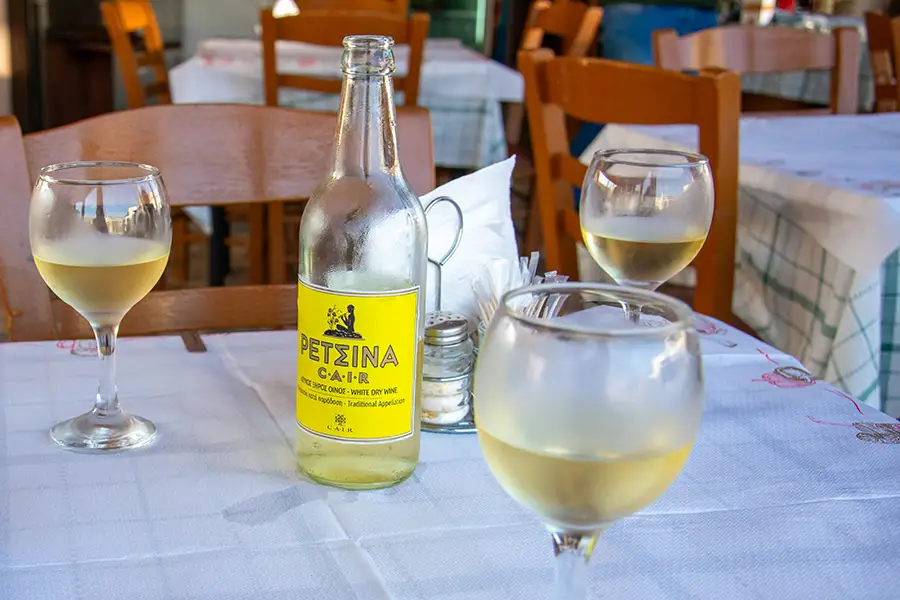
For modern drinkers unfamiliar with it, retsina can seem unusual, even challenging. Yet viewed through a historical lens, it represents something remarkable: a preservation technique that evolved into a cultural signature.
The flavor was not invented for novelty.
It emerged from necessity.
And like so many elements of Greek cuisine, what began as practicality eventually became identity.
Oxygala, avyrtake, and cultured dairy: before yogurt had a brand
Fresh milk is one of the most fragile foods humans consume.
In warm climates, its lifespan is measured in hours rather than days. For ancient pastoral communities, this posed a challenge that fermentation answered elegantly.
As naturally occurring bacteria transformed lactose into lactic acid, milk thickened, soured, and stabilized. What could have been wasted became something entirely new.
Ancient sources refer to oxygala (/ὀξύγαλα), literally something like “acid milk,” and avyrtake (/αβυρτάκη), a cultured dairy product whose exact form remains debated but is generally understood as a type of sour milk or yogurt-like preparation.
Whatever its precise texture, its importance is clear.
Fermentation allowed shepherding communities to preserve nutrition, extend food supplies, and create products with entirely new sensory qualities. Acidity became an ally. Sourness became structure.
Today, yogurt is often marketed as a wellness food or probiotic trend. In antiquity, it was something far simpler and far more important.
It was a way of ensuring that nourishment survived the day.
Its tang was not fashionable.
It was functional.
And yet, in one of history’s recurring ironies, necessity produced something genuinely delicious.
Salt, sea, and savory power: the story of Garos
If olives represent patience and wine represents transformation, fish sauce represents concentration.
Ancient Mediterranean societies developed sophisticated methods for preserving fish through salt and controlled decomposition. Among these products was garos, a fermented fish sauce that would later influence the more widely known Roman garum.
The process sounds startling to modern ears.
Fish, salt, sunlight, and time.
Yet what emerged was one of the most prized condiments of the ancient world. Before soy sauce, the rise of Garos (/γάρος).
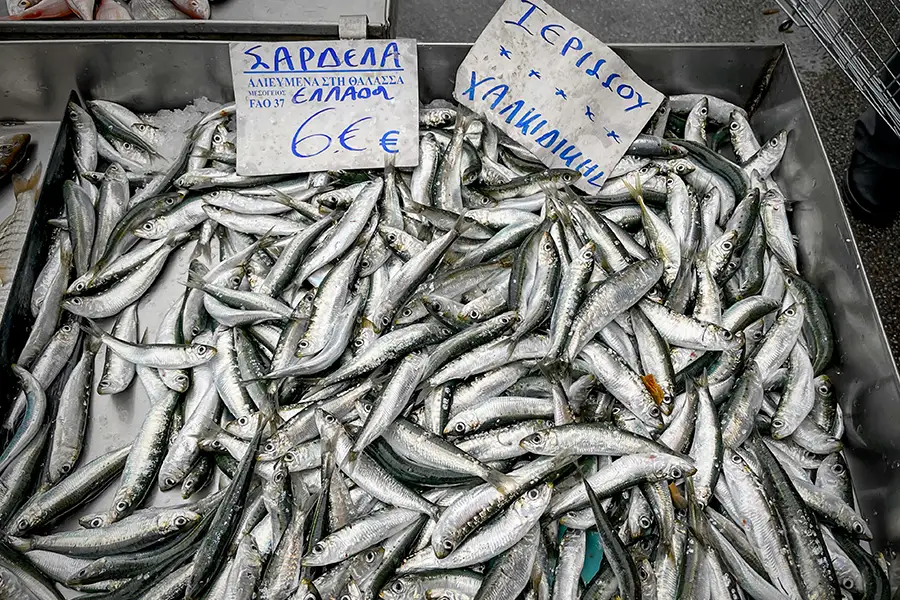
As proteins broke down, they released compounds rich in savory flavor, producing an intensely aromatic liquid capable of transforming dishes with only a few drops. Modern food science would describe this as umami. Ancient cooks simply recognized that it made food taste deeper, richer, and more complete.
Far from being a crude preservation method, fish sauce represented culinary sophistication.
It extracted maximum value from a highly perishable resource while creating a flavor profile impossible to achieve through fresh ingredients alone.
In many ways, it was the Mediterranean ancestor of soy sauce, anchovy essence, and countless other fermented condiments that continue to shape cuisines around the world.
More than preservation: fermentation as a way of life
Looking across olives, wine, dairy, and fish, a larger pattern begins to emerge.
Fermentation was never just a collection of kitchen tricks.
It was a worldview.
It required attentiveness without interference. Knowledge without complete control. A willingness to trust that transformation would occur if the conditions were right.
In this sense, fermentation reflects something broader about traditional Greek food culture. The goal was not to dominate nature but to collaborate with it.
Food was allowed to move through stages. To become.
The modern world often values speed, immediacy, and consistency. Fermentation values timing, adaptation, and change.
Its lessons extend beyond the kitchen.
It teaches that some things improve not because we act upon them constantly, but because we learn when to step back.
Ethical and practical note: ancient solutions to modern food waste
One of the most striking aspects of traditional fermentation is how little it wastes.
Excess grapes become stable wine.
Bitter olives become edible.
Milk on the verge of spoilage becomes cultured dairy.
Small fish become concentrated flavor.
Nothing is discarded simply because it is inconvenient.
Fermentation transforms vulnerability into value.
Today, sustainability is often framed as innovation. Yet many of the principles we celebrate as modern solutions have existed for centuries within traditional food systems.
Fermentation is resourcefulness disguised as flavor.
It is sustainability disguised as pleasure.
And perhaps that is why these foods endure. They satisfy both practical needs and human desires simultaneously.
Bringing ancient techniques to the modern kitchen
The good news is that you do not need an archaeological dig site, an amphora, or a degree in microbiology to explore fermentation at home.
The easiest place to start is with yogurt. Observe how cultures transform milk through time and temperature. Notice how flavor develops through waiting rather than intervention.
Explore olives. Taste different regional styles and pay attention to how brine influences texture, acidity, and complexity.
Experiment with simple vegetable ferments using salt and water. Cucumbers, carrots, cabbage, and peppers all reveal the same fundamental principle: under the right conditions, microorganisms become collaborators.
Most importantly, approach fermentation with curiosity rather than anxiety.
The ancient Greeks were not following laboratory protocols.
They were paying attention.
The real lesson of fermentation is not precision.
It is an observation.
The takeaway: what ancient Greece understood about transformation
At its core, Greek fermentation is not about food preservation.
It is about temporal design.
Olives are not just stored in brine; they are held in a slow recalibration of bitterness into clarity. Wine is not simply aged; it is time sealed inside clay, unfolding at a controlled pace. Fish is not merely preserved; it is condensed history, intensity extracted from perishable life. Dairy is not stabilized; it is transformed into endurance with taste.
Across all of it, something becomes clear: the Aegean kitchen never treated time as an enemy.
It treated it as an ingredient.
Fermentation is the moment when time stops being background and becomes active material, salted, sealed, and allowed to work. It is where waiting is not the absence of action, but its most precise form.
And this is the quiet logic that runs beneath Greek food culture, from ancient amphorae to modern tables still set with olives, cheese, wine, and brined vegetables.
Greece did not just learn to preserve food.
It learned to store time and season with it.
*Featured Image: Olympos, Karpathos, Greece [Source: Unsplash]