Homemade yoghurt with live cultures

Homemade yoghurt is a simple dairy ferment made with milk and live cultures. By heating the milk, cooling it to the right temperature, and keeping it warm while the cultures work, you can create a creamy, tangy yoghurt at home with only a few ingredients.

Share this article:

A simple cultured dairy recipe using milk and an active starter.

Homemade yoghurt is one of the most approachable dairy ferments. It needs only milk, live cultures, warmth, and time. The cultures ferment lactose in the milk, producing lactic acid, which gives yoghurt its characteristic tang and helps the milk set into a thicker texture. Traditional yoghurt cultures are usually based on bacteria such as Streptococcus thermophilus and Lactobacillus delbrueckii subsp. bulgaricus.

Use live yoghurt cultures

You have two good options.

The easiest is to use plain yoghurt with live active cultures. Choose an unsweetened yoghurt that clearly says it contains live cultures. Avoid flavoured yoghurt, sweetened yoghurt, or products with lots of stabilisers.

The second option is to buy a freeze-dried yoghurt starter culture. This is more consistent and useful if you want repeatable results.

Yoghurt
Ingredients:

Makes about 1 litre:

  • 1 litre whole milk
  • 30g live plain yoghurt or yoghurt starter culture according to packet instructions
  • Optional: 30g milk powder for a thicker texture

Use whole milk for a creamier yoghurt. Semi-skimmed milk also works, but the result will usually be thinner.


Equipment

  • Saucepan
  • Thermometer
  • Clean jar or jars
  • Whisk or spoon
  • Yoghurt maker, warm oven, insulated box, or thermal bag

Clean equipment matters. You are creating conditions for specific cultures to grow, so keep jars and utensils clean before starting.

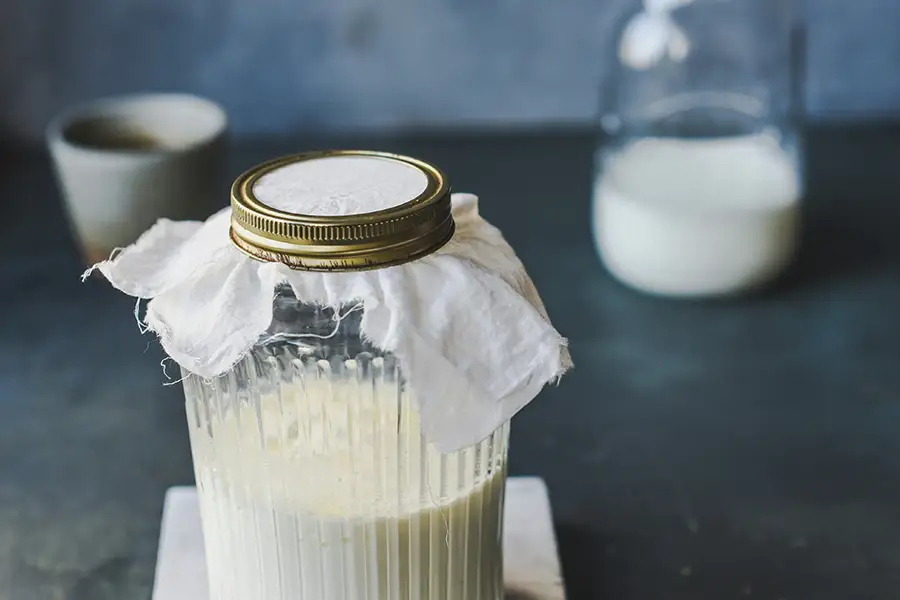
Homemade yoghurt with live cultures
Directions:

1. Pour the milk into a saucepan and heat gently to 85–90°C, stirring often so it does not catch at the bottom. Hold it at this temperature for around 5–10 minutes if possible. This step helps create a thicker, smoother yoghurt by changing the milk proteins. It also reduces the number of competing microorganisms in the milk.

2. Remove the pan from the heat and allow the milk to cool to 42–43°C.

This is important. If the milk is too hot, it may damage the starter culture. If it is too cool, fermentation may be slower or less reliable.

3. In a small bowl, mix the live yoghurt or starter culture with a few spoonfuls of the warm milk until smooth. Pour this mixture back into the rest of the milk and stir gently. Do not whisk aggressively. You want the culture evenly distributed without creating too much foam.

4. Pour the cultured milk into clean jars. Keep it warm at around 40–43°C for 6–8 hours. The longer it ferments, the tangier it becomes. For a milder yoghurt, check after 6 hours. For a sharper yoghurt, leave it closer to 8–10 hours.

Try not to move or shake the jars while the yoghurt is setting.

5. Once set, transfer the yoghurt to the fridge. Chill for at least 4 hours before eating. The texture firms further as it cools.


Optional: Make Greek-Style Strained Yoghurt

To make thicker Greek-style yoghurt, place the finished yoghurt into a cheesecloth-lined sieve and strain in the fridge for 2–4 hours. The longer you strain it, the thicker it becomes.

The liquid that drains away is whey. You can use it in bread, pancakes, smoothies, or as a starter for some vegetable ferments.

More ferments...

Crisp lacto-fermented carrots with fresh ginger

Crisp lacto-fermented carrot sticks with fresh ginger, made in a...

Traditional Korean baechu-kimchi with gochugaru

Traditional baechu kimchi made with napa cabbage, Korean radish, spring...

Garlic pickle with fenugreek & black gram

A slow-soaked garlic pickle with fenugreek, black gram, and tangy...

Tangy fermented red onion slices

These fermented red onions are crisp, vivid and gently tangy,...

Tomato, pepper & basil fermented salsa

A bright July salsa ferment made with ripe tomatoes, sweet...

Lightly fermented peaches with thyme and lemon

A light summer fruit ferment made with ripe peaches, thyme,...

Explore more from Brine & Bloom

Fermentation supports what grows before it ever reaches the kitchen

Fermentation revolutionizes agriculture by providing eco-friendly solutions like biofertilizers, biopesticides,...

Gut-health hype meets whole fermented foods

Whole fermented foods differ from processed probiotics, crucial for gut...

African fermented grains and beyond

African fermented grains like millet and sorghum deliver probiotic nutrition...

8 kid-friendly fermentations to make this summer

Engage kids this summer with eight fun and safe DIY...

Leave a Reply

Your email address will not be published. Required fields are marked *