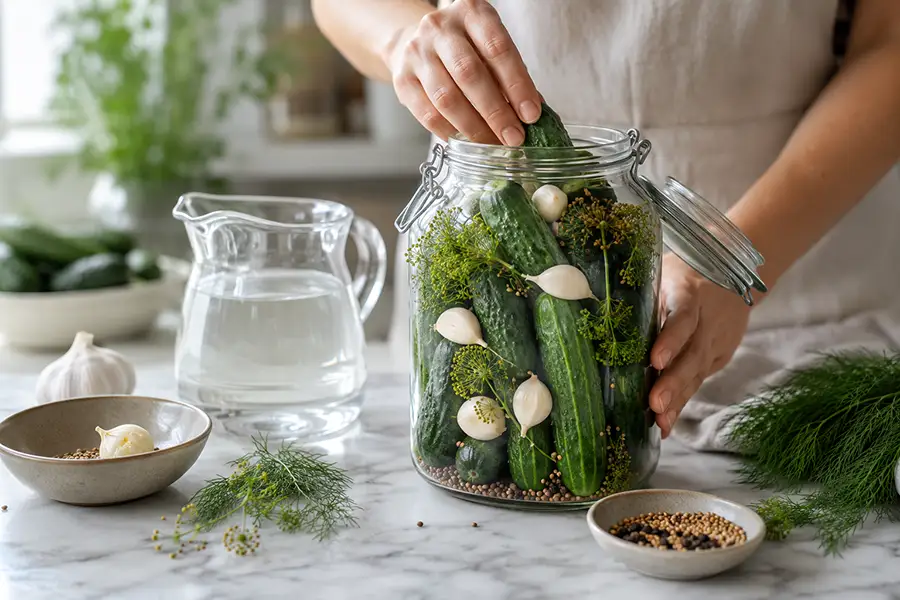
Few summer ferments feel as classic as cucumbers in dill brine. Crisp cucumbers, garlic, dill seed, and salt water come together in a simple jar that slowly becomes tangy, aromatic, and deeply refreshing.
This is a good July recipe because cucumbers are at their best in high summer. They are firm, juicy, and naturally suited to brining. The salt water creates the right environment for lactic acid bacteria naturally present on the vegetables and in the surrounding environment to become active, changing the flavour, texture, and keeping quality of the cucumbers.
For this recipe, a 3–5% brine is used. A 3% brine gives a balanced, pleasantly salty ferment, while 5% creates a firmer, saltier cucumber that may suit warmer kitchens or longer fermentation. In very hot weather, start with smaller jars, taste daily, and move the cucumbers to the fridge once they are tangy enough for you.
Why you’ll love this one
Dill fermented cucumbers are crisp, bright, and full of savoury summer flavour. Garlic adds warmth, dill seed brings a familiar pickle-like aroma, and the brine gives the cucumbers their gentle tang.
They are excellent served with sandwiches, potato dishes, rice bowls, eggs, grilled vegetables, or cheese. They also make a simple snack straight from the fridge.
FAQs
Why use a 3–5% brine for fermented cucumbers?
Cucumbers contain a lot of water and can soften quickly, especially in warm weather. A 3% brine gives a balanced flavour, while 4–5% can help keep cucumbers firmer and saltier during fermentation.
Do I need to burp the jar?
If you are using a normal lid, close it loosely or open it briefly once a day to release pressure. If you are using an airlock fermentation lid, follow the lid instructions. The cucumbers must remain submerged at all times.
Why did my fermented cucumbers become soft?
Soft cucumbers can happen when the cucumbers are overripe, the kitchen is too warm, the ferment is left too long, or the blossom end was not trimmed. Use very fresh cucumbers, trim the blossom end, ferment for a shorter time, and refrigerate once tangy.
Dill fermented cucumbers with garlic, and dill seed
Ingredients:
For 1 litre jar:
- 500–600 g small cucumbers or pickling cucumbers
- 2 garlic cloves, peeled and lightly crushed
- 1 tsp dill seeds, or 2 fresh dill flower heads
- 1 tsp mustard seeds, optional
- ½ tsp black peppercorns, optional
- 500 ml water
- 15–25 g fine sea salt or pickling salt
Brine Ratio
- For 500 ml water:
- 3% brine: 15 g salt
- 4% brine: 20 g salt
- 5% brine: 25 g salt
A 3% brine is usually enough for a balanced cucumber ferment. Use the higher end if your kitchen is very warm, your cucumbers are large, or you prefer a firmer, saltier result.
Directions:
- Wash the cucumbers well under cool running water. Trim a thin slice from the blossom end of each cucumber, as this can help reduce softening.
- Place the garlic, dill seed, mustard seeds, and peppercorns in the bottom of a clean 1 litre jar.
- Pack the cucumbers tightly into the jar, leaving about 2–3 cm of space at the top. The cucumbers should fit snugly but not be crushed.
- Dissolve the salt fully in the water to make the brine. Pour the brine over the cucumbers until they are completely covered.
- Use a fermentation weight, small clean glass weight, or suitable food-safe weight to keep the cucumbers below the brine.
- Close the jar loosely, or use a fermentation lid if you have one. Place the jar on a small plate in case liquid bubbles over during active fermentation.
- Ferment at room temperature, ideally around 18–22°C, for 3–7 days. In a warm July kitchen, they may be ready sooner. Taste daily after the third day.
- When the cucumbers are tangy, aromatic, and still pleasantly crisp, transfer the jar to the fridge.
What to Expect
During fermentation, the brine may become cloudy and small bubbles may appear. The cucumbers will slowly change from bright green to a more olive-green colour. The flavour should become tangy, salty, garlicky, and dill-scented.
A little cloudiness is normal in fermented cucumber brine. Mould, unpleasant odours, sliminess, or mushy cucumbers are not. When in doubt, discard the ferment.
Notes:
Fermentation Time
3–7 days at room temperature.
Warm kitchens may need only 2–4 days. Cooler kitchens may need longer.
Storage
Store in the fridge once the cucumbers are tangy enough. Best eaten within 1–2 months for good texture.
Always use a clean fork or tongs to remove cucumbers from the jar.
Serving Ideas
Slice and serve with sandwiches, burgers, roasted potatoes, rice bowls, salads, or cheese boards.
Finely chop and fold into yoghurt, sour cream, or mayonnaise-style sauces for a quick pickle dressing.
Use the brine sparingly in salad dressings, potato salads, or marinades where a salty, tangy note is welcome.