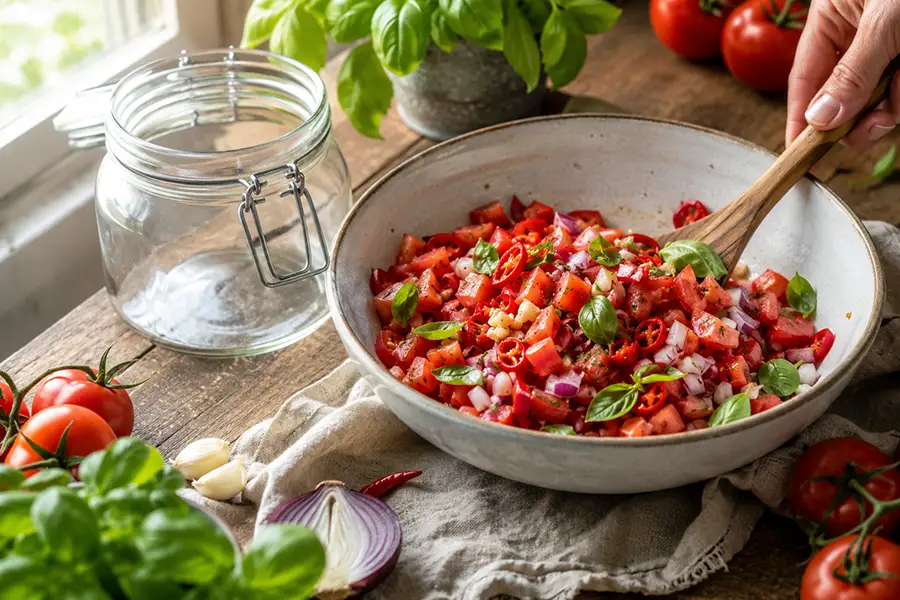
This sweet pepper relish is a soft, colourful ferment made with red peppers, onion, and a little carrot. It is gently savoury, lightly tangy, and naturally sweet from the vegetables rather than heavy with sugar.
Red peppers bring fruitiness, onion adds depth, and carrot helps round the flavour while giving the relish a little body. After a short fermentation, the mixture can be left chunky or pulsed briefly into a spoonable relish.
This is a useful summer ferment for adding brightness to everyday meals. It works especially well with eggs, potatoes, sandwiches, grilled vegetables, beans, rice, and cheese.
Why you’ll love this ferment
Sweet pepper relish is milder than chilli sauce but more flavourful than plain pickled peppers. It has colour, softness, and a gentle acidity that makes it easy to use across many dishes.
It is also a good recipe for using peppers that are ripe and sweet but not quite perfect-looking. As long as they are fresh and free from spoilage, they can become a beautiful jar of relish.
FAQs
Can I use yellow or orange peppers instead of red peppers?
Yes. Yellow and orange peppers also work well and give a sweeter, softer flavour. Green peppers can be used, but they taste sharper and less sweet.
What if my vegetables do not release enough liquid?
Add a small amount of 2% brine, using 2 g salt per 100 ml water. Add only enough to cover the vegetables, then keep everything weighted below the liquid.
Can I blend the relish?
Yes. You can leave it chunky or pulse it briefly after fermentation. Do not blend it too long unless you want a smoother sauce rather than a relish.
Sweet Pepper Relish
Ingredients:
For 1 medium jar:
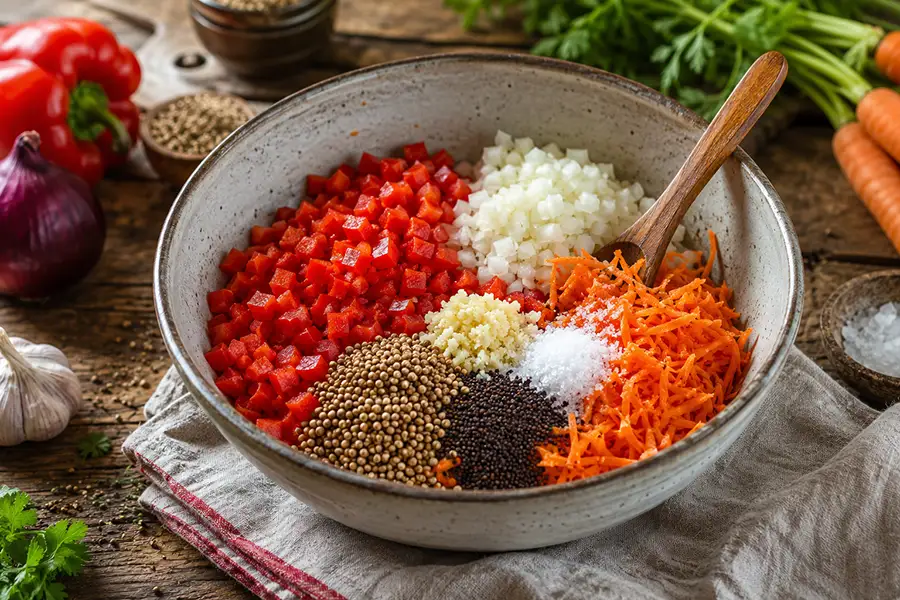
- 400 g red peppers, finely diced
- 100 g onion, finely diced
- 80 g carrot, grated or finely diced
- 2 garlic cloves, finely chopped
- 12 g fine sea salt or pickling salt
- ½ tsp coriander seeds, lightly crushed, optional
- ½ tsp mustard seeds, optional
- Pinch of chilli flakes, optional
After fermentation:
- 1 tbsp apple cider vinegar or lemon juice, optional
- 1 tsp honey or sugar, optional
Salt Ratio
This recipe uses approximately 2% salt by vegetable weight.
The vegetables weigh about 580 g, so 12 g salt gives a balanced short relish ferment.
Directions:
- Wash the peppers and carrot. Peel the onion and garlic.
- Finely dice the red peppers and onion. Grate or finely dice the carrot.
- Place the vegetables in a clean bowl. Add the salt, coriander seeds, mustard seeds, and chilli flakes if using.
- Mix well, then massage gently for 2–3 minutes to help the vegetables release liquid.
- Let the mixture sit for 15–20 minutes.
- Spoon the relish mixture into a clean jar, pressing down firmly so the liquid rises above the vegetables.
- If there is not enough liquid to cover the vegetables, add a small amount of 2% brine: dissolve 2 g salt in 100 ml water and add just enough to cover.
- Use a fermentation weight or suitable clean food-safe weight to keep the vegetables below the liquid.
- Close the jar loosely, or use a fermentation lid. Place the jar on a small plate.
- Ferment at room temperature for 2–4 days. Taste daily after the second day.
- When the relish tastes lightly tangy and savoury, transfer it to the fridge.
- For a smoother relish, pulse briefly in a food processor after fermentation. Stir in vinegar or lemon juice if you want a brighter finish.
What to Expect
The relish may release more liquid as it ferments. You may see small bubbles, and the flavour should become gently sour and savoury.
The peppers will soften but should not smell unpleasant or become slimy. Discard the ferment if you see mould, unpleasant odours, or signs of spoilage.
Fermentation Time
2–4 days at room temperature.
In hot weather, check after 48 hours.
Notes:
Storage
Store in the fridge and use within 2–3 weeks.
Use a clean spoon each time.
Serving Ideas
Spoon over eggs, roasted potatoes, burgers, sausages, grilled vegetables, rice bowls, beans, or lentils.
Use as a sandwich relish with cheese or roasted vegetables.
Mix into yoghurt, sour cream, or mayonnaise-style sauces for a quick dip.
Serve with fritters, flatbreads, or mezze-style plates.