This quick courgette pickle-ferment is made for everyday summer meals. It is lightly tangy, gently salty, and ready after a short room-temperature ferment. Think of it as a fast, fridge-friendly jar for adding brightness to grain bowls, mezze-style plates, sandwiches, wraps, and simple lunches.
Courgettes ferment quickly because they are tender and full of moisture. That makes them convenient, but also a little delicate. A short ferment helps preserve their freshness before the texture becomes too soft.
This recipe uses courgette half-moons or batons, garlic, herbs, and a simple 3% brine. It is flexible enough to adjust with dill, mint, parsley, coriander seed, mustard seed, or chilli flakes.
Why you’ll love this ferment
This is a practical small-batch ferment. It does not require long waiting, complicated seasoning, or large quantities of vegetables.
The finished courgettes are useful in many dishes: spoon them over rice, lentils, chickpeas, potatoes, roasted vegetables, hummus, yoghurt sauces, eggs, or flatbreads.
They bring the tang of a pickle, but with the softer, fresher character of a short ferment.
FAQs
Is this more like a pickle or a ferment?
It sits between the two in flavour, but it is made by fermentation rather than vinegar pickling. The courgettes sit in salt brine for a short time, developing a gentle tang before being moved to the fridge.
Can I add vinegar?
You do not need vinegar for the fermentation itself. If you want a sharper flavour, add a little vinegar or lemon juice after fermentation, just before serving.
Why is this a short ferment?
Courgettes are tender and can become soft if left too long. A short 24–72 hour ferment gives flavour while keeping the texture more pleasant.
Quick Courgette Pickle-Ferment
Ingredients:
For 1 medium jar:
- 500 g firm courgettes
- 1–2 garlic cloves, thinly sliced
- 1 tsp mustard seeds
- ½ tsp coriander seeds, optional
- 1 small sprig fresh dill, mint, or parsley
- Pinch of chilli flakes, optional
- 500 ml water
- 15 g fine sea salt or pickling salt
Brine Ratio
This recipe uses a 3% brine:
Directions:
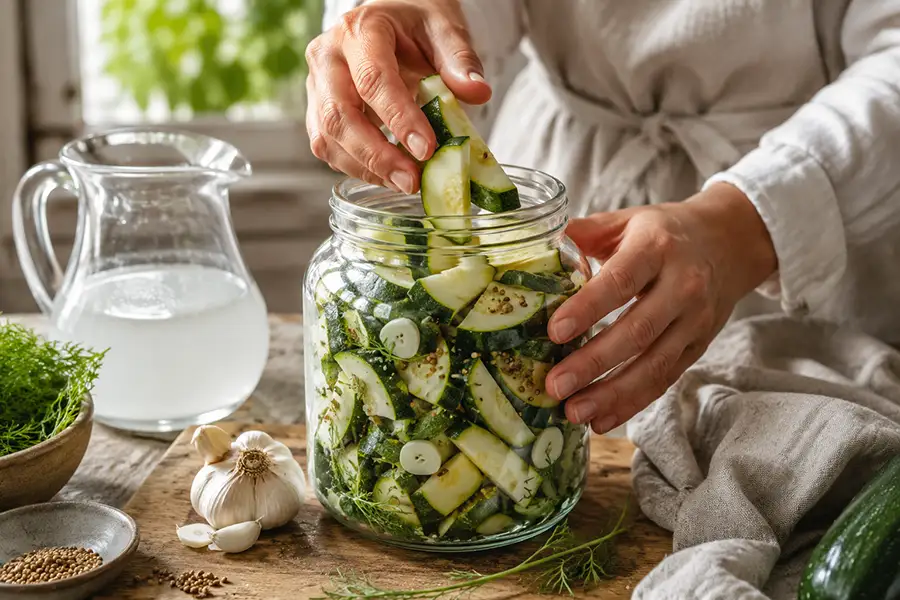
- Wash the courgettes well and trim the ends.
- Cut into thick half-moons, batons, or chunky slices. Avoid very thin slices, as they can soften too quickly.
- Place the garlic, mustard seeds, coriander seeds, herbs, and chilli flakes in a clean jar.
- Add the courgettes, packing them gently but firmly.
- Dissolve the salt fully in the water to make the brine.
- Pour the brine over the courgettes until they are fully covered.
- Use a fermentation weight or suitable clean food-safe weight to keep the courgettes below the brine.
- Close the jar loosely, or use a fermentation lid. Place the jar on a small plate.
- Ferment at room temperature for 24–72 hours. In warm weather, taste after 24 hours.
- When the courgettes are lightly tangy and still pleasant in texture, transfer the jar to the fridge.
What to Expect
The brine may become lightly cloudy and the courgettes may soften. The flavour should become salty, gently sour, and aromatic.
This ferment is best when it still tastes fresh. Do not wait for a very sour result, as the courgettes may lose their texture before the flavour deepens.
Discard the ferment if you see mould, sliminess, unpleasant odours, or anything that looks spoiled.
Fermentation Time
24–72 hours at room temperature.
Shorter is usually better for texture.
Notes:
Storage
Store in the fridge and use within 1–2 weeks.
Use clean utensils and keep the courgettes covered by brine.
Serving Ideas
Add to grain bowls with rice, bulgur, barley, lentils, chickpeas, or beans.
Serve on mezze plates with hummus, yoghurt sauce, olives, flatbread, and roasted vegetables.
Use in wraps, sandwiches, or cheese toasties.
Chop and stir into potato salad, chickpea salad, or herby yoghurt dressing.