Fermented coconut milk yoghurt

Coconut milk can be fermented into a creamy, tangy yoghurt-style dairy-free ferment using live cultures, gentle warmth, and a little sugar to support microbial activity. Because coconut milk behaves differently from dairy milk, a small amount of thickener helps create a smooth, spoonable texture.

Share this article:


For a dairy-free cultured yoghurt you can ferment coconut milk. Use a vegan yoghurt starter if you want the recipe to remain fully dairy-free. Some yoghurt starters are grown on dairy, so check the label. Alternative starter options are 60g plain live coconut yoghurt or 2 probiotic capsules containing live Lactobacillus and/or Bifidobacterium cultures.

Some important safety notes here:

Use clean jars and utensils.

Do not ferment coconut milk at room temperature like sauerkraut. Coconut yoghurt-style ferments should be incubated warm with an active starter, then chilled.

The target for safe acidification in many fermented foods is generally below pH 4.6, and a coconut yoghurt guide from the University of Guam notes that coconut milk yoghurt fermentation lowers the pH below 4.6 as cultures produce acids.

Discard the batch if it develops mould, smells unpleasant, becomes oddly slimy, or tastes spoiled rather than pleasantly tangy.

You will need:

  • Saucepan
  • Whisk
  • Thermometer
  • Clean glass jar or jars
  • Yoghurt maker, warm oven, or insulated box
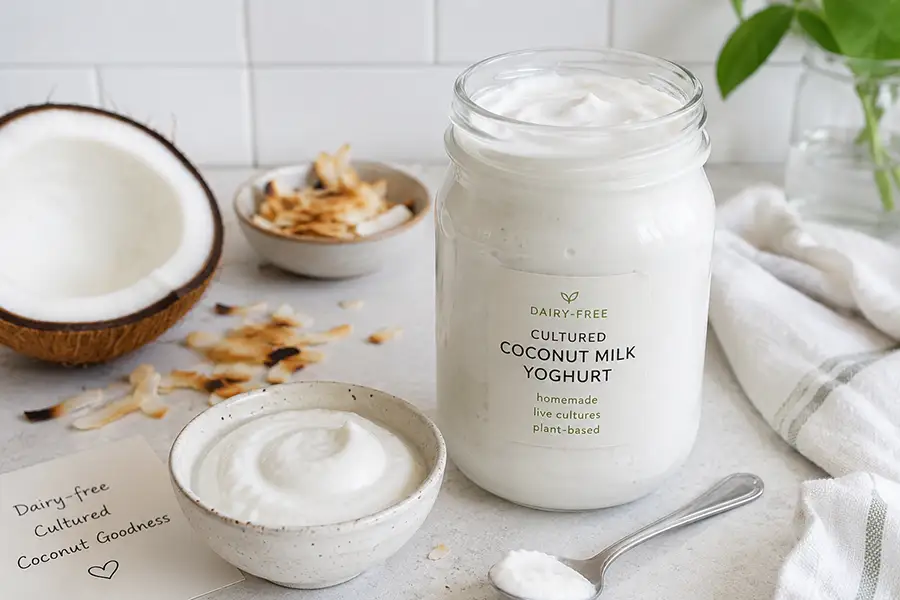
Coconut milk yoghurt
Ingredients:

Makes about 750–850g

  • 800ml full-fat coconut milk, preferably canned and unsweetened
  • 25g sugar
  • 12g tapioca starch or cornflour
  • 1–2g agar agar powder, optional for a firmer set
  • 1 sachet vegan yoghurt starter culture, according to packet instructions


Alternative starter options:

  • 60g plain live coconut yoghurt
  • 2 probiotic capsules containing live Lactobacillus and/or Bifidobacterium cultures

Use a vegan yoghurt starter if you want the recipe to remain fully dairy-free. Some yoghurt starters are grown on dairy, so check the label.

Fermented Coconut Milk Yoghurt
Directions:

1. Shake the coconut milk well before opening. Pour it into a saucepan and whisk in the sugar and tapioca starch or cornflour. If using agar agar, add it at this stage. Place over medium heat and warm gently, whisking often. Bring the mixture to 82–85°C and hold it there for around 2–3 minutes. This helps hydrate the thickener and reduces unwanted microbial competition before the culture is added.

2. Remove the pan from the heat. Allow the mixture to cool to 40–43°C. This temperature range is warm enough for many yoghurt cultures but not so hot that it damages them. If the coconut mixture is too hot, the starter may fail.

3. Add your starter culture, live coconut yoghurt, or probiotic capsule contents. Whisk gently but thoroughly until fully combined. Do not add the culture while the mixture is above 45°C.

4. Pour the cultured coconut milk into clean jars. Keep warm at around 38–43°C for 8–12 hours. A yoghurt maker is ideal, but a warm oven with the light on or an insulated container can also work. The longer it ferments, the tangier it becomes. Start checking after 8 hours.

5. Once the flavour is pleasantly tangy, transfer the jars to the fridge. Chill for at least 6 hours, preferably overnight. The yoghurt will thicken further as it cools.

Notes:

The finished coconut yoghurt should be:

  • creamy
  • lightly tangy
  • mildly coconut-flavoured
  • spoonable
  • thicker after chilling

It may separate slightly. If that happens, stir it gently before serving.

Add flavourings only after fermentation and chilling.

Good options include:

  • vanilla
  • honey or maple syrup
  • berry compote
  • mango purée
  • cinnamon
  • toasted coconut
  • fermented strawberry syrup
  • lemon zest

Avoid adding fruit before fermentation unless following a tested recipe, as fruit can introduce extra microorganisms and change the fermentation behaviour.

More ferments...

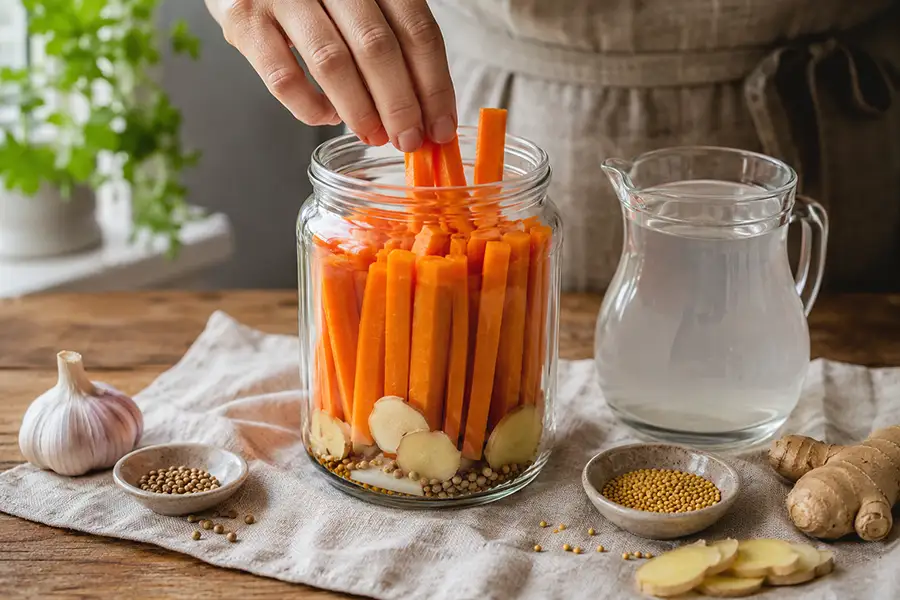
Crisp lacto-fermented carrots with fresh ginger

Crisp lacto-fermented carrot sticks with fresh ginger, made in a...

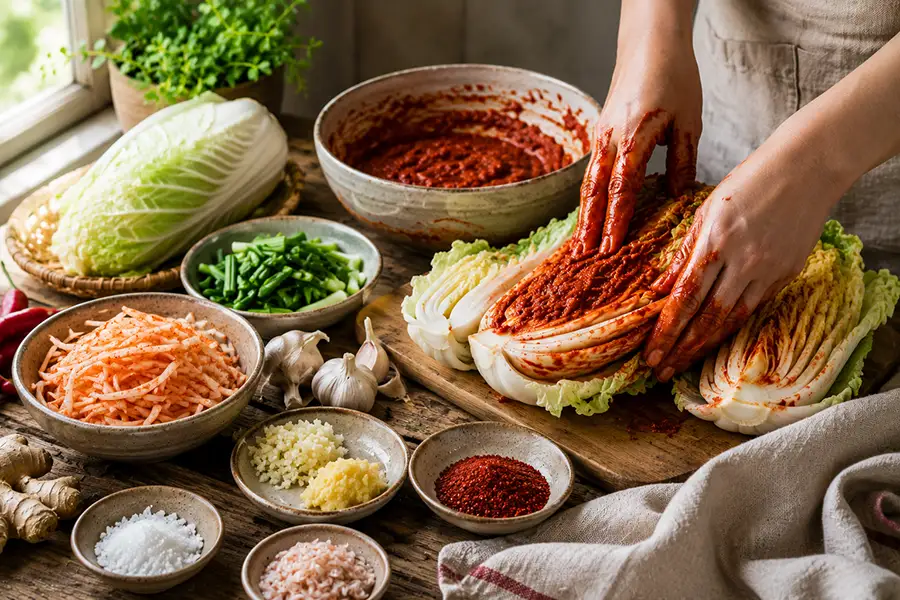
Traditional Korean baechu-kimchi with gochugaru

Traditional baechu kimchi made with napa cabbage, Korean radish, spring...

Garlic pickle with fenugreek & black gram

A slow-soaked garlic pickle with fenugreek, black gram, and tangy...

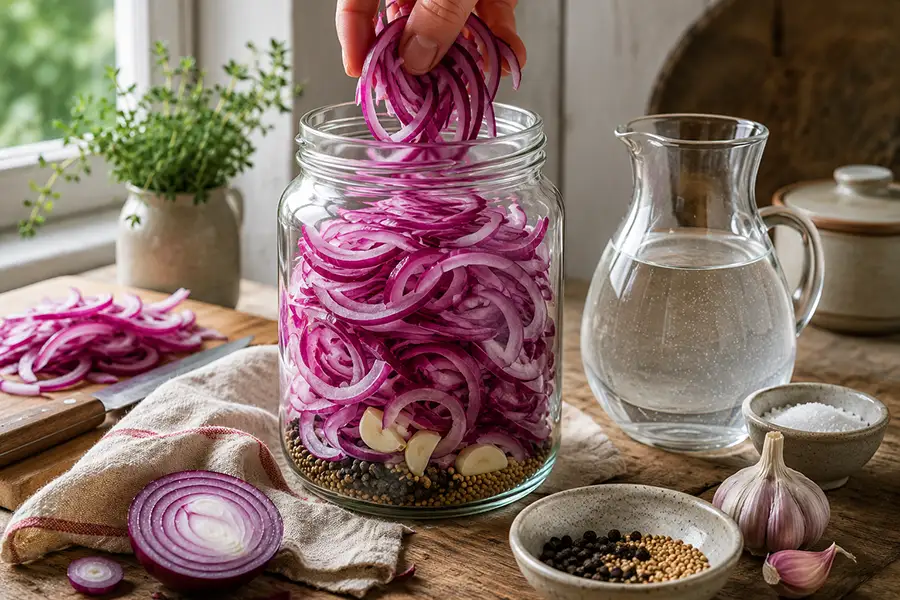
Tangy fermented red onion slices

These fermented red onions are crisp, vivid and gently tangy,...

Tomato, pepper & basil fermented salsa

A bright July salsa ferment made with ripe tomatoes, sweet...

Lightly fermented peaches with thyme and lemon

A light summer fruit ferment made with ripe peaches, thyme,...

Explore more from Brine & Bloom

Fermentation supports what grows before it ever reaches the kitchen

Fermentation revolutionizes agriculture by providing eco-friendly solutions like biofertilizers, biopesticides,...

Gut-health hype meets whole fermented foods

Whole fermented foods differ from processed probiotics, crucial for gut...

African fermented grains and beyond

African fermented grains like millet and sorghum deliver probiotic nutrition...

8 kid-friendly fermentations to make this summer

Engage kids this summer with eight fun and safe DIY...