

At Brine & Bloom, we often talk about fermentation as a craft. Something that happens in a jar on your kitchen counter, with patience, observation, and a bit of luck. But fermentation is also science, and right now it is becoming a matter of European policy too. A new project, Proscale, shows that the same biological process that makes our pickles can play a role in how Europe feeds itself in the decades ahead.
What Proscale is
Proscale is a four-year research project starting in September 2026 and running through August 2030, with a total budget of €8.5 million. Most of that funding, roughly €6.9 million, comes from the Circular Bio-based Europe Joint Undertaking (CBE JU), a multi-billion euro partnership between the EU and the bio-based industries. The project is coordinated by Finland’s VTT Technical Research Centre, with 15 additional partners spanning research institutions, food companies, and biotech firms across Europe.
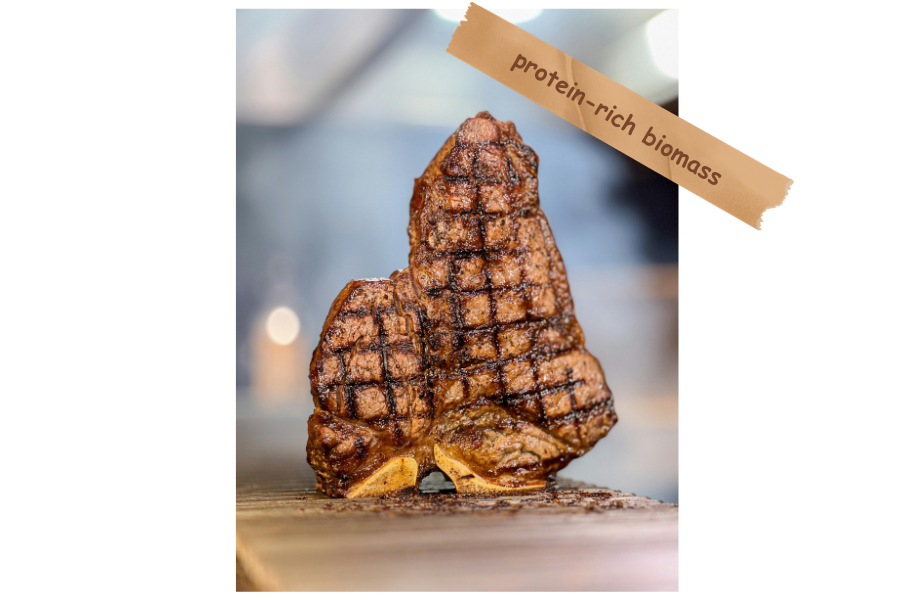
The core of the project sounds almost like a recipe from a rural pantry, just at industrial scale. Fungi, yeast, and bacteria are cultivated through continuous fermentation on sidestreams from potato, wheat, and vegetable processing, as well as residues from baking and pasta manufacture. The microorganisms convert these cheap, often discarded materials into protein-rich biomass, targeting ingredients with more than 50% protein on a dry matter basis. The end result is intended for meat and dairy alternatives, sports nutrition, functional foods, and even everyday staples like bread and pasta.
The project has already received a symbolic mark of recognition too: the STEP Seal from the European Commission, a rare honor for biotech projects that recognizes high-quality innovation aligned with the EU’s economic and climate goals.
Why “Scale” and not “Discovery”
The name Proscale isn’t accidental. Single-cell protein isn’t a new idea, fermentation for protein production has been studied for decades. What’s at stake here is scaling: how a process that works at lab level can become economically and environmentally viable at industrial scale. The project’s goals are specific and measurable: boosting resource efficiency by 40% to 60% by leveraging underutilized sidestreams, improving climate neutrality by 20% across processes, and enhancing circularity by 2% to 7% through reuse of co-products, including for pet food. At the same time, the project is targeting a tenfold increase in fermenter capacity, a number that shows just how far the distance still is between the lab bench and mass production.
It’s worth noting that Proscale doesn’t operate in a vacuum. It’s part of a broader European strategy around alternative protein: the EU had already announced a €50 million investment to help startups scale up alternative protein production through methods like precision fermentation. According to an analysis by ProVeg International, global investment in fermentation-based protein exceeded €5 billion between 2015 and 2024, with over €1 billion in Europe alone, and the market is projected to reach tens of billions of euros in value by 2050.
Our own perspective, from the jar to the bioreactor
What Proscale represents is bigger than any one project. It’s a signal that humanity is finally taking fermentation seriously as infrastructure, not just tradition. For centuries, this same microbial process fed families through winters and preserved harvests against scarcity. Now it’s being asked to help feed a planet of ten billion people without exhausting the soil, the water, or the climate that sustains us. That’s not a small ambition. It’s one of the great engineering challenges of our time, and it happens to run on the same principle we practice with a jar and some salt.
The same logic that turns cabbage into sauerkraut- microorganisms transforming something simple into something more valuable- is what Proscale is scaling up to industrial capacity. Fermentation is quietly becoming one of the most important tools we have for building a food future that works with natural cycles instead of against them. Every jar on a counter and every bioreactor in a lab is part of the same story: humanity learning, again, how to make more from less, and how to do it well.
Sources: World Bio Market Insights, Circular Bio-based Europe Joint Undertaking (CBE JU)