

As a home cook or chef, the importance of understanding when a ferment is no longer safe to consume cannot be understated. While fermented foods like kimchi, kombucha, and sauerkraut can last for weeks or even months thanks to the protective barrier of lactic acid bacteria, there are key signs that indicate when it’s time to discard them.
Recognizing these telltale signs not only supports your culinary endeavors but also ensures you maintain food safety standards in your kitchen. In this article, we’ll delve into the main indicators; visible mould, unpleasant smell, slimy texture, and the general uncertainty about a ferment’s safety, that point towards when it may be best to throw away your fermented creation.
Visible mould
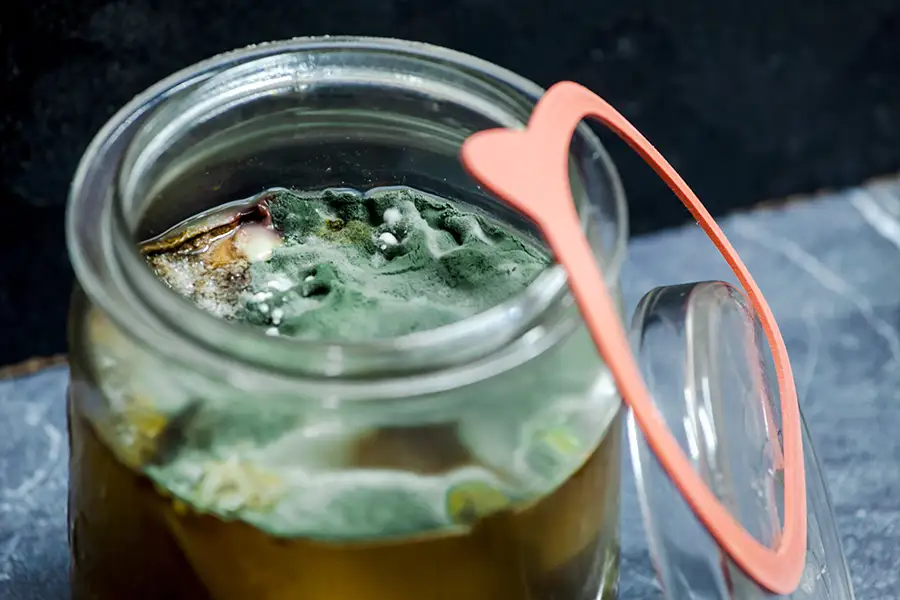
One of the most glaring indicators that a ferment has gone bad is the presence of visible mould. Mould can appear as fuzzy white, green, black, or even pink growths on the surface of your ferments. This occurs when harmful bacteria or fungi compete with the good bacteria and succeed, often as a result of air exposure or insufficient salinity in the brine.
It’s essential to understand the difference between surface yeasts like Kahm yeast, which is harmless, and harmful moulds that can potentially produce mycotoxins. Kahm yeast appears as a thin white film and can usually be scraped off without any harm to the food below. However, if you spot vivid or furry mould, it’s best to err on the side of caution and discard the ferment entirely, especially when the mould has penetrated below the surface.
To prevent mould growth in future ferments, ensure that all vegetables are submerged below the brine, and use a clean weight to keep them submerged. Sterilizing your fermentation vessels and maintaining proper salinity levels can also inhibit unwanted microbial growth.
Unpleasant smell
An unpleasant or unexpected odor emanating from your ferment is a strong indicator that something has gone awry. While ferments often develop unique scents that can be pungent, they should not smell putrid or rancid. The characteristic scent of rotting or ammonia-like odors signals that spoilage bacteria such as Enterobacter have outpaced the beneficial microbes.
Smells are produced by the metabolic activity of bacteria and yeast. When the fermentation environment is compromised, harmful bacteria can thrive, leading to off-putting smells. If the aroma of your ferment is overwhelmingly unpleasant or differs from the typical tangy scent known to the recipe, it’s wise to dispose of it to avoid any health risks.
To avoid such issues, maintain an optimal fermentation temperature and ensure your ingredients and equipment are sanitized. Keeping your ferments in a stable environment with controlled temperature will foster healthy bacterial growth and discourage spoilage microbes.
Slimy texture
A slimy texture in ferments, often seen in vegetable ferments like cucumbers or beans, indicates spoiled or inedible food. This texture arises from polysaccharide-producing bacteria, which thrive when the sugar content is too high or the fermentation process is not properly controlled.
The transformation into a slimy consistency generally suggests that the balance of microorganisms is off, and undesirable bacteria have taken over. These bacteria can produce histamines and other compounds that not only ruin the texture but may pose allergies or food safety concerns.
If you encounter this slimy condition, it’s best to discard the entire batch, as the contamination spreads quickly. To prevent slimy ferments, use adequate salt concentrations and an initial high-temperature phase to encourage lactic acid bacteria to create an acidic environment hostile to spoilage organisms.
Unsafe uncertainty
Beyond the physical signs of spoilage, a general uncertainty about whether a ferment is safe points towards erring on the side of caution. If you are not entirely sure of the safety and quality of your ferment due to ambiguous signs or instinctual mistrust, it’s better to dispose of it. This is especially pertinent when dealing with fermented products that have a heightened risk of botulism, like improperly fermented meats or home-canned goods.
Uncertainty often stems from insufficient fermentation time, fluctuating temperatures, or inadvertent contamination. Always adhere to recipe timings and guidelines, maintain a consistent environment, and start with high-quality, fresh produce to minimize the risk of unsafe ferments.
Avoiding such uncertainty involves a commitment to understanding the fermentation science and practicing meticulous hygiene. Consultation with fermentation guides and staying informed on safe techniques will aid both beginners and seasoned fermenters alike.
To throw or not to throw?
The decision to throw away a ferment can be distressing given the time and effort invested, yet it is vital for culinary safety and integrity. Familiarizing yourself with the technical aspects of fermentation can bolster confidence in discerning when a ferment is past its prime.
Fermentation relies on a delicate balance between protective and potentially harmful microorganisms. Understanding the significance of proper pH levels and brine salinity is crucial. Regularly measuring these parameters with a digital pH meter or refractometer can provide a quantitative means to assess the health of your ferments.