Makes about 1 litre:
- 1 litre whole milk
- 30g live plain yoghurt or yoghurt starter culture according to packet instructions
- Optional: 30g milk powder for a thicker texture
Use whole milk for a creamier yoghurt. Semi-skimmed milk also works, but the result will usually be thinner.
Equipment
- Saucepan
- Thermometer
- Clean jar or jars
- Whisk or spoon
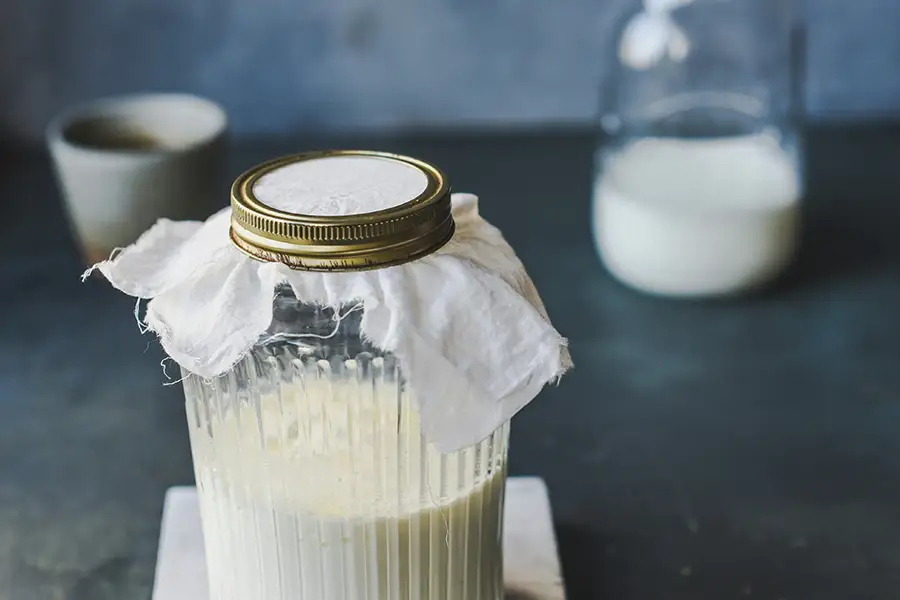
- Yoghurt maker, warm oven, insulated box, or thermal bag
Clean equipment matters. You are creating conditions for specific cultures to grow, so keep jars and utensils clean before starting.
1. Pour the milk into a saucepan and heat gently to 85–90°C, stirring often so it does not catch at the bottom. Hold it at this temperature for around 5–10 minutes if possible. This step helps create a thicker, smoother yoghurt by changing the milk proteins. It also reduces the number of competing microorganisms in the milk.
2. Remove the pan from the heat and allow the milk to cool to 42–43°C.
This is important. If the milk is too hot, it may damage the starter culture. If it is too cool, fermentation may be slower or less reliable.
3. In a small bowl, mix the live yoghurt or starter culture with a few spoonfuls of the warm milk until smooth. Pour this mixture back into the rest of the milk and stir gently. Do not whisk aggressively. You want the culture evenly distributed without creating too much foam.
4. Pour the cultured milk into clean jars. Keep it warm at around 40–43°C for 6–8 hours. The longer it ferments, the tangier it becomes. For a milder yoghurt, check after 6 hours. For a sharper yoghurt, leave it closer to 8–10 hours.
Try not to move or shake the jars while the yoghurt is setting.
5. Once set, transfer the yoghurt to the fridge. Chill for at least 4 hours before eating. The texture firms further as it cools.
Optional: Make Greek-Style Strained Yoghurt
To make thicker Greek-style yoghurt, place the finished yoghurt into a cheesecloth-lined sieve and strain in the fridge for 2–4 hours. The longer you strain it, the thicker it becomes.
The liquid that drains away is whey. You can use it in bread, pancakes, smoothies, or as a starter for some vegetable ferments.