Sweet mango pickle (Gur Keri)

Unlike traditional fermented pickles, this is an oil-preserved pickle that develops its flavour through marination rather than fermentation.

Share this article:

Some recipes are more than instructions; they’re family traditions passed from one generation to the next. Sweet Mango Pickle (Gur Keri) is one of those recipes. Unlike many Indian pickles that require weeks of patience, this version delivers the bold, complex flavours of homemade pickle in just a few days.

Made with tart green mangoes, fragrant spices, jaggery, and peanut oil, Gur Keri is a beautiful balance of sweet, sour, spicy, and savoury. It captures everything we love about seasonal preserving: transforming simple ingredients into something that elevates every meal.

A taste of Gujarat

In Gujarat, sweet pickles hold a special place at the table. The combination of unripe mangoes and jaggery creates a unique flavour that is distinctly Gujarati—bright, warming, and deeply comforting.

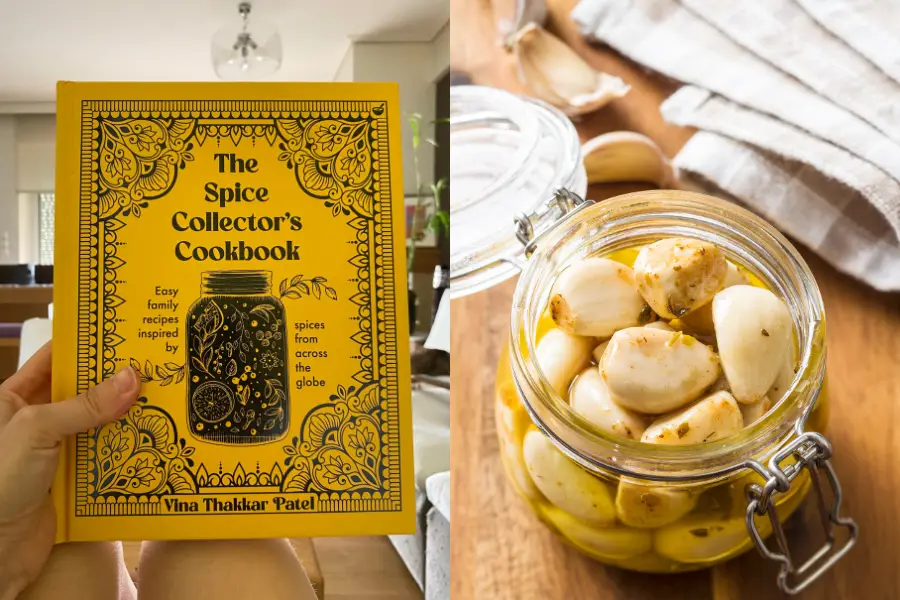
This recipe comes from The Spice Collector’s Cookbook by Vina Patel, where she shares not only recipes but the stories and traditions behind them. In the introduction to this recipe, Patel writes about her mother’s exceptional mango pickle, explaining that every jar was made with love and that pickle was an essential part of every meal and every family journey. Those memories shine through in every bite.

About “The Spice Collector’s Cookbook

If you enjoy exploring authentic spice traditions from around the world, The Spice Collector’s Cookbook by Vina Patel is a wonderful addition to your kitchen library. The book combines approachable recipes with personal stories, making each dish feel like an invitation into Patel’s family kitchen. From everyday meals to vibrant condiments like this Gur Keri, it celebrates the rich diversity of Indian home cooking and the spices that bring every recipe to life.

Join our newsletter

Get fermentation tips, recipes, what we’re making, directly in your inbox. We promise, no spam.

Sweet Mango Pickle (Gur Keri)
Ingredients:
  • 2 large unripe mangoes, peeled and diced
  • 2 tsp salt, plus more to taste
  • 480 ml (2 cups) peanut oil
  • A pinch of asafoetida (hing)
  • 415 g pickle masala (available at Indian supermarkets)
  • 175 g (¾ cup) grated jaggery (or less, if you prefer a less sweet pickle)
  • Masala poori, to serve (optional)
Directions:
  1. Place the diced mangoes and salt in a large bowl and gently stir to combine.
  2. Let the mangoes rest for 1 hour to release their juices.
  3. Using your hands, gently squeeze the excess juice from the mangoes and discard the liquid.
  4. Pat the mango pieces dry with paper towels.
  5. Spread the mangoes on a large plate and leave them to dry in the sun or in a warm, dry place for 3–5 hours.
  6. Transfer the dried mangoes to a clean bowl.
  7. Heat the peanut oil in a deep pan over low heat for 10 minutes.
  8. Add a pinch of asafoetida (hing), then remove the pan from the heat and allow the oil to cool completely.
  9. Once cooled, stir in the pickle masala and grated jaggery until well combined.
  10. Add the dried mango pieces and mix thoroughly so they’re evenly coated.
  11. Taste and add more salt if needed.
  12. Transfer the pickle to a clean, sterilised jar.
  13. Store the jar in a dark place for 2 days to allow the flavours to develop.
  14. Stir well before serving.
  15. Serve with masala poori, curries, rice dishes, or flatbreads.
  16. Store the pickle in the refrigerator for up to 2 months.
Notes:

Unlike traditional fermented pickles, this is an oil-preserved pickle that develops its flavour through marination rather than fermentation. The result is:

  • A delicious balance of sweet, tangy, and spicy flavours
  • Crisp, juicy mango pieces
  • Rich aromatic Indian spices
  • Ready to enjoy after just two days of marinating
  • Perfect alongside curries, rice dishes, flatbreads, or even cheese boards

More ferments...

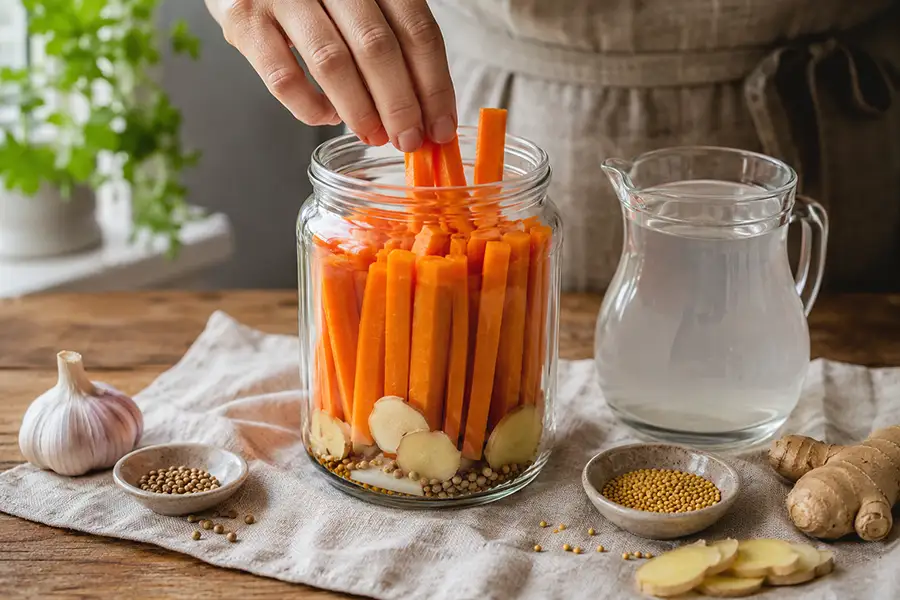
Crisp lacto-fermented carrots with fresh ginger

Crisp lacto-fermented carrot sticks with fresh ginger, made in a...

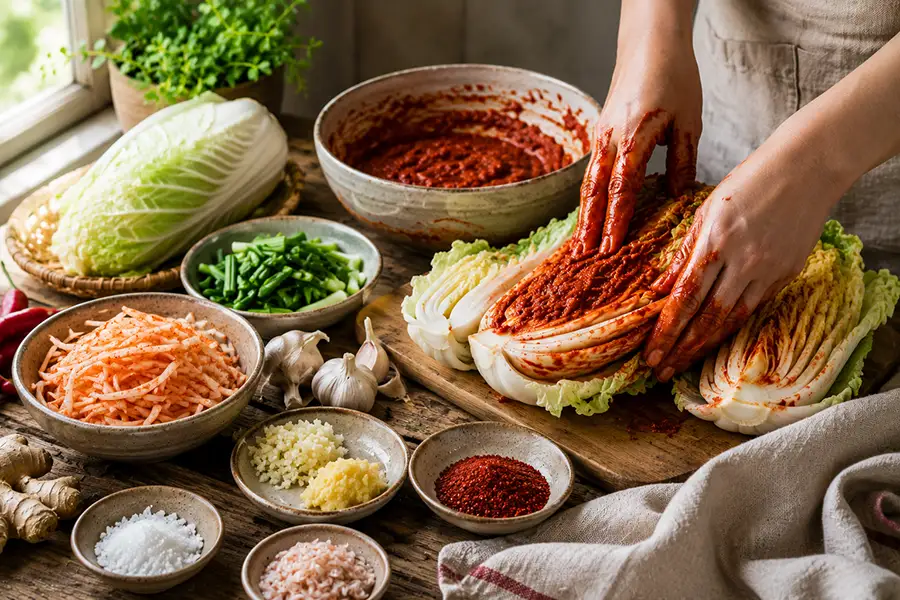
Traditional Korean baechu-kimchi with gochugaru

Traditional baechu kimchi made with napa cabbage, Korean radish, spring...

Garlic pickle with fenugreek & black gram

A slow-soaked garlic pickle with fenugreek, black gram, and tangy...

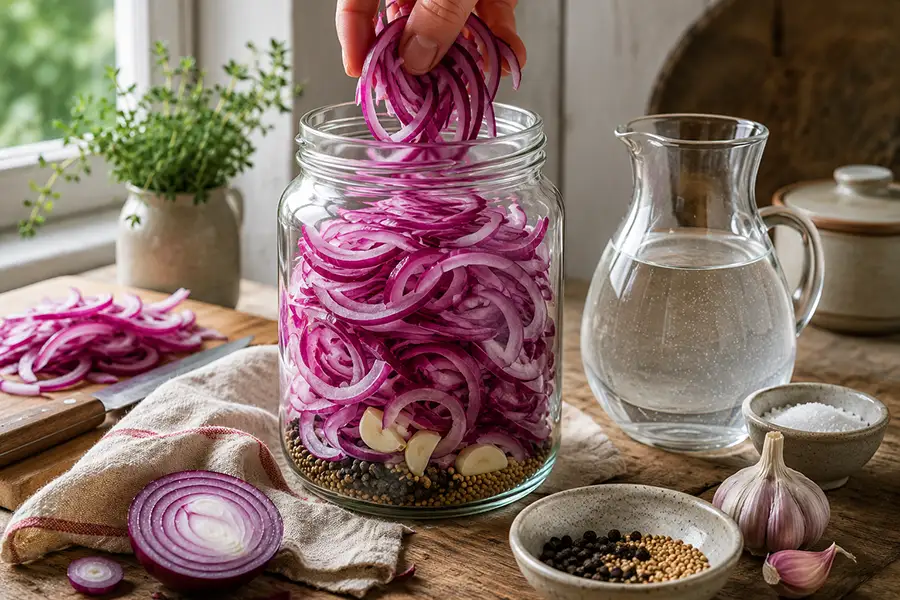
Tangy fermented red onion slices

These fermented red onions are crisp, vivid and gently tangy,...

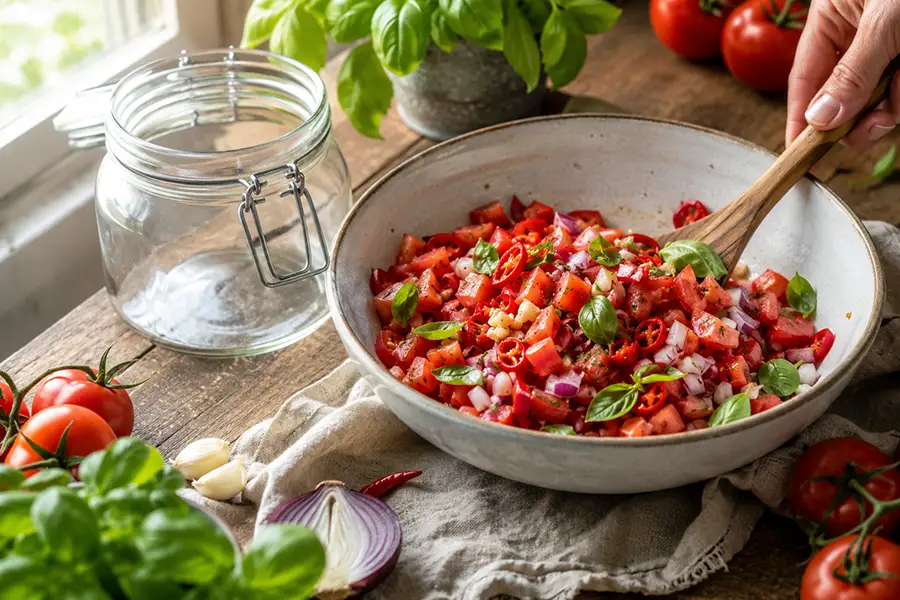
Tomato, pepper & basil fermented salsa

A bright July salsa ferment made with ripe tomatoes, sweet...

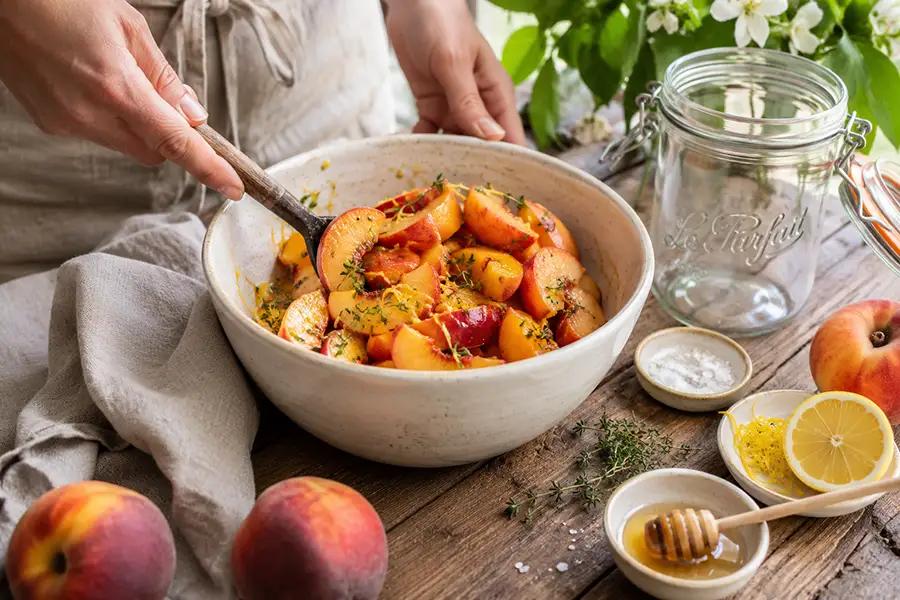
Lightly fermented peaches with thyme and lemon

A light summer fruit ferment made with ripe peaches, thyme,...

Explore more from Brine & Bloom

The rise of climate-resilient crops is changing fermentation

Climate-resilient crops are inspiring a new wave of fermentation, proving...

Gut Health Remains One of 2026’s Biggest Food Trends

Gut health is influencing the way we eat in 2026,...

The day we found the sea in our hands – a food memory

This story celebrates the origins of food, and the childhood...

Why more restaurants are fermenting their own ingredients in 2026

Fermentation has become one of the most exciting tools in...

Leave a Reply

Your email address will not be published. Required fields are marked *