Apricots are fragrant, soft, and full of summer brightness. With a little honey and a pinch of salt, they become a delicate short ferment: glossy, lightly tangy, floral, and spoonable.
This recipe is intentionally brief. Apricots are tender fruit, and honey can make fermentation active quickly. The goal is not a long-aged preserve but a small jar to keep in the fridge and use over a few days.
The finished apricots are lovely with yoghurt, pancakes, porridge, soft cheese, toast, ice cream, or simple desserts. They can also be served beside savoury dishes where a little sweet-sharp fruit works well.
Why you’ll love this ferment
This apricot and honey ferment is simple, elegant, and quick. It keeps the perfume of fresh apricots while adding a gentle tang and syrupy texture.
The honey rounds the fruit without making it heavy, and a little salt keeps the flavour balanced. Lemon zest or vanilla can be added if you want a softer dessert-like finish.
FAQs
Why is this ferment so short?
Apricots are soft and honey can ferment quickly, especially in warm weather. A brief 8–18 hour ferment gives flavour while keeping the fruit fresh and pleasant in texture.
Can I use dried apricots?
This recipe is written for fresh apricots. Dried apricots behave differently and would need extra liquid and a different method. For this short ferment, fresh ripe apricots are best.
Can I use sugar instead of honey?
Yes. Use 25–30 g sugar instead of honey. The flavour will be less floral but still bright and syrupy.
Apricot and honey short ferment
Ingredients:
Makes 1 small jar:
- 400 g ripe but firm apricots
- 30 g honey
- 2 g fine sea salt
- Zest of ½ unwaxed lemon, optional
- ¼ tsp vanilla extract or a small piece of vanilla pod, optional
- 1 tsp lemon juice, optional, added after fermentation
Directions:
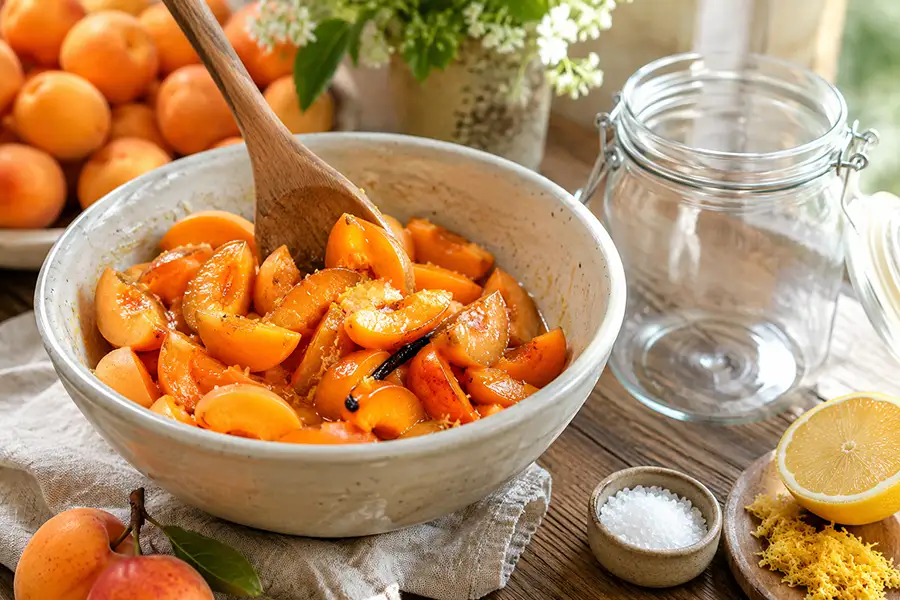
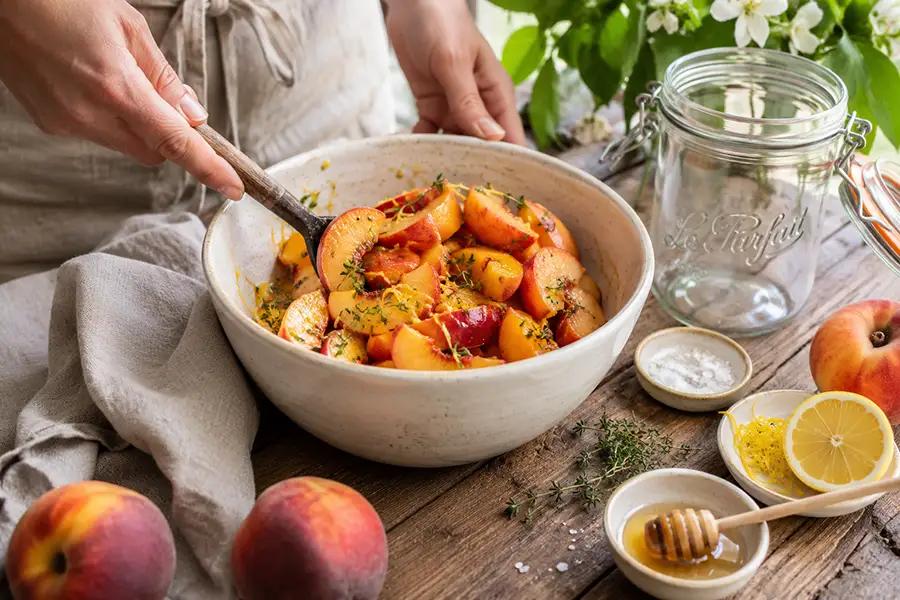
- Wash the apricots well. Cut them in half, remove the stones, and slice each half into two or three wedges.
- Place the apricots in a clean bowl with the honey, salt, lemon zest, and vanilla if using.
- Mix gently until the apricots are coated. Let the mixture sit for 15–20 minutes so the fruit begins to release juice.
- Spoon the apricots and syrup into a clean jar. Press down gently so the fruit is surrounded by syrup.
- Close the jar loosely, or cover with a clean lid that is not fully tightened.
- Ferment at room temperature for 8–18 hours. In a warm kitchen, check after 6–8 hours.
- When the apricots taste lightly tangy and syrupy, stir in lemon juice if using.
- Transfer immediately to the fridge.
What to Expect
The apricots will soften and release a golden syrup. You may see small bubbles, especially if the kitchen is warm.
The flavour should be fresh, honeyed, lightly tangy, and fragrant. This ferment should remain brief and refrigerated quickly.
Discard the ferment if you see mould, unpleasant odours, sliminess, or signs of spoilage.
Fermentation Time
8–18 hours at room temperature.
This is a very short ferment.
Notes:
Storage
Store in the fridge and use within 3–5 days.
Use a clean spoon each time.
Serving Ideas
Spoon over thick yoghurt, coconut yoghurt, porridge, pancakes, waffles, toast, or ice cream.
Serve with soft cheese, labneh, ricotta-style cheese, or fresh goat’s cheese.
Add to a breakfast bowl with oats, nuts, seeds, and fresh herbs.
Use as a small sweet-sharp side with roasted carrots, grain bowls, or grilled halloumi.