
The Balkan Peninsula holds a deep and varied tradition of fermented foods. Across the region, fermentation has long been used to preserve seasonal ingredients, develop flavour, and make everyday foods last beyond the harvest.
Some Balkan foods are true ferments, shaped by lactic acid bacteria, yeasts, or mixed microbial activity. Others, such as ajvar, pindjur, lyutenitsa, kyopolou, zacuscă, and malidzano, belong more accurately to the wider world of preserved foods. They are usually roasted, cooked, jarred, or heat-treated rather than fermented. Both traditions matter, but they are not the same.
When we look specifically at Balkan fermentation, several foods stand out: whole sour cabbage, turšija, fermented milk products, brined cheeses, boza, and trahana or tarhana. Together, they show how fermentation in the Balkans moves across vegetables, dairy, grains, and drinks.
Whole sour cabbage: a winter foundation
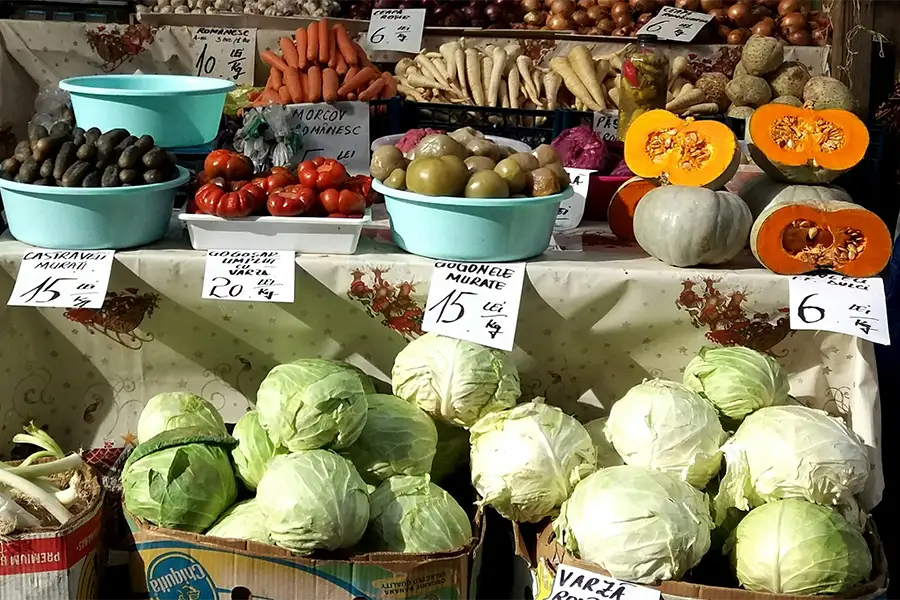
One of the most important Balkan vegetable ferments is whole sour cabbage, known in different regions as kiseli kupus, kiselo zele, or related names. Unlike shredded sauerkraut, this method often involves fermenting whole cabbage heads in salted water, traditionally in large barrels.
The result is both practical and culinary. The fermented cabbage can be sliced into salads, used as a side dish, or separated into whole leaves for dishes such as sarma. The brine itself, often called rasol in parts of the Balkans, may also be used or consumed in some traditions.
This method reflects the logic of winter preservation. Cabbage harvested in season is transformed through salt, water, time, and naturally present microorganisms. As lactic acid fermentation progresses, the cabbage develops acidity, depth, and a texture suited to long storage and cooking.
Turšija: mixed vegetables in brine
Turšija is another important Balkan preserved vegetable tradition. It may include peppers, carrots, cauliflower, green tomatoes, cucumbers, cabbage, celery root, and other seasonal vegetables. It is usually prepared from late summer into autumn, when households have an abundance of produce to preserve.
There is an important distinction to make. Some versions of turšija are true salt-brine ferments, while others are vinegar pickles. The fermented versions rely on salt, water, vegetables, and time, allowing lactic acid bacteria to gradually acidify the brine. Vinegar-based versions are preserved differently and should not be described as fermented unless microbial fermentation has actually taken place.
At the table, turšija often appears as a sharp, colourful side dish, particularly during colder months. It carries the flavour of the harvest forward, giving winter meals brightness, crunch, and acidity.
Fermented milk: kiselo mlyako, kiselo Mleko and regional dairy
Fermented milk products are central to Balkan food culture. Bulgarian kiselo mlyako is perhaps the best-known example, but related yoghurt-like fermented milk products exist across Serbia, North Macedonia, Albania, Bosnia and Herzegovina, Greece, Romania, and neighbouring regions.
These foods are made through the activity of lactic acid bacteria, which ferment milk sugars and create the characteristic tang, texture, and acidity of cultured dairy. Traditional versions may vary according to the type of milk used, local microbial cultures, climate, and household practice.
Fermented dairy in the Balkans is not limited to yoghurt-like foods. Brined white cheeses, sheep’s milk cheeses, cow’s milk cheeses, and mixed-milk cheeses also form part of the wider fermented dairy landscape. These products are shaped by microbial activity, salt, ageing, and storage in brine.
Brined cheeses and kajmak
White brined cheeses are common across the Balkans and Eastern Mediterranean. Products such as sirene and related cheeses are made through milk fermentation, coagulation, salting, and storage in brine. They are often eaten with bread, vegetables, eggs, pies, and cooked dishes.
Kajmak sits slightly differently. Depending on the method, it may involve ripening and microbial development, but it is not as straightforward a ferment as yoghurt or sour cabbage. It is best understood as part of the region’s cultured and ripened dairy traditions rather than as a simple lactic ferment.
This nuance matters. Balkan dairy traditions are diverse, and not every dairy product fits neatly into one category. Some are directly fermented. Others are ripened, cultured, salted, or aged in ways that involve microbial and environmental change over time.
Boza: a fermented cereal drink
Boza is a traditional fermented cereal drink found in parts of the Balkans, including Bulgaria, Albania, North Macedonia, Serbia, Bosnia and Herzegovina, Kosovo, Montenegro, and neighbouring food cultures. It is usually made from grains such as millet, wheat, maize, or other cereals.
The drink is typically thick, mildly sour, and lightly sweet, with a low alcohol content depending on fermentation time and method. Its character comes from the fermentation of cooked grains, often involving lactic acid bacteria and yeasts.
Boza expands the story of Balkan fermentation beyond vegetables and dairy. It shows how grains, too, can become part of a living food tradition, transformed into a drink that sits between nourishment, refreshment, and preservation.
Trahana and tarhana: fermented grain and dairy
Trahana, tarhana, and related preparations appear across Greece, Turkey, Bulgaria, Albania, North Macedonia, and other parts of the region. They are usually made from grain combined with fermented milk, yoghurt, or sour milk, then dried for later use.
Once dried, trahana can be stored and later cooked into soups or porridges. It is one of the clearest examples of fermentation working together with drying as a preservation method.
This type of food reflects a practical rhythm: ferment, dry, store, and rehydrate when needed. It is simple, durable, and deeply tied to household cooking.
Fermentation and preservation are related, but not identical
The Balkans are rich in preserved foods, but not all preserved foods are fermented. Roasted pepper spreads such as ajvar, pindjur, lyutenitsa, kyopolou, zacuscă, and malidzano are culturally important, but they are generally cooked preserves rather than microbial ferments.
This distinction does not make them less valuable. It simply helps us understand them more accurately. Fermentation relies on microorganisms transforming the food over time. Heat-preserved relishes rely mainly on roasting, cooking, acidification, oil, sealing, or sterilisation.
Both approaches speak to the same seasonal instinct: keeping the abundance of summer and autumn alive through winter.
A regional tradition of time, climate and household knowledge
Balkan fermentation is not one single practice. It changes from country to country, village to village, and family to family. Salt levels, vessels, temperatures, ingredients, and storage methods all vary.
What connects these traditions is the careful use of time and environment. Whether fermenting cabbage in barrels, culturing milk, preparing boza, or drying trahana, the process depends on understanding how ingredients behave when given the right conditions.
This is what makes Balkan fermentation so rich. It is both practical and cultural, shaped by climate, scarcity, abundance, and memory.
Conclusion
To speak about Balkan ferments is to speak about more than yoghurt and pickled vegetables. The region offers a broad fermentation landscape: whole sour cabbage, rasol, turšija, kiselo mlyako, kiselo mleko, brined cheeses, boza, trahana, and tarhana.
These foods show how fermentation can preserve, transform, and connect. They also remind us that every jar, barrel, crock, and bowl carries a local story.
Sources
Traditional Balkan fermented milk products
Guide to fermenting vegetables and turšija
Whole sour cabbage / kiseli kupus overview
Unpasteurised commercial boza as a source of microbial diversity
The nutritional value of Greek trahanas and Turkish tarhana
Trahana, tarhana and related Eastern Mediterranean traditions