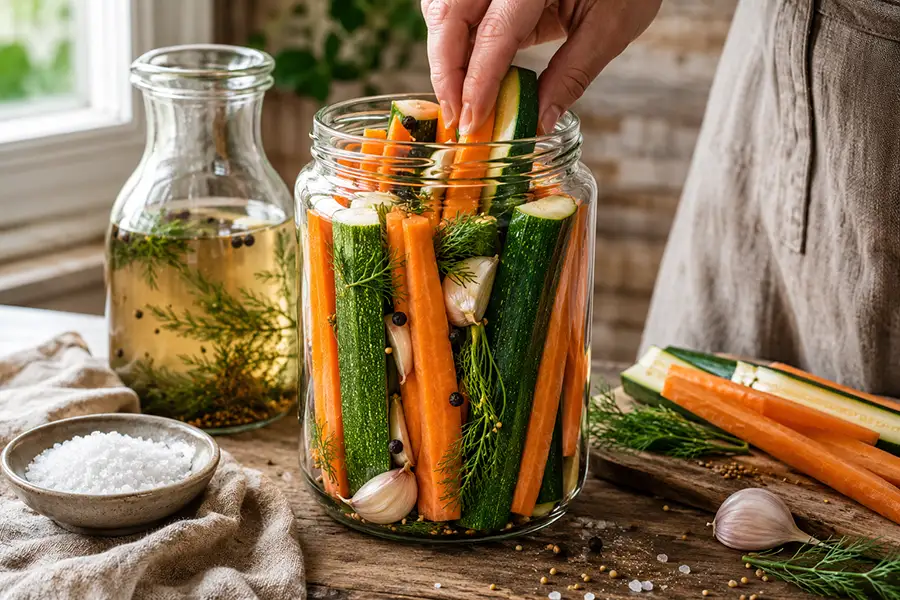
Courgette and carrot sticks make a colourful, crisp-leaning summer ferment. The carrots bring sweetness and firmness, while the courgettes absorb the brine quickly and become gently tangy. Dill and mustard seed add a classic pickle-like flavour without making the jar feel heavy.
This recipe is useful when you want a lighter vegetable ferment for snacking, sandwiches, grain bowls, or summer mezze plates. The carrots help give the jar more structure, which is helpful because courgettes can soften faster than many other vegetables.
For the best texture, use young, firm courgettes and cut them into thick sticks rather than thin slices.
Why you’ll love this ferment
This ferment is simple, bright, and very easy to serve. The carrot sticks stay crunchy, the courgettes become lightly tangy, and the dill-mustard brine gives everything a familiar savoury lift.
It is a good beginner-friendly courgette ferment because the vegetables are cut larger, making them easier to keep submerged and less likely to soften immediately.
FAQs
Why combine courgette with carrot?
Carrot adds sweetness, colour, and firmness. Courgettes soften quickly during fermentation, so carrots help balance the texture of the jar.
Can I use fresh dill instead of dill seed?
Yes. Fresh dill sprigs work well and give a greener, more aromatic flavour. Dill seed gives a slightly deeper, more pickle-like note.
How do I stop courgette from becoming mushy?
Use young, firm courgettes, cut them into thick sticks, keep the ferment short, and refrigerate once lightly tangy. Warm kitchens can soften courgettes quickly, so taste early.
Courgette and Carrot Sticks
Ingredients:
For 1 litre jar:
- 350 g firm courgettes
- 200 g carrots
- 2 garlic cloves, peeled and lightly crushed
- 1 tsp dill seeds, or 2 fresh dill sprigs
- 1 tsp mustard seeds
- ½ tsp black peppercorns, optional
- 500 ml water
- 15 g fine sea salt or pickling salt
Brine Ratio
This recipe uses a 3% brine:
Directions:
- Wash the courgettes and carrots well. Peel the carrots if the skins are tough.
- Cut the courgettes and carrots into thick sticks, roughly similar in length so they fit neatly into the jar.
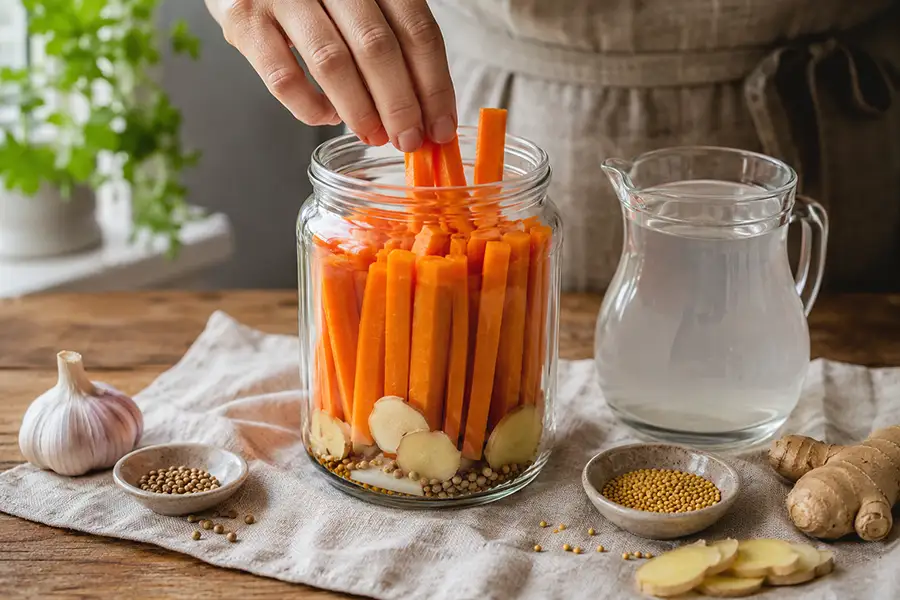
- Place the garlic, dill, mustard seeds, and peppercorns in the bottom of a clean 1 litre jar.
- Pack the courgette and carrot sticks upright into the jar. Keep them snug but not crushed.
- Dissolve the salt fully in the water to make the brine.
- Pour the brine over the vegetables until they are completely covered.
- Use a fermentation weight or suitable clean food-safe weight to keep the vegetables below the brine.
- Close the jar loosely, or use a fermentation lid. Place the jar on a small plate.
- Ferment at room temperature for 2–4 days. In warm weather, taste after 48 hours.
- When the vegetables taste lightly tangy and the courgettes are still pleasant in texture, transfer the jar to the fridge.
What to Expect
The brine may turn lightly cloudy and small bubbles may appear. The carrots should remain crisp, while the courgettes will soften more quickly.
The ferment should smell fresh, salty, dill-scented, and gently sour. Discard it if you see mould, sliminess, unpleasant odours, or signs of spoilage.
Fermentation Time
2–4 days at room temperature.
This is best as a short ferment.
Notes:
Storage
Store in the fridge and use within 2 weeks for best texture.
Use clean utensils each time and keep the vegetables covered by brine.
Serving Ideas
Serve as a snack with dips, cheese, or olives.
Add to sandwiches, wraps, grain bowls, lentil salads, or mezze plates.
Chop into potato salad or yoghurt-based sauces.
Serve alongside roasted vegetables or eggs for a bright, crunchy contrast.