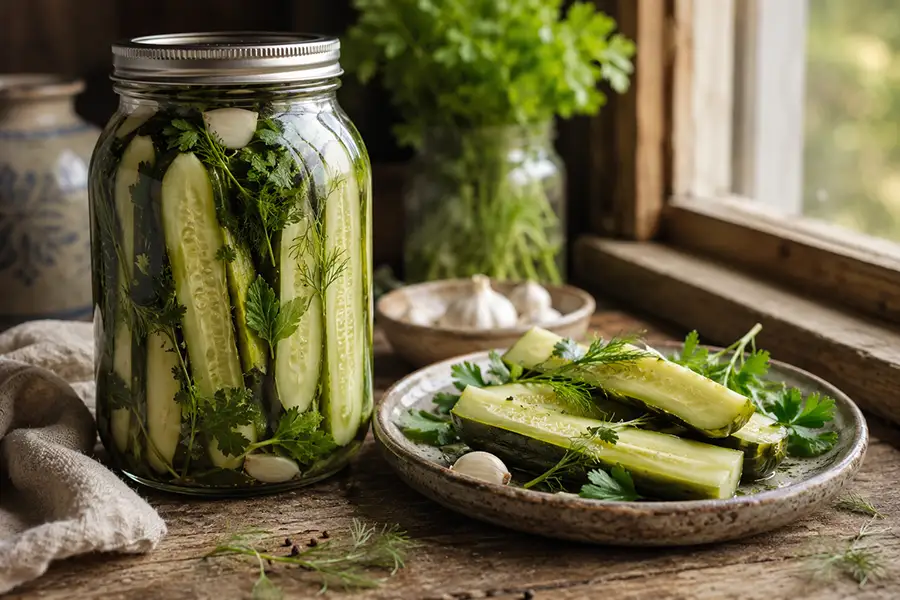
Cucumber and herb spears are a fresh, aromatic summer ferment for days when the garden, market, or fridge is full of soft green leaves. Parsley, dill, celery leaf, and coriander each bring a different character to the brine, making this a flexible recipe that can move from classic and familiar to bright and fragrant.
This recipe is especially useful in July, when cucumbers and herbs are both abundant in the Northern Hemisphere. Instead of making one fixed pickle, you can use the herbs you have and build a jar around freshness, crunch, and gentle acidity.
The method is simple: cucumbers are cut into spears, packed with herbs and garlic, covered in brine, weighted, and left to ferment for a few days. The result is crisp, green, and refreshing.
Choosing your herbs
Dill gives the most traditional cucumber pickle flavour.
Parsley keeps the ferment clean, grassy, and mild.
Celery leaf adds a savoury, mineral note that works beautifully with garlic.
Coriander leaf gives a brighter, citrus-like flavour, especially good with chilli or coriander seed.
You can use one herb or mix two together. If using coriander leaf, add it generously but expect the flavour to soften during fermentation.
Why you’ll love this ferment
This is a lighter, more garden-led cucumber ferment. It is less about deep pickle flavour and more about freshness. The herbs infuse the brine, the cucumbers stay crunchy, and the finished spears work well beside almost any summer meal.
They are excellent with grilled vegetables, flatbreads, rice bowls, sandwiches, potato salads, lentil salads, or mezze-style plates.
FAQs
Which herbs work best with fermented cucumber spears?
Dill is the most classic choice, but parsley, celery leaf, and coriander also work well. Parsley gives a clean green flavour, celery leaf adds savoury depth, and coriander brings a brighter, citrus-like note.
Can I mix different herbs in the same jar?
Yes. Dill and parsley work well together, as do celery leaf and coriander seed. Avoid overcrowding the jar with too many tender leaves, as herbs can float. Keep everything submerged under the brine.
Why did the herbs darken during fermentation?
Tender herbs often darken in brine. This is normal, especially with parsley and coriander. The ferment should still smell fresh, salty, herbal, and tangy. Discard it if you see mould, sliminess, or smell anything unpleasant.
Cucumber and Herb Spears with Parsley, Dill, Celery Leaf, or Coriander
Ingredients:
For 1 litre jar:
- 500–600 g cucumbers
- 2 garlic cloves, peeled and lightly crushed
- 10–15 g fresh herbs: parsley, dill, celery leaf, coriander, or a mix
- 1 tsp coriander seeds, optional
- ½ tsp mustard seeds, optional
- 500 ml water
- 15 g fine sea salt or pickling salt
Brine Ratio
This recipe uses a 3% brine:
For very warm kitchens, you may increase the salt slightly to 20 g per 500 ml water for a 4% brine.
Directions:
- Wash the cucumbers and herbs well. Cut the cucumbers lengthways into spears.
- Place the garlic, herbs, coriander seeds, and mustard seeds in a clean 1 litre jar.
- Pack the cucumber spears tightly into the jar. Try to keep them vertical so they are easy to remove later.
- Dissolve the salt fully in the water. Pour the brine over the cucumbers until they are completely covered.
- Press the cucumbers down with a fermentation weight or suitable clean weight. Everything must remain below the brine.
- Close the jar loosely, or use a fermentation lid. Place the jar on a small plate.
- Ferment at room temperature, ideally around 18–22°C, for 2–5 days. In hot weather, taste after 48 hours.
- When the cucumbers taste lightly tangy and the herbs have scented the brine, transfer the jar to the fridge.
What to Expect
The brine may become lightly cloudy, and small bubbles may appear. The herbs may darken slightly, especially tender leaves such as coriander and parsley. This is normal.
The finished spears should taste fresh, lightly sour, salty, herbal, and crisp.
If the herbs rise above the brine, push them back down or remove any floating pieces. Floating herbs can attract surface mould if exposed to air.
Fermentation Time
2–5 days at room temperature.
This is best as a short ferment, especially in summer.
Notes:
Storage
Store in the fridge and eat within 2–4 weeks for the best flavour and texture.
Use clean utensils each time.
Serving Ideas
Serve whole spears beside sandwiches, wraps, roasted vegetables, eggs, grilled halloumi, or grain bowls.
Chop them into yoghurt sauces, potato salad, chickpea salad, or lentil salad.
Use the herb-scented brine in small amounts in dressings or savoury sauces.