
The best time to source carrots for fermentation is late summer or early autumn. Carrots harvested after the first frost tend to have a higher natural sugar content, which fuels the lactic acid bacteria and leads to a more robust fermentation process.
Fermenting carrots is a delightful way to preserve their crunchiness while adding a probiotic punch to your diet. Lacto-fermentation not only enhances the nutritional profile of carrots but also adds a tangy flavor that can enliven any dish. Whether you’re new to fermentation or a seasoned pro, fermenting carrots is an easy process that yields delicious results.
This article will guide you through the process of making lacto-fermented carrots, from understanding their health benefits to practical steps in crafting them in your own kitchen. You’ll gain insights into the essential equipment and ingredients, as well as expert tips for troubleshooting common issues during fermentation.
Why make fermented Carrots?
Fermented carrots offer numerous health benefits. The process of lacto-fermentation introduces beneficial bacteria, known as probiotics, into your food. These probiotics aid in digestion and support gut health, which is linked to better immunity and overall wellness. Additionally, fermented carrots can help you absorb more nutrients from all the food you eat.
The process of fermenting carrots doesn’t just enhance their nutritional value; it also extends their shelf life. By storing them in a saltwater brine, you can keep carrots fresh for months without using any preservatives. This makes fermented carrots a sustainable option for reducing food waste.
Moreover, the tangy, slightly sour taste of fermented carrots adds flavor complexity to your meals. They can be eaten on their own as a crunchy snack, or used as a zesty ingredient in various dishes, offering versatility in the kitchen.
Ingredients
Start with fresh, organic carrots that are free from pesticides and chemicals. The quality of the carrots directly impacts the final taste of the fermented product. A 350 – 500 gr jar of fermented carrots typically requires about half a kilo of carrots.
While organic carrots are preferred for their lack of chemicals, you can certainly use conventional ones. If using non-organic carrots, it is highly recommended to peel them first to remove potential pesticide residues that typically accumulate on the skin.
In addition to carrots, you’ll need non-iodized salt to create a brine. Avoid using table salt, as it commonly contains iodine and anti-caking agents that can interfere with the fermentation process. Kosher or sea salt works best for fermentation.
Lastly, water is crucial. Use filtered or distilled water to avoid chlorine and other chemicals present in tap water, which can inhibit the growth of beneficial bacteria.
Equipment
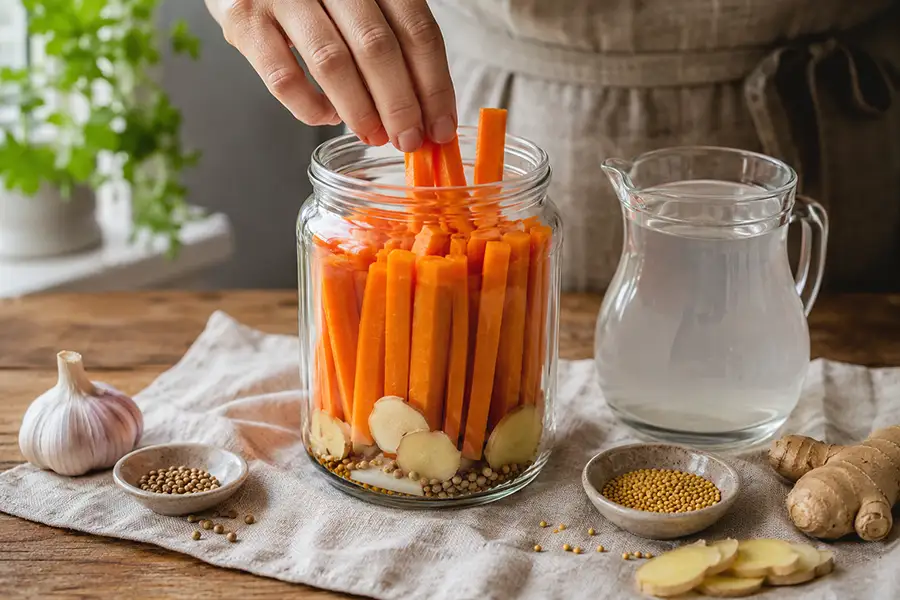
The equipment required to ferment carrots is minimal, making it accessible for home fermentation enthusiasts. You will need 350 – 500gr glass jar with a tight-fitting lid. A wide-mouth mason jar is ideal as it allows larger carrot sticks to fit in easily.
A weight or fermentation lid to submerge the carrots and ensure they are always under the brine is highly recommended. This prevents the growth of mold. You might also consider an airlock lid, which allows carbon dioxide to escape without letting oxygen in, maintaining anaerobic conditions.
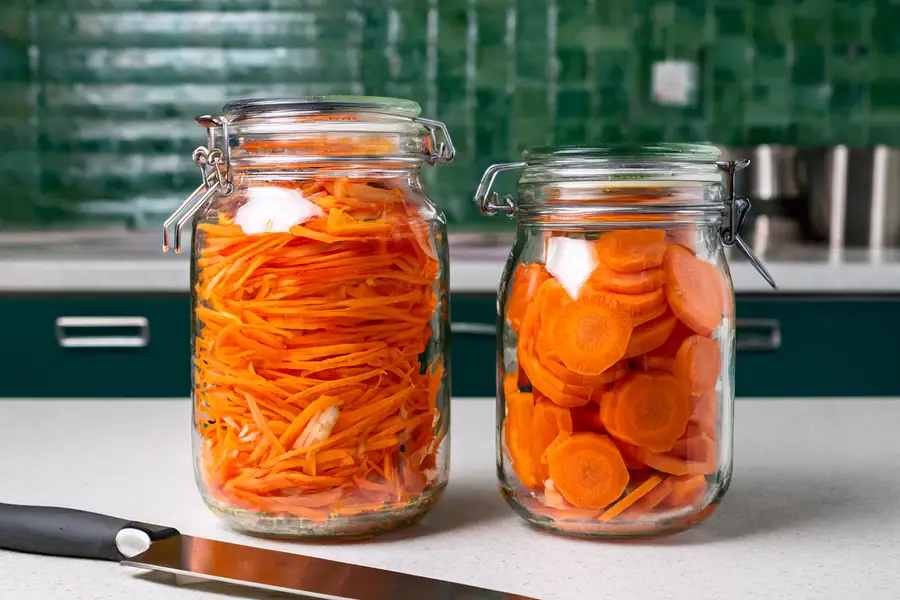
Finally, a knife or a mandoline will be useful for cutting carrots into uniform sticks or coins, allowing for even fermentation.
When is it ready?
The fermentation process can take anywhere from 5 to 14 days, depending on your taste preference and room temperature. After 5 days, begin tasting the carrots daily. They should be tangy and slightly sour yet retain a crisp texture.
Once you achieve the desired flavor, move the jar to the refrigerator. The cool temperature slows down the fermentation process and preserves the carrots for several months.
How to use
Fermented carrots can be enjoyed in a variety of ways. Eat them as a snack straight from the jar for a probiotic-rich treat, or add them to salads for a crunchy, tangy element.
They also pair well with meats and sandwiches, providing a wonderful contrast to rich and savory flavors. Try chopping them up and incorporating them into dips or spreads for an unusual twist.
How to maintain
To maintain your fermented carrots, always ensure they’re submerged in brine to prevent spoilage. If the water level drops, top it off with additional brine made from the same salt-to-water ratio.
Avoid using dirty utensils when removing carrots from the jar, as introducing pathogens can spoil the fermentation. Store the carrots in the refrigerator once fermentation reaches your desired level, as this pauses the process and keeps the carrots tasting perfect.
Is this ferment good for you?
Yes, this ferment is excellent for your health. Fermented carrots are rich in probiotics, which are beneficial for digestive health and overall immune system support. They also contain vitamins such as A, C, and K, and certain minerals.
Regular consumption of fermented foods like carrots has been associated with improved gut flora diversity, which can have numerous health benefits ranging from better digestion to enhanced mood and energy levels.
Expert tips
Ensure that the carrots remain submerged in the brine during fermentation to prevent them from spoiling. Using a pebble or ferment cap can help keep them down.
If this is your first attempt at fermenting carrots, try adding some garlic, dill, or other spices for additional flavor. Experiment with different combinations to find what suits your taste buds.
Ferment at a stable room temperature, ideally between 18-24°C. Too warm or too cool temperatures can affect the speed and effectiveness of fermentation.
Troubleshooting
If your fermentation develops mold, it’s usually due to exposure to air. Ensure carrots are submerged and covered well. Remove any surface mold promptly before it penetrates the bulk of the ferment.
It is important to distinguish between Kahm yeast and mold. Kahm yeast appears as a white, thin, wavy film on the surface and is harmless (though you should scoop it out). In contrast, mold is typically fuzzy, can be various colors like green, black, or red, and may be toxic; if you see fuzzy growth, the batch should be discarded.
If your carrots are soft instead of crunchy, this might be due to a prolonged fermentation. Next time, check them earlier in the process and move to the refrigerator as soon as they hit the right texture.