Fermented chilli sauce is one of the most satisfying ways to preserve fresh chillies. The process is simple: chillies and garlic are covered with a 3% salt brine, left to ferment until tangy and aromatic, then blended into a bright, savoury sauce.
Unlike vinegar-based hot sauce, this version develops its sharpness through fermentation first. The result is lively, layered, and flexible. You can keep it thick and rustic, blend it smooth, or add a little vinegar after fermentation for extra brightness and longer fridge life.
This recipe is ideal when chillies are abundant in summer. Use one variety for a clean flavour or mix several types for more complexity.
Why you’ll love this ferment
Fermented chilli sauce is bold, useful, and easy to adapt. Garlic adds depth, the brine brings structure, and fermentation softens the raw heat of the chillies into something rounder and more savoury.
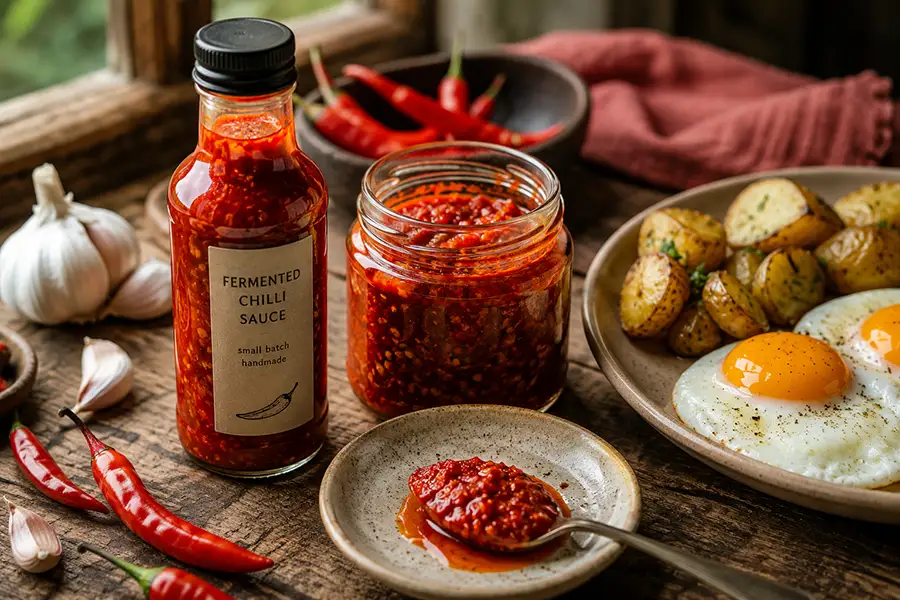
Use it on eggs, roasted potatoes, rice bowls, grilled vegetables, beans, noodles, sandwiches, tacos, marinades, or yoghurt-based sauces.
FAQs
Can I use any type of chilli?
Yes. You can use mild, medium, or hot chillies, depending on the sauce you want. Mixing varieties can create more depth, while using one type gives a cleaner, more focused flavour.
Do I need to add vinegar?
No. The sauce can be made with fermentation brine only. Vinegar or lemon juice can be added after fermentation if you want a sharper flavour or a brighter finish.
Why did my chilli brine become cloudy?
Cloudy brine is common during lactic acid fermentation and is usually normal. The ferment should smell pleasantly sour, salty, spicy, and clean. Discard it if you see mould, sliminess, or smell anything unpleasant.
Fermented Chilli Sauce with Garlic
Ingredients:
For 1 medium jar:
- 250 g fresh chillies, stems removed
- 3 garlic cloves, peeled
- 500 ml water
- 15 g fine sea salt or pickling salt
After fermentation:
- 2–4 tbsp fermentation brine, as needed for blending
- 1–2 tbsp apple cider vinegar or lemon juice, optional
- 1 tsp honey or sugar, optional
- Extra salt, to taste
Brine Ratio
This recipe uses a 3% brine:
Directions:
- Wash the chillies well and remove the stems. For a milder sauce, remove some or all of the seeds. For a hotter sauce, leave them in.
- Place the chillies and garlic cloves in a clean jar.
- Dissolve the salt fully in the water to make the brine.
- Pour the brine over the chillies and garlic until they are fully covered.
- Use a fermentation weight or suitable clean food-safe weight to keep everything below the brine. Chillies can float, so this step matters.
- Close the jar loosely, or use a fermentation lid. Place the jar on a small plate.
- Ferment at room temperature, ideally around 18–22°C, for 5–10 days. In a warm kitchen, begin tasting after 4–5 days.
- When the chillies smell pleasantly sour, savoury, and garlicky, strain them, keeping the brine.
- Blend the chillies and garlic with 2–4 tbsp of the fermentation brine until smooth. Add vinegar or lemon juice if you want a sharper sauce. Add a little honey or sugar if you want a softer finish.
- Taste and adjust with salt if needed.
- Transfer to a clean jar or bottle and refrigerate.
What to Expect
The brine may become cloudy and small bubbles may appear. The chillies may soften slightly and their colour may deepen.
The finished sauce should smell fresh, spicy, garlicky, and pleasantly sour. Discard the ferment if you see mould, sliminess, or smell anything unpleasant or rotten.
Fermentation Time
5–10 days at room temperature.
Warmer kitchens may need less time. Cooler kitchens may need longer.
Notes:
Storage
Store the blended sauce in the fridge and use within 1–2 months.
Use a clean spoon each time. If adding vinegar after fermentation, the flavour will become sharper and may keep better in the fridge.
Serving Ideas
Spoon over fried or boiled eggs.
Add to roasted potatoes, rice bowls, noodles, soups, or beans.
Mix with yoghurt, sour cream, or mayonnaise-style sauces for a quick spicy dressing.
Stir into marinades for vegetables, chicken, tofu, or grilled cheese sandwiches.