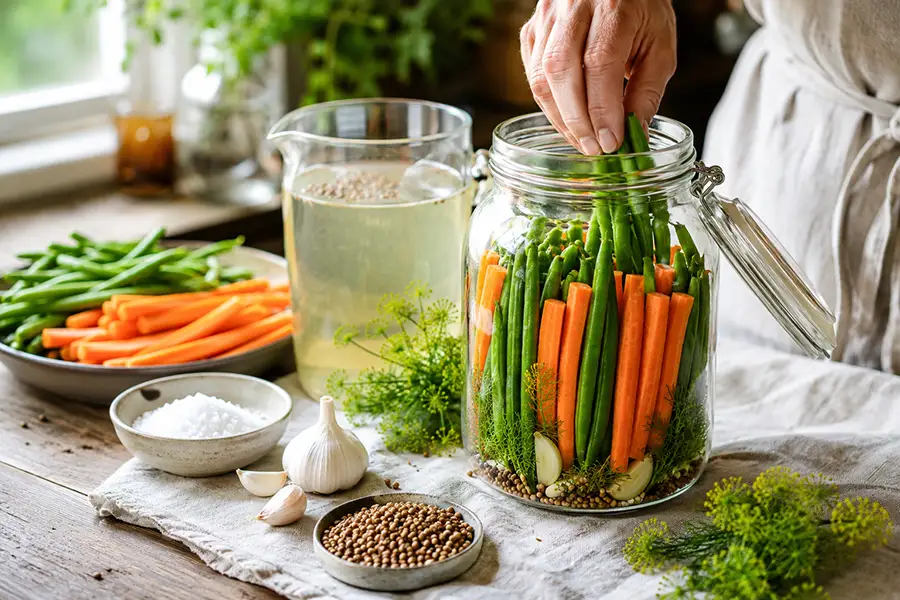
A green bean and carrot jar is one of the easiest ways to make a colourful summer ferment. The green beans stay crisp, the carrots bring sweetness and brightness, and the brine ties everything together with a gentle tang.
This recipe is simple, practical, and cheerful enough to sit on the table as part of a summer meal. It works well as a snack jar, a salad ingredient, or a side for mezze plates, sandwiches, rice bowls, and roasted vegetables.
The combination is also useful for texture. Green beans bring snap, carrots bring crunch, and both hold up better than softer summer vegetables.
Why you’ll love this ferment
This is a bright, beginner-friendly jar with very little fuss. The vegetables are easy to pack, easy to serve, and easy to pair with other foods.
Garlic and dill keep the flavour familiar, while mustard seed or coriander seed can add a little extra warmth.
FAQs
Can I cut the green beans smaller?
Yes, but longer beans are easier to pack upright and keep submerged. Smaller pieces may float more easily, so use a fermentation weight and check the jar regularly.
Can I add other vegetables?
Yes. Small amounts of radish, courgette, or pepper can be added, but green beans and carrots give the best crisp texture. Avoid overcrowding the jar with too many different vegetables.
Why are the carrots still crunchy but the beans changed colour?
That is normal. Carrots usually keep their colour and crunch well, while green beans often become softer in colour during fermentation. Flavour and smell are better signs to watch than colour alone.
Green Bean and Carrot Ferment
Ingredients:
For 1 litre jar:
- 300 g fresh green beans
- 200 g carrots
- 2 garlic cloves, peeled and lightly crushed
- 1 tsp dill seeds, or 2 fresh dill sprigs
- ½ tsp mustard seeds, optional
- ½ tsp coriander seeds, optional
- 500 ml water
- 15 g fine sea salt or pickling salt
Brine Ratio
This recipe uses a 3% brine:
Directions:
- Wash the green beans and carrots well.
- Trim the stem ends from the green beans. Peel the carrots if the skins are tough.
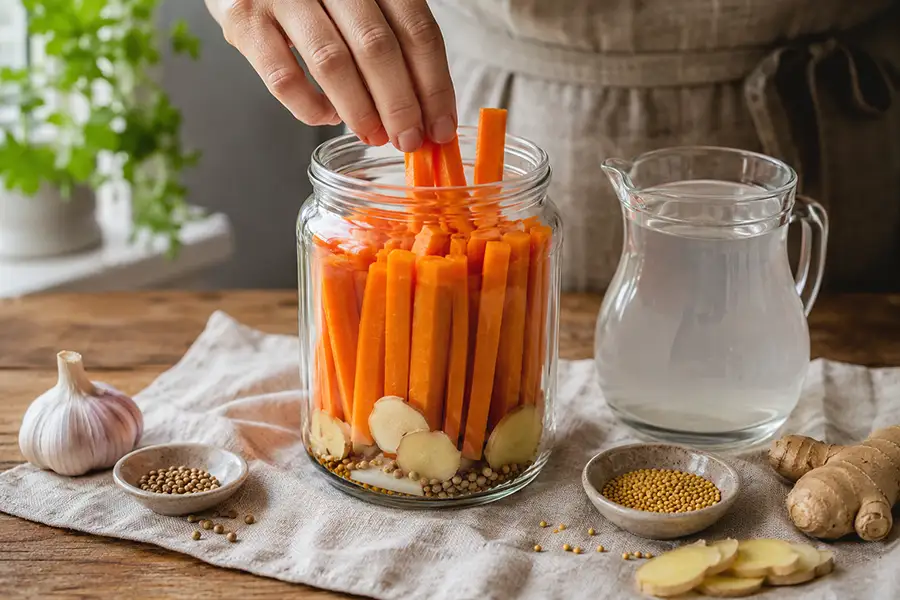
- Cut the carrots into sticks roughly the same length as the green beans.
- Place the garlic, dill, mustard seeds, and coriander seeds in the bottom of a clean 1 litre jar.
- Pack the green beans and carrot sticks upright into the jar, alternating colours as you go.
- Dissolve the salt fully in the water to make the brine.
- Pour the brine over the vegetables until they are completely covered.
- Use a fermentation weight or suitable clean food-safe weight to keep the vegetables below the brine.
- Close the jar loosely, or use a fermentation lid. Place the jar on a small plate.
- Ferment at room temperature for 4–7 days. In warm weather, taste after 4 days.
- When the vegetables are tangy and still crisp, transfer the jar to the fridge.
What to Expect
The brine may become cloudy and the vegetables may soften slightly while keeping some crunch. The green beans may become more olive-green, while the carrots usually stay bright.
The finished jar should smell fresh, salty, garlicky, herbal, and pleasantly sour. Discard it if you see mould, sliminess, unpleasant odours, or signs of spoilage.
Fermentation Time
4–7 days at room temperature.
Taste early in warm kitchens.
Notes:
Storage
Store in the fridge and use within 1–2 months for best texture.
Always use clean utensils and keep the vegetables covered by brine.
Serving Ideas
Serve as a colourful snack jar with dips, cheese, olives, and bread.
Chop into salads, grain bowls, potato salads, or lentil dishes.
Serve with sandwiches, toasties, roasted vegetables, eggs, or mezze plates.
Add to lunchboxes as a crisp, tangy side.