Miso-cured aubergine (misozuke-style)

Salted aubergines are buried in fermented miso paste and left to mature into a silky, deeply savoury pickle. This misozuke-style aubergine is rich, elegant, and full of umami, perfect for small plates, rice dishes, or simple vegetable meals.

Share this article:

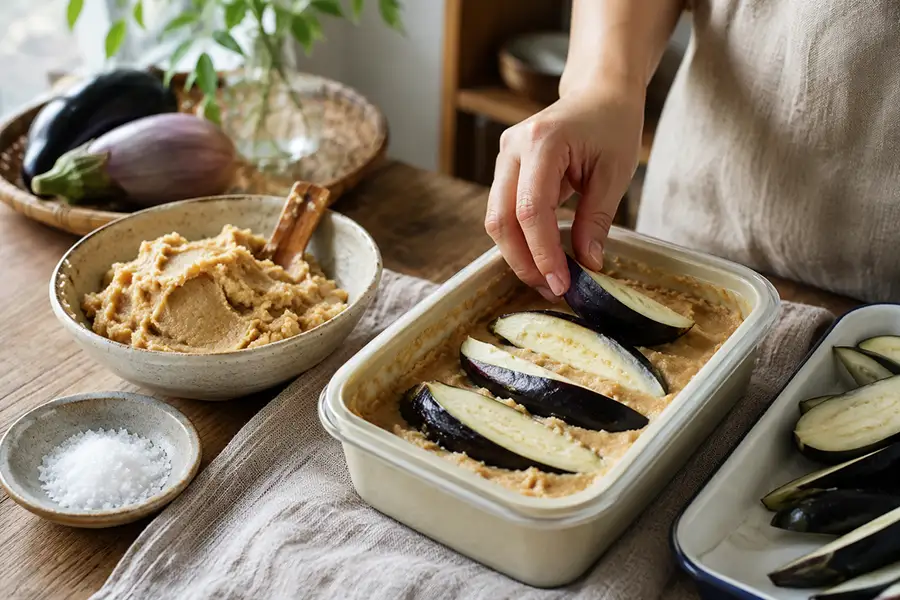
This miso-cured aubergine is not a bubbling brine ferment in the usual sense. Instead, it is a fermented cure, where salted aubergine is buried in miso and left to mature. The miso, already a fermented food, slowly seasons the aubergine and gives it a deep, savoury, slightly sweet, complex flavour.

The texture becomes soft and silky, while the taste becomes concentrated and rich. It is a lovely way to handle aubergine if you want something more refined and less sharp than a vinegar pickle.

This version is especially good sliced and served with rice, tofu, grilled vegetables, or as part of a Japanese-inspired small plate.

FAQs

Is this actually fermented?

It is better described as a fermented cure or miso maturation. The aubergine itself is not fermenting in a brine in the usual way, but it is being cured in miso, which is already a fermented ingredient.

Which miso works best?

White miso gives a milder, sweeter flavour. Mixed or light brown miso gives a deeper, more savoury result. Very dark miso can be strong, so use it only if you want a bolder taste.

Can I reuse the miso afterwards?

It is best not to reuse it in the same way for another raw vegetable batch. However, some people cook with used miso in soups or sauces. If reusing at all, it should be cooked, not used again as a raw curing bed.

Miso-cured aubergine (misozuke-style)
Ingredients:

Makes 1 small container:

  • 500 g aubergines
  • 10 g fine sea salt or pickling salt (2% of aubergine weight)
  • 250–300 g miso paste (white miso, mixed miso, or light brown miso)
  • 1 tsp honey or sugar, optional
  • 1 tsp mirin or a little water, optional, only if the miso is very stiff
  • Toasted sesame seeds, optional, for serving


Miso-cured aubergine (misozuke-style)
Directions:
  1. Wash the aubergines and trim the ends.
  2. Cut them into thick batons, rounds, or long wedges.
  3. Place them in a bowl with the 10 g salt and toss well. Leave for 45–60 minutes.
  4. Drain and gently squeeze or pat dry. You want to remove excess moisture without damaging the aubergine pieces.
  5. If your miso is very thick, mix it with the honey or sugar and a teaspoon of mirin or water to make it easier to spread.
  6. Spread a layer of miso at the bottom of a clean container.
  7. Arrange a layer of aubergine on top, then cover with more miso. Continue until all the aubergine is packed and fully covered in miso.
  8. Press a small piece of parchment or clean reusable wrap directly on top of the miso surface, then close the container.
  9. Refrigerate for 3–5 days.
  10. When ready, remove the aubergine pieces and scrape or wipe off most of the miso before serving. Do not rinse heavily, or you will lose too much flavour.
  11. Slice if needed and serve cold or bring to room temperature briefly before eating.


Maturation Time and Storage

Refrigerator cure: 3–5 days

Use within: about 1 week after removing from the miso

Keep refrigerated


More ferments...

Crisp lacto-fermented carrots with fresh ginger

Crisp lacto-fermented carrot sticks with fresh ginger, made in a...

Traditional Korean baechu-kimchi with gochugaru

Traditional baechu kimchi made with napa cabbage, Korean radish, spring...

Garlic pickle with fenugreek & black gram

A slow-soaked garlic pickle with fenugreek, black gram, and tangy...

Tangy fermented red onion slices

These fermented red onions are crisp, vivid and gently tangy,...

Tomato, pepper & basil fermented salsa

A bright July salsa ferment made with ripe tomatoes, sweet...

Lightly fermented peaches with thyme and lemon

A light summer fruit ferment made with ripe peaches, thyme,...

Explore more from Brine & Bloom

Fermentation supports what grows before it ever reaches the kitchen

Fermentation revolutionizes agriculture by providing eco-friendly solutions like biofertilizers, biopesticides,...

Gut-health hype meets whole fermented foods

Whole fermented foods differ from processed probiotics, crucial for gut...

African fermented grains and beyond

African fermented grains like millet and sorghum deliver probiotic nutrition...

8 kid-friendly fermentations to make this summer

Engage kids this summer with eight fun and safe DIY...

Leave a Reply

Your email address will not be published. Required fields are marked *