Soy sauce and garlic fermented aubergine

Salted aubergines ferment briefly in a soy sauce, garlic, and light vinegar brine to create a savoury, umami-rich pickle with soft texture and gentle tang. A beautiful short ferment for rice bowls, mezze plates, noodles, or grilled vegetables.

Share this article:

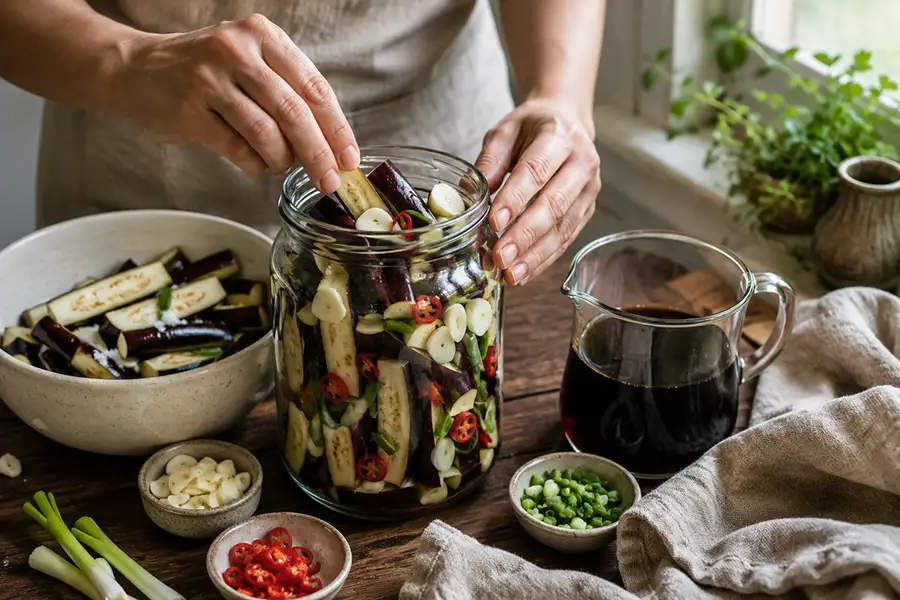
This soy sauce and garlic aubergine is a savoury, short fermented pickle with deep umami flavour and a soft, silky texture. The aubergine is first salted at 2% of its weight, which helps draw out moisture and season it evenly. It is then packed with garlic and covered in a light soy-based brine with just a little vinegar.

The result is somewhere between a ferment and a quick pickle: lightly tangy, savoury, garlicky, and perfect for serving with rice, grilled vegetables, noodles, grain bowls, or mezze-style plates.

This is best treated as a short, fridge-forward ferment, not a pantry preserve.

FAQs

Why salt the aubergines first?

Salting at 2% of the aubergine’s weight helps draw out water, softens the flesh slightly, and seasons the vegetable before it goes into the brine. It also helps improve texture and flavour.

Is this a true lacto-ferment?

It sits between a ferment and a quick pickle. The brief fermentation period allows some flavour development, but the soy sauce and vinegar also shape the final result. It is best seen as a short fermented pickle.

How should I serve it?

Serve it with rice, noodles, grain bowls, grilled vegetables, lentils, cheese, or as part of a mezze-style plate. A few sesame seeds on top work beautifully.

Soy sauce and garlic fermented aubergine
Ingredients:

Makes 1 medium jar:

  • 500 g aubergines
  • 10 g fine sea salt or pickling salt (2% of aubergine weight)
  • 3 garlic cloves, thinly sliced
  • 1 small chilli, sliced, optional
  • 150 ml water
  • 100 ml soy sauce
  • 1 tbsp rice vinegar or apple cider vinegar
  • 1 tsp sugar or honey
  • 1 spring onion, sliced, optional
  • ½ tsp toasted sesame seeds, optional, for serving


Soy sauce and garlic fermented aubergine
Directions:
  1. Wash the aubergines and trim the ends.
  2. Cut them into thick batons or chunky half-moons. Place them in a bowl and toss with the 10 g salt.
  3. Leave for 45–60 minutes so the aubergines soften slightly and release some moisture.
  4. Drain off any liquid and gently squeeze the aubergines with clean hands or press lightly in a colander. You want them softened, not crushed.
  5. Place the aubergines in a clean jar with the garlic, chilli, and spring onion if using.
  6. In a small jug, mix the water, soy sauce, vinegar, and sugar until combined.
  7. Pour the liquid over the aubergines until covered. Press the vegetables down so they stay submerged. Use a fermentation weight if needed.
  8. Close the jar loosely and leave at room temperature for 1–3 days, depending on how warm your kitchen is. Taste after the first day.
  9. Once the flavour is lightly tangy and savoury, transfer to the fridge.
  10. Leave in the fridge for another day before serving if possible, so the flavour settles.


Fermentation Time and Storage

Room temperature: 1–3 days

Refrigerator: best after 1 extra day of chilling

Use within: 7–10 days


More ferments...

Crisp lacto-fermented carrots with fresh ginger

Crisp lacto-fermented carrot sticks with fresh ginger, made in a...

Traditional Korean baechu-kimchi with gochugaru

Traditional baechu kimchi made with napa cabbage, Korean radish, spring...

Garlic pickle with fenugreek & black gram

A slow-soaked garlic pickle with fenugreek, black gram, and tangy...

Tangy fermented red onion slices

These fermented red onions are crisp, vivid and gently tangy,...

Tomato, pepper & basil fermented salsa

A bright July salsa ferment made with ripe tomatoes, sweet...

Lightly fermented peaches with thyme and lemon

A light summer fruit ferment made with ripe peaches, thyme,...

Explore more from Brine & Bloom

Fermentation supports what grows before it ever reaches the kitchen

Fermentation revolutionizes agriculture by providing eco-friendly solutions like biofertilizers, biopesticides,...

Gut-health hype meets whole fermented foods

Whole fermented foods differ from processed probiotics, crucial for gut...

African fermented grains and beyond

African fermented grains like millet and sorghum deliver probiotic nutrition...

8 kid-friendly fermentations to make this summer

Engage kids this summer with eight fun and safe DIY...

Leave a Reply

Your email address will not be published. Required fields are marked *