

Image source: Notpla is a biodegradable material designed “to make packaging disappear”
Walk into almost any supermarket today, and you will see the same pattern repeated: food surrounded by plastic.
Fresh vegetables wrapped in plastic film. Yogurt containers made from single-use polymers. Ready-made meals packed in plastic trays. Even products that are naturally sustainable often come with layers of unnecessary packaging.
For decades, plastic has been considered the most convenient solution for protecting food, extending shelf life, and making transportation easier. But the environmental cost of this convenience has become impossible to ignore.
Plastic pollution is now one of the world’s most urgent environmental challenges, affecting oceans, wildlife, and ecosystems. As consumers become more aware of the impact of disposable packaging, a global movement toward plastic-free and low-waste alternatives is accelerating.
Interestingly, some of the most promising solutions are coming from an unexpected place: the world of microbes.
From fossil fuels to fermentation, the a new era of packaging
Most traditional plastics are made from fossil fuels and can take hundreds of years to break down. Scientists and companies are now exploring alternatives made from renewable materials, including plant fibers, agricultural waste, algae, fungi, and even microorganisms.
One of the most fascinating developments is the use of microbial fermentation to create new biomaterials.
The same biological process that transforms milk into yogurt, cabbage into sauerkraut, and grapes into wine is now being used to produce materials that can replace conventional plastics.
Through fermentation, microorganisms can produce natural polymers and other compounds that may be used to create packaging with a lower environmental footprint.
This represents an important shift: instead of treating microbes as something we only use to preserve food, we are beginning to recognize them as tools for designing a more sustainable future.
Why food packaging matters
Packaging plays an important role in our food system.
It protects food from contamination, extends shelf life, and helps transport products safely around the world. Without packaging, food waste could actually increase.
The challenge is finding materials that provide these benefits without creating long-term environmental problems.

The ideal packaging system would:
- Protect food effectively.
- Use renewable resources.
- Be recyclable, compostable, or reusable.
- Avoid harmful chemicals.
- Fit into a circular economy.
Creating this balance is one of the biggest challenges facing the food industry today.
The return of reusable storage
While scientists develop next-generation materials, some of the most sustainable solutions are not new at all.
For centuries, people preserved and stored food using durable materials designed to last:
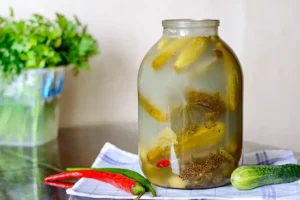
- Glass jars for preserves and fermented foods.
- Ceramic crocks for vegetables and dairy.
- Wooden containers for grains and cured foods.
- Metal containers for long-term storage.
These traditional approaches are experiencing a revival as people rethink their relationship with disposable products.
A glass jar, for example, can be reused hundreds of times. It can store leftovers, hold dry ingredients, ferment vegetables, preserve seasonal produce, or organize a pantry.
Sometimes the future of sustainability looks surprisingly similar to the past.
How fermentation fits into a plastic-free Kitchen
Fermentation naturally supports a lower-waste lifestyle.
Instead of buying heavily packaged preserved foods, home cooks can transform fresh ingredients into foods that last longer.
A seasonal harvest of vegetables can become:
- Sauerkraut from excess cabbage.
- Pickled carrots from surplus produce.
- Fermented hot sauces from extra peppers.
- Preserved lemons from a citrus harvest.
- Yogurt or kefir from milk.
This reduces food waste while also reducing reliance on packaged alternatives.
Fermentation is not only about creating new flavors, it is about changing how we value ingredients.
What consumers can do today
Large-scale packaging change requires innovation from companies and policymakers, but individual choices also matter.
A more sustainable kitchen can begin with simple steps:
Choose reusable containers
Invest in glass jars, stainless steel containers, and durable storage solutions that can be used for years.
Buy products with less packaging
Choose loose fruits and vegetables when possible and avoid unnecessary layers of wrapping.
Preserve seasonal food
Learning simple preservation techniques helps extend the life of fresh produce and reduces waste.
Support better packaging choices
Consumer demand influences what companies create. Choosing sustainable products sends a clear message that packaging matters.
The future of food storage
The future of food packaging will likely not depend on a single solution.
Some products may use compostable biomaterials. Others may rely on advanced recycling systems. Many households will continue returning to simple, reusable options that have worked for generations.
The most sustainable kitchen will probably combine innovation with tradition.
Microbial technologies may help us create the packaging of tomorrow, while fermentation jars and reusable containers remind us of the wisdom we already have.
The goal is not just to package food differently.
It is to rethink our relationship with food itself, valuing every ingredient, reducing waste, and creating systems that can nourish both people and the planet.
Explore the people and organizations shaping the future of food
1. World Packaging Organisation (WPO)
The future of sustainable packaging is not simply about replacing plastic. It is about designing systems that protect food while reducing environmental impact, an approach highlighted by organizations such as the
World Packaging Organisation
2. Traceless Materials
Innovators such as traceless are exploring how agricultural by-products can become the raw materials for a new generation of biodegradable packaging.
traceless.eu
3. Wageningen University & Research
One of Europe’s strongest research institutions around food systems, packaging, agriculture, and sustainability.
A particularly valuable voice is Eelke Westra, who works on sustainable food systems and packaging. His perspective is useful because he emphasizes that packaging must be evaluated within the entire food system, including food loss prevention.